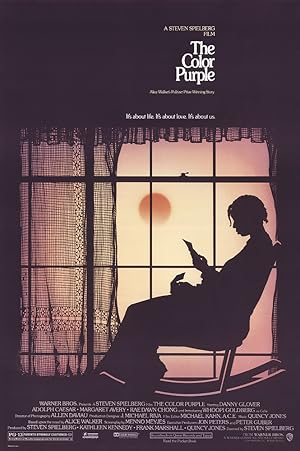
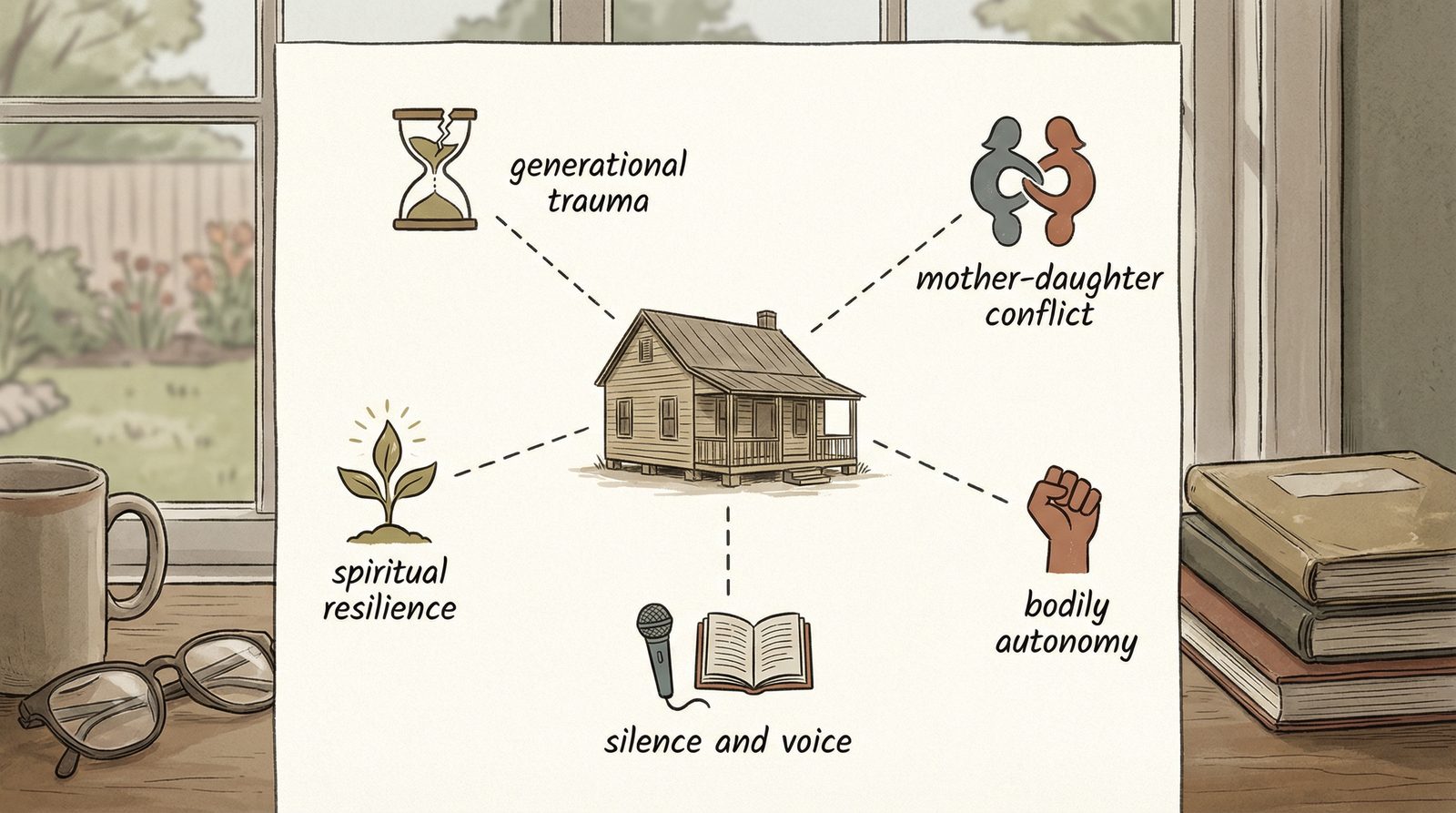
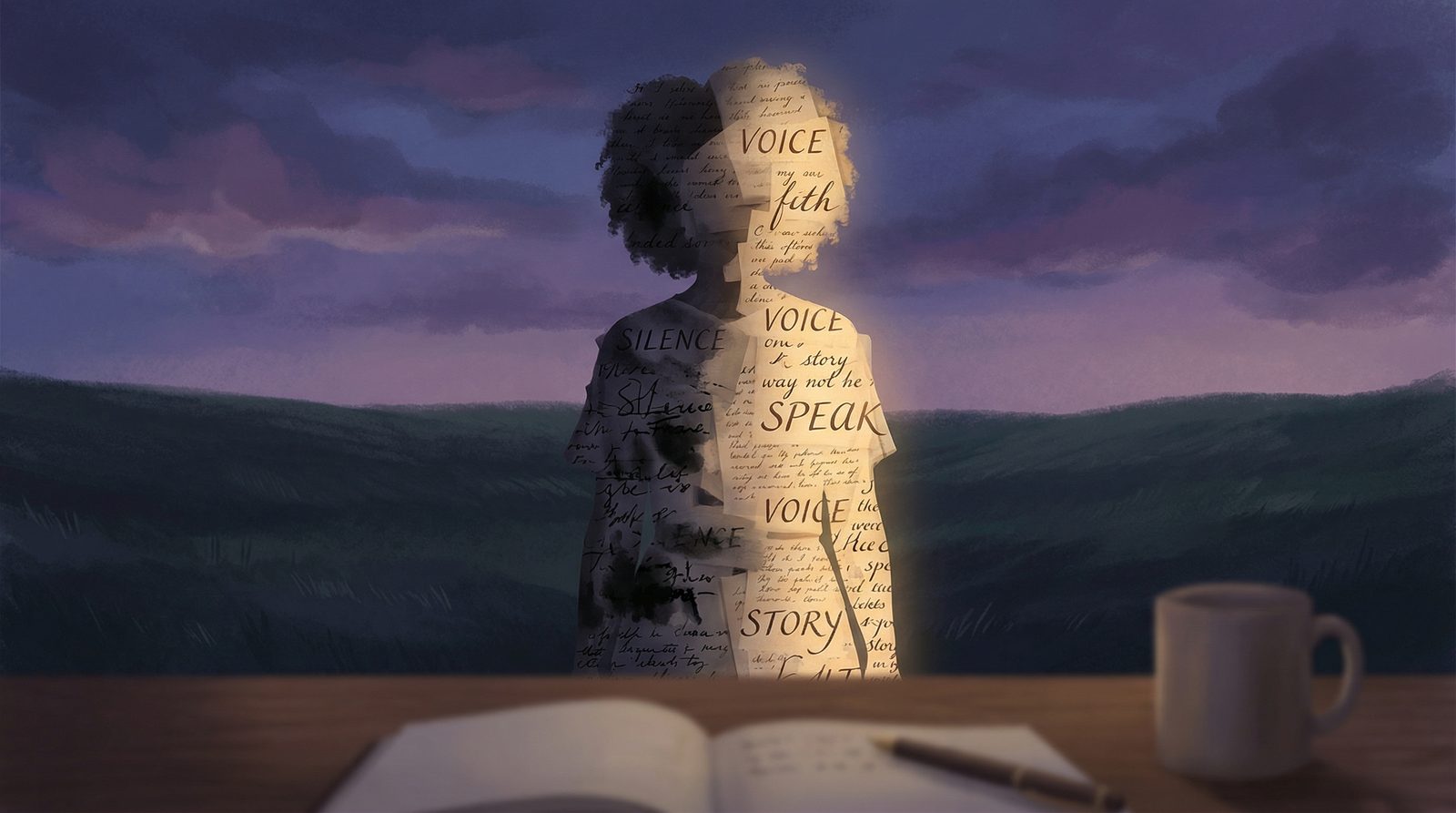
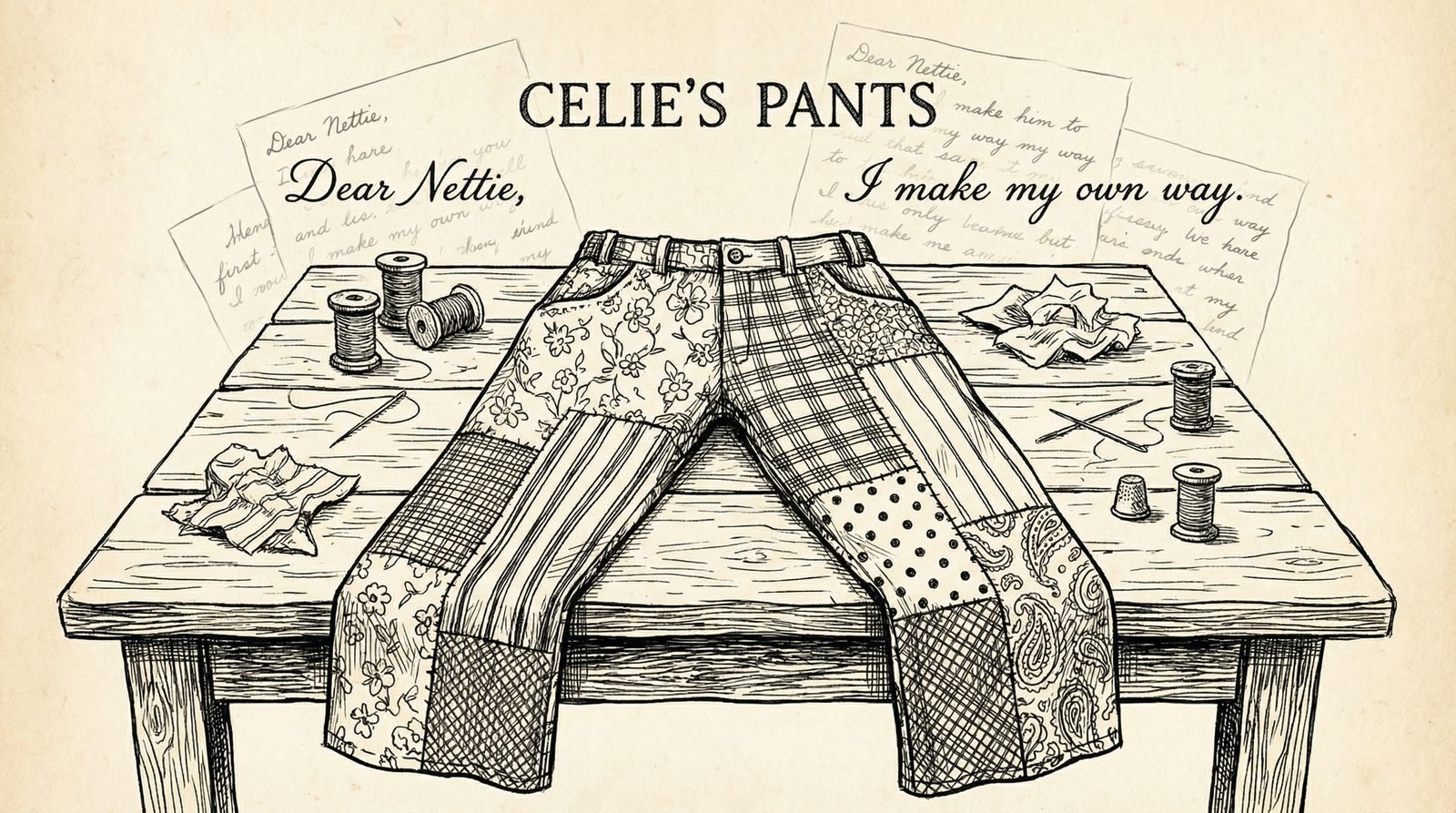
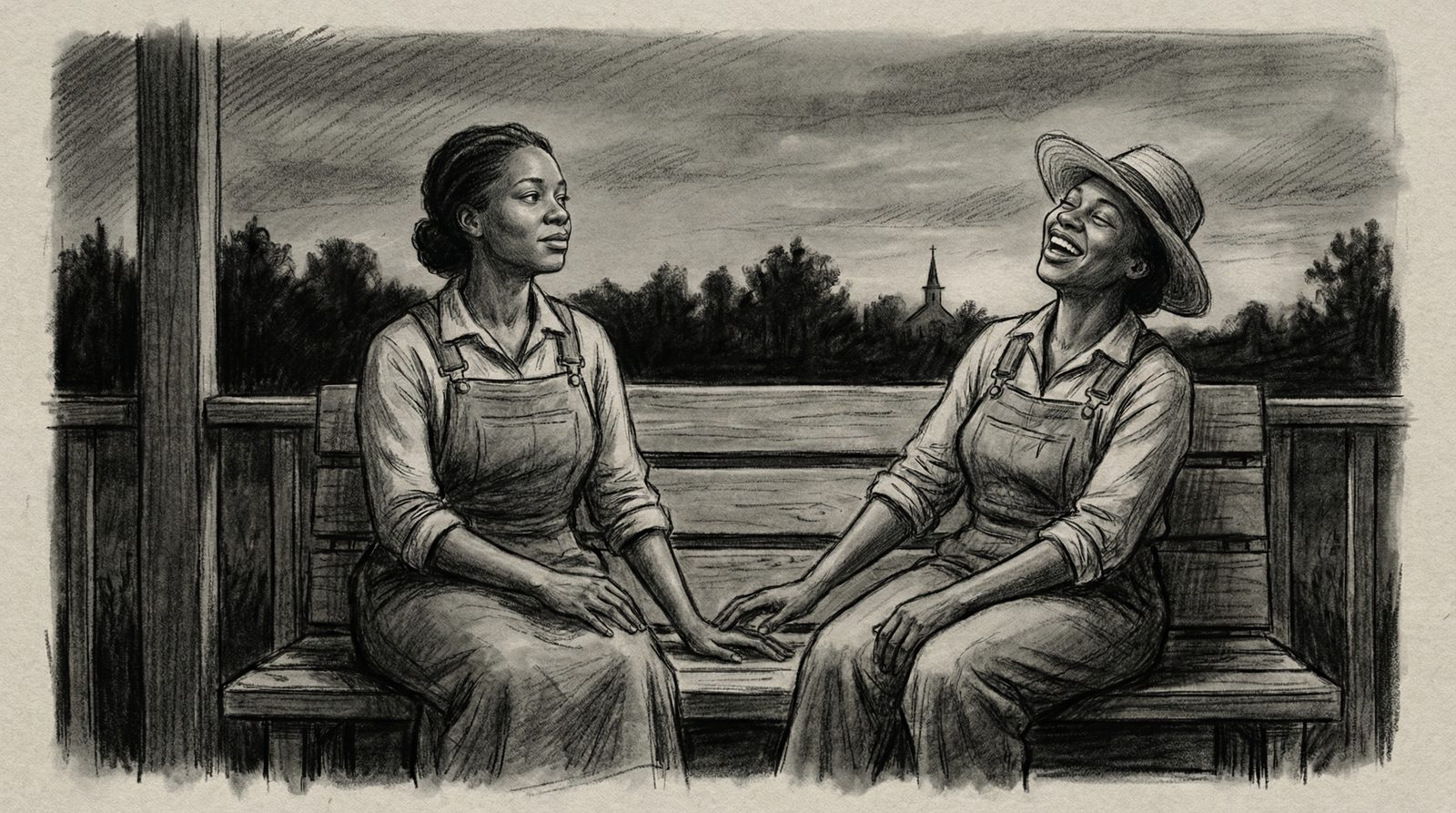
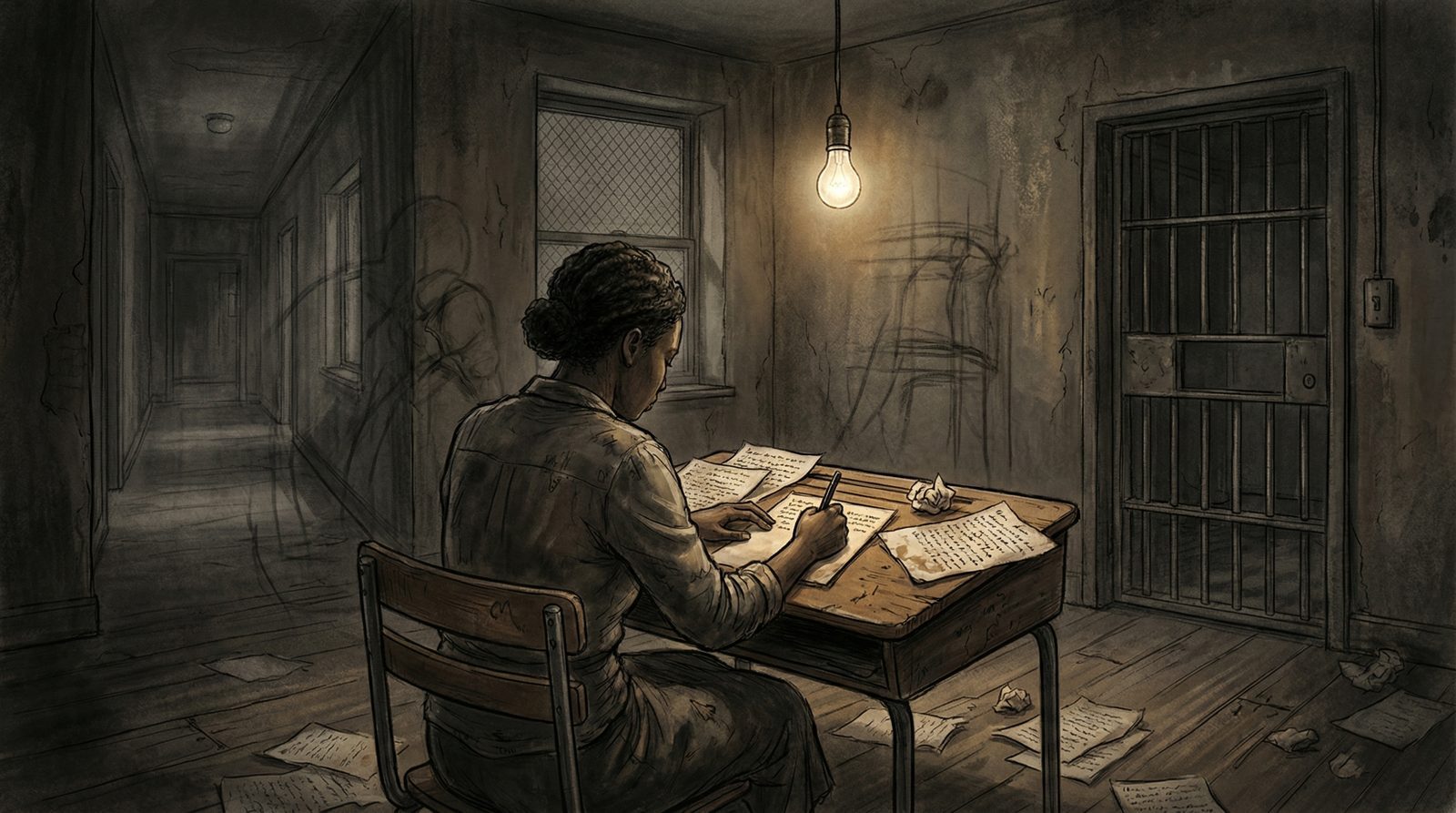
The Color Purple (1985) is the first major screen adaptation of Alice Walker’s novel. Spielberg approaches the story with careful reverence, foregrounding Celie’s inner life without diluting the brutality she endures. The film translates the letters of the novel into a visual language shaped by silence, longing, and endurance. At its core, the film reflects the motif of Silence as Survival, showing how Celie learns to speak inside a world that rarely listens.
The film became a cultural lightning rod. Praised for its performances and emotional force, criticized for the way pain is presented, it remains a milestone in bringing Black women’s interiority to mainstream cinema.
PLOT AND FOCUS
Set in the American South of the early twentieth century, the film follows Celie from childhood through adulthood as she faces physical abuse, forced marriage, and years of emotional suppression. Her husband, Mister, controls her labor and voice, and her sister Nettie’s exile becomes a wound that shapes her adolescence.
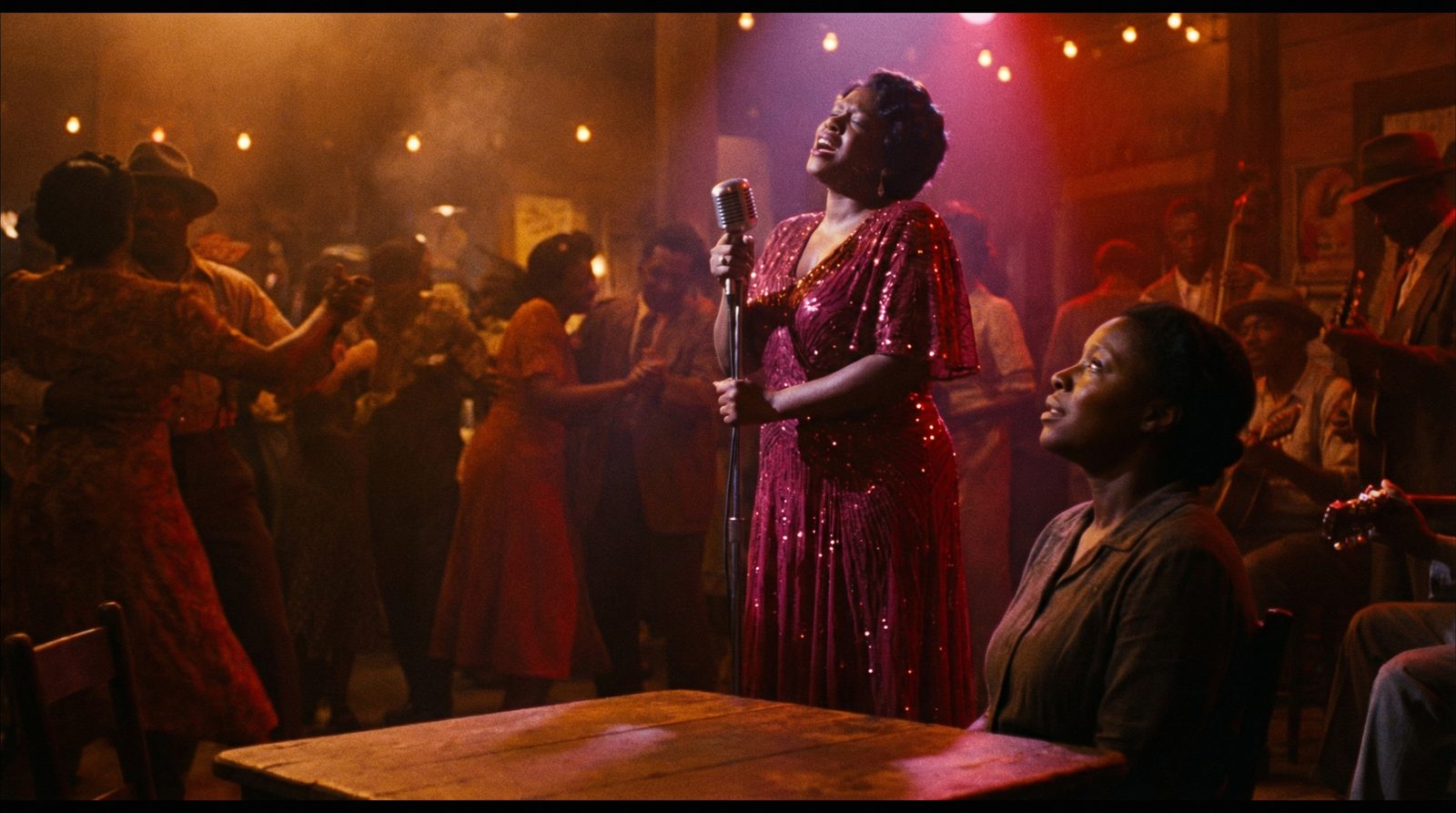
The plot shifts when Shug Avery enters Celie’s life. Shug’s confidence and warmth form a kind of emotional education, helping Celie imagine a life beyond obedience. These scenes express the motif of Intimacy as Healing. Celie’s understanding of love is rewritten through Shug’s presence.
The story’s emotional climax is Celie’s assertion of selfhood. Her declaration that she will no longer be silenced is one of the most enduring moments in the film and a reflection of her journey toward spiritual and personal freedom.
STYLE AND APPROACH
The visual style blends warm Southern landscapes with tight interior shots that reflect Celie’s confinement. Spielberg uses color and framing to show the difference between the world Celie lives in and the world she longs for. The fantasy sequences, though brief, reveal her imagination as a refuge.
The performances ground the film. Celie’s quietness becomes a form of strength rather than erasure, and Shug and Sofia bring vitality that expands the emotional world of the story. This balance keeps the film from becoming a simple story of suffering. It becomes a story of transformation.
CULTURAL CONTEXT AND LEGACY
The film sparked heated debate. Some viewers praised its honesty. Some criticized its portrayal of violence. Others felt the adaptation softened parts of the novel. Yet the broader impact is undeniable. The film introduced Celie’s story to millions who had never encountered the novel and opened conversations about gender, race, and autonomy in mainstream film.
It also paved the way for later adaptations, including the Broadway musical and the 2023 film musical. As a cultural object, the 1985 film stands alongside the novel as one of the most significant depictions of Black womanhood in American cinema of the 1980s.
IS IT WORTH WATCHING?
Yes. It is emotionally intense but deeply moving. The film is a landmark in American cinema for its performances, visual storytelling, and commitment to centering Celie’s voice. Anyone interested in literary adaptations, Southern history, or stories of resilience will find it essential.
Alice Walker writes with a steady, spiritual intelligence that feels rooted in the earth itself. Her work is shaped by Southern Black womanhood, political struggle, and a belief that the sacred can live inside ordinary lives. With The Color Purple, she placed working class Black women at the center of American literature and refused to soften their experiences. The novel’s emotional clarity reflects the motif of Trauma as Inheritance, while her characters show remarkable capacity for growth.
Walker’s voice blends tenderness with ferocity. She insists on telling the truth even when the truth is uncomfortable.
LIFE AND INFLUENCES
Born in rural Georgia, Walker grew up in a sharecropping family where stories and faith were central. A childhood accident left her blind in one eye, a trauma that shaped her early sense of isolation and introspection. She attended Spelman College and later Sarah Lawrence, where the Civil Rights Movement deepened her political awareness.
Her influences include Zora Neale Hurston, Black Southern folklore, womanist theology, and her own experience of racism and poverty. These threads appear throughout her work, aligning with motifs like Survival Narratives and Intimacy as Healing.
THEMES AND MOTIFS
Walker returns again and again to themes of spiritual reclamation, domestic violence, sexuality, community, and the healing potential of female friendship. She coined the term “womanist” to describe a feminism grounded in Black women’s experiences. Her characters often move from silence to voice and from survival to rootedness.
Many of her stories explore the double pull of harm and hope within families. This tension aligns with motifs such as Emotional Minimalism and Power as Proximity, where vulnerability and authority compete.
STYLE AND VOICE
Walker writes with clarity, gentleness, and rhythmic simplicity. Her voice is direct and grounded. She blends emotion with restraint. She favors intimate narration, lyrical fragments, and spiritual imagery. Even at her most political, the work feels lived in rather than theoretical.
The dignity she grants her characters comes through language that honors their truth. She allows flaws, contradictions, and small moments to carry the story.
Walker has published poetry, essays, and additional novels, but The Color Purple remains the work most closely tied to her cultural legacy.
RELATED ADAPTATIONS
Walker’s most famous novel has inspired multiple major screen adaptations that carried Celie’s story to new audiences:
• The Color Purple (1985) – Steven Spielberg’s dramatic adaptation, which brought the novel into mainstream cinema.
• The Color Purple (2023) – A musical film adaptation that builds on the stage production and reimagines the story through song and choreography.
CULTURAL LEGACY
Alice Walker changed the shape of American literature. She expanded the canon to include the voices of Black Southern women whose stories had long been marginalized. Her work sparked debate, redefined womanist thought, and influenced writers across generations.
The adaptations of The Color Purple in 1985 and 2023 further broadened its reach. Together with the original novel, they formed a multiform narrative that continues to shape how readers and viewers think about faith, gender, race, and freedom. Today, Walker’s influence stands beside figures like Toni Morrison and Zora Neale Hurston, whose work insists on truth over comfort and on healing over silence.
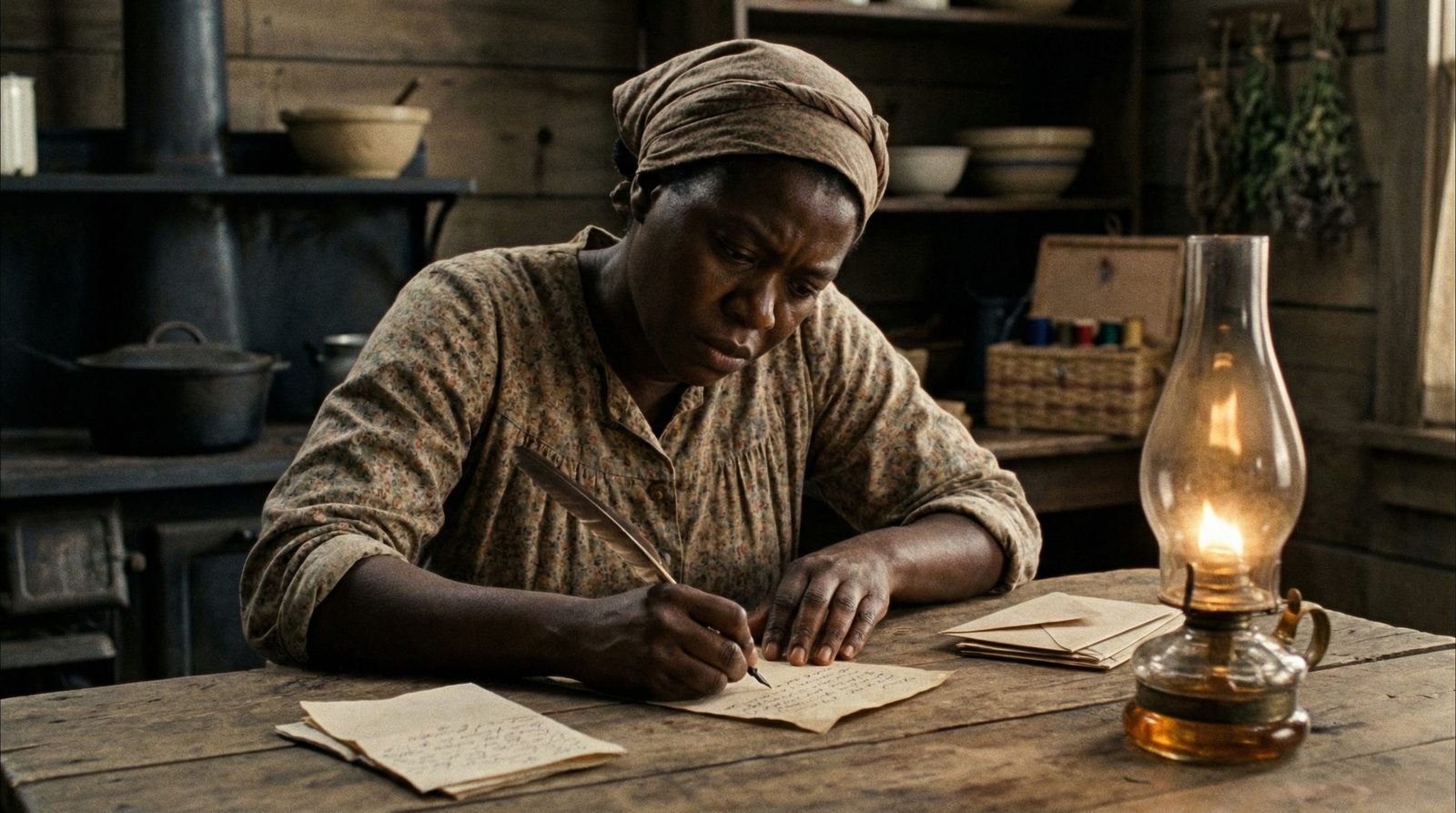
The Color Purple is one of the most quietly powerful novels of the twentieth century. First published in 1982, it tells Celie’s story through letters written in her own unpolished voice. She writes to God because she has no one else to listen. The book begins in near silence and grows into a full song of survival. The early chapters lean into the motif of Silence as Survival, where withholding becomes a way to stay alive in a world that rarely offers safety.
What makes the novel unforgettable is its transformation. Celie’s frightened voice becomes the voice of a woman reclaiming her own life.
PLOT AND THEMES
Celie’s story unfolds through letters addressed first to God and later to her sister Nettie. She grows up in rural Georgia, enduring sexual violence, forced marriage, and constant humiliation. Her husband, known only as Mister, uses her as labor and property. The plot moves slowly in action but widely in emotional scope. It traces Celie’s long shift from voicelessness to self-possession.
The exchange of letters between Celie and Nettie becomes the novel’s emotional spine. Nettie’s letters from Africa widen the book’s sense of place and connect Celie’s private suffering to broader histories of displacement and oppression. This pattern aligns with the motif of Trauma as Inheritance, where pain is passed across families and continents.
The story also explores sisterhood, chosen family, and the sacredness of desire. Celie’s bond with Shug Avery becomes a turning point. Shug models a life of self-regard, sensuality, and spiritual independence. Through Shug, Celie learns that her body and voice belong to her. This shift reflects the motif of Intimacy as Healing, where affection becomes instruction.
STYLE AND LANGUAGE
The novel is written in Celie’s dialect, with spelling and grammar shaped by her limited formal education. What might seem simple becomes beautiful through sincerity. Alice Walker refuses to smooth or correct Celie’s voice. Instead, she lets the language carry emotional truth. This restraint is a form of Emotional Minimalism, where plain words carry enormous weight.
The epistolary form gives the book its heart. Every letter feels like a prayer or confession. As Celie grows, the writing grows with her. Her vocabulary expands. Her confidence sharpens. The evolution of her syntax becomes its own proof of transformation.
CHARACTERS AND RELATIONSHIPS
Celie anchors the novel, but she is lifted forward by the women around her. Sofia’s defiance teaches her resistance. Shug Avery’s independence teaches her desire and spiritual agency. Nettie’s letters teach her about the world and about her own worth. Together, these women rewrite Celie’s understanding of freedom.
The men are not reduced to caricatures. Mister is violent and controlling, yet his slow, partial redemption shows Walker’s belief in the possibility of change. Harpo and others reflect the pressures of a patriarchal world that harms them as well. These dynamics connect to the motif of Power as Proximity, where harm flows through inherited roles rather than pure malice.
Celie’s relationships move the novel from brutality to connection. Each bond widens her sense of what a life can be.
CULTURAL CONTEXT AND LEGACY
When it was released, The Color Purple changed the landscape of American literature. It won both the Pulitzer Prize and National Book Award and sparked fierce debate. Some Black male critics accused Walker of betrayal for depicting domestic violence within Black families. The argument exposed the cultural tension the novel refuses to hide. Walker insisted on telling the truth about private pain rather than protecting public appearance.
The story continued to evolve through adaptation. The 1985 film directed by Steven Spielberg brought Celie’s world to mainstream cinema, earning critical acclaim and introducing the story to millions who had never read the novel. The later 2023 film musical adaptation expanded the emotional palette even further, using music and movement to explore Celie’s interior life in ways unique to the stage and screen.
The novel’s themes place it alongside Beloved (1987) and Their Eyes Were Watching God (1937) as a cornerstone of Black feminist literature. More than forty years later, its closing lines still feel revelatory. The book is an argument for joy as resistance.
IS IT WORTH READING?
Yes. The Color Purple is essential reading. It is unflinching, tender, and transformative. The brutality is difficult, but the beauty is sustaining. For readers interested in stories of trauma, faith, desire, and freedom, it remains one of the most important novels in American literature.
Sapphire writes at the edge of what many readers are prepared to face. Her work is not interested in comfort. It is interested in truth, particularly for Black girls and women who have been ignored, abused, or erased. With Push, she created one of the most searing voices in modern American fiction. Her writing lives squarely inside the motif of Survival Narratives, where staying alive is not the end of the story but the beginning of a new kind of speech.
What distinguishes Sapphire is her refusal to look away. She asks the reader not to look away either.
LIFE AND INFLUENCES
Sapphire has worked as a teacher, poet, and activist. That background matters. It shows up in her attention to language, in her respect for the classroom as a site of transformation, and in her insistence on centering voices that have rarely been granted literary space.
Her influences come as much from lived experience and political struggle as from other books. She writes in conversation with histories of racism, poverty, and gendered violence in the United States, and with the communities who have had to navigate those forces every day. That grounding connects her work closely to the motifs of Trauma as Inheritance and Literacy as Liberation.
THEMES AND MOTIFS
Across her writing, Sapphire returns to a few central questions. What happens when a child is told, again and again, that she does not matter. What happens when the only stories available about you are written by people who fear or pity you. And what happens when you finally learn to put your own words on the page.
Her characters often live in the overlap between violence and possibility. Their lives are shaped by abuse, poverty, and systemic neglect, but they are not defined solely by trauma. The struggle to find language, to learn, to speak, becomes part of who they are. This is where her work most clearly embodies Literacy as Liberation.
She is also deeply interested in how identity is inherited. Not just culture and family, but harm, silence, and shame. That interest lines up with Trauma as Inheritance, which runs just under the surface of much of her work.
STYLE AND VOICE
Sapphire’s style is direct and formally bold. She is willing to bend spelling, grammar, and conventional polish to stay honest to the characters she writes. In Push, that means letting Precious’s voice arrive exactly as it is, then allowing it to change on the page as she learns. The effect is intimate and often overwhelming. The reader is not handed an interpretation. The reader is asked to listen.
Her poetry and prose share a commitment to rhythm and emotional precision. Even at their most brutal, the lines feel deliberate. She uses repetition, image, and silence with care, trusting readers to make the connections she lays down.
KEY WORKS
Push (1996) – The novel that introduced Precious Jones and brought Sapphire’s work into the wider literary conversation.
Alongside her fiction, Sapphire has also published poetry collections that explore many of the same themes with a different kind of intensity.
CULTURAL LEGACY
With Push and its film adaptation, Sapphire forced mainstream audiences to confront a story many would rather ignore. Her work changed the way readers and viewers talk about voice, representation, and the ethics of depicting trauma. It also influenced a generation of writers who saw in Precious’s story proof that the most marginalized characters could hold the center of a narrative.
In the broader landscape, Sapphire stands alongside writers like Toni Morrison and Jesmyn Ward in insisting that Black girls and women belong at the heart of serious literature. Her contribution is specific and singular, but its impact is wide. She gave a voice to someone the culture had tried very hard not to see, and in doing so, she shifted the boundaries of who literature is for.
Director: Lee Daniels Screenplay: Geoffrey Fletcher Based on: Push by Sapphire Genre: Drama Country: United States Year: 2009
INTRODUCTION
Precious is one of the most emotionally direct literary adaptations in recent film. It does not soften the material from Sapphire’s novel. Instead, it stays close to the young woman at its center and lets her voice guide the story. The film is grounded, unsentimental, and deeply humane. It belongs to the broader motif of Survival Narratives, where survival is not triumph but the first step toward rebuilding a life.
The film’s strength lies in how it listens. It lets Precious speak in ways she was never allowed to speak in her own world.
PLOT AND FOCUS
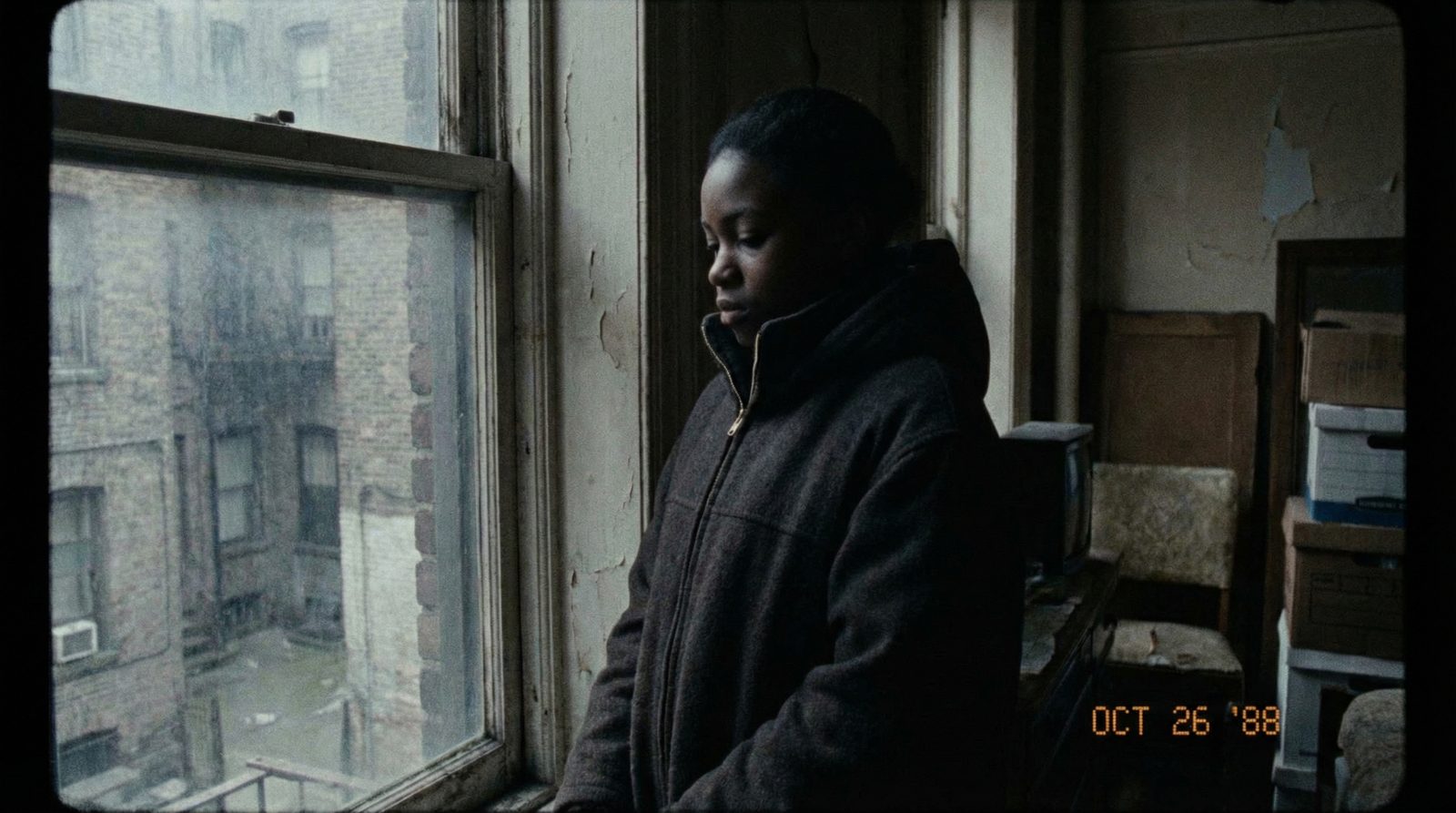
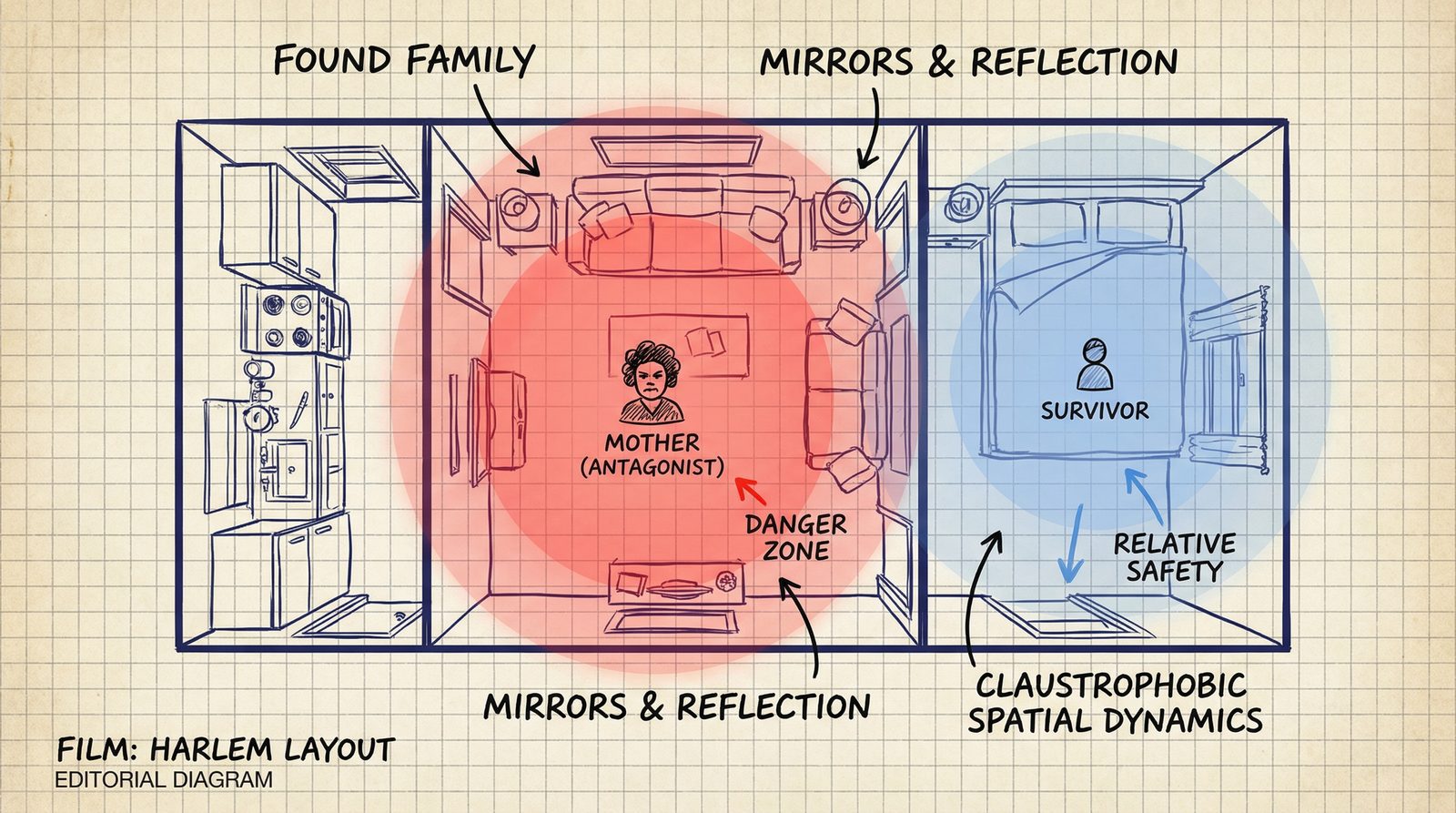
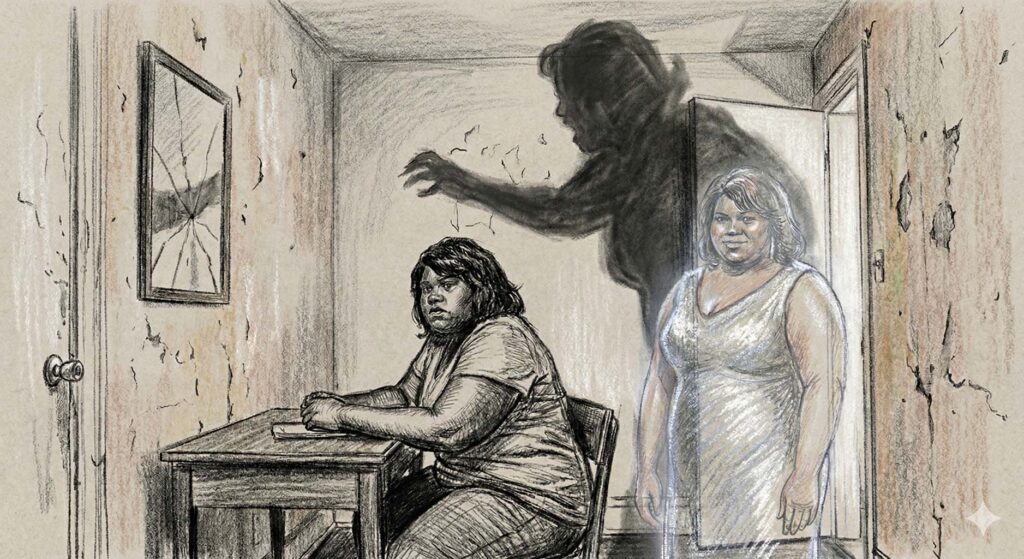
The story follows Precious Jones, an illiterate teenager in Harlem who becomes pregnant for the second time by her own father. She lives with an abusive mother whose violence shapes every corner of her life. School offers no refuge. The future appears closed.
The turning point comes when she is sent to an alternative school and meets Ms Rain. The classroom becomes a rare place where she can breathe. This setting deepens the motif of Literacy as Liberation. Learning to read and write becomes a form of self-definition. The world does not change quickly, but the way Precious understands herself begins to shift.
The film keeps the focus tight on her interior life. Flashbacks, fantasies, and daydreams interrupt scenes in ways that reveal how Precious copes. They are not escapes. They are survival tools.
WHAT IS PRECIOUS ABOUT?
Precious is about a teenage girl fighting to survive extreme abuse and neglect, and slowly discovering that her life can be more than what has been done to her. The film follows her as a new school environment and a few rare supportive adults give her space to learn, to speak, and to imagine a future. It is not a feel-good story, but it is a story about voice: the moment someone who has been silenced begins to name her own experience and take the first steps toward self-determination.
STYLE AND APPROACH
The visual style mixes naturalistic cinematography with abrupt dream sequences. These brief escapes into glamour show how Precious imagines a self she has never been allowed to be. The contrast makes the real world feel even more stark, but it also reveals her imagination as a place of possibility.
The performance by Gabourey Sidibe gives the film its weight. She plays Precious with a stillness that holds everything she cannot say. Mo’Nique’s portrayal of the mother is equally memorable, a character shaped by rage, trauma, and internalized harm. The performances emphasize the motif of Trauma as Inheritance, showing how damage is passed down through silence and lack of support.
The film does not sensationalize abuse. It refuses melodrama. The restraint is what makes it powerful.
CHARACTERS AND RELATIONSHIPS
Precious is portrayed as a full person rather than a symbol. She is angry, hopeful, confused, stubborn, and capable of tenderness. The film refuses to flatten her into a victim. This complexity reflects the motif of Survival as Identity. She has survived so much that survival itself has become her worldview.
Her mother is frightening but not one-dimensional. The film allows glimpses of desperation that never excuse her actions but show their roots. This balance makes the story more honest.
Ms Rain and the women in the alternative school form a quiet counterbalance. They are steady in a world that rarely offers Precious stability. Their presence gives the narrative spaces of breath without turning them into saviors.
CULTURAL CONTEXT AND LEGACY
Precious was widely praised on release and sparked intense debate. Some viewers saw it as exploitative. Others saw it as a rare, respectful depiction of a young Black girl surviving impossible conditions. The film forced a mainstream audience to confront issues of abuse, poverty, and systemic neglect that are usually kept off-screen.
The film won multiple awards and established both Sidibe and Mo’Nique as major talents. It also renewed interest in Sapphire’s novel, expanding its readership for a new generation. In the broader landscape, Precious stands alongside works that insist on depicting harm without sanitizing it, while also honoring the inner life of the person at the center.
The film remains a cultural touchstone. It opened conversations about representation, empathy, and who gets to have their story taken seriously.
IS IT WORTH WATCHING?
Yes. It is emotionally difficult, but it is also precise, grounded, and deeply compassionate. Anyone interested in character-driven storytelling, literary adaptation, or the realities of structural harm will find it worth their time.
Motif Type: Psychological Coping
Era Focus: 20th Century to 21st Century
Primary Fields: Memoir, Literary Fiction, Trauma Narratives
WHAT THIS MOTIF MEANS
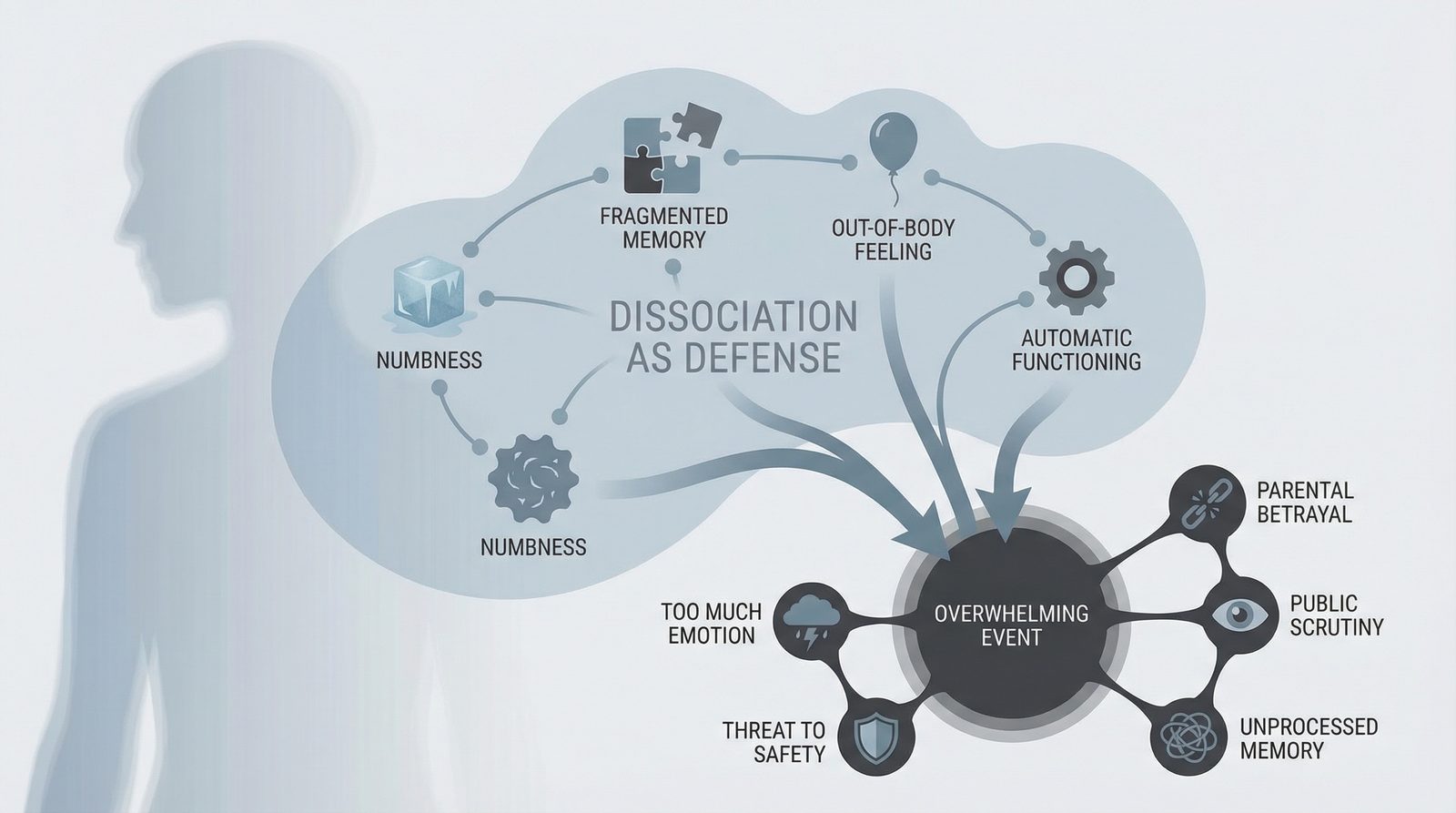
Dissociation as Defense appears in stories where a character withdraws from overwhelming experience by separating from emotion, memory, or physical sensation. This defense is not chosen. It emerges instinctively when the mind cannot safely process what is happening.
On the page, dissociation often shows up in flat tone, sudden shifts, dreamlike distance, or disconnection between events and feelings.
HOW IT WORKS IN NARRATIVE
The motif usually appears during or after trauma. Characters recount violence or control with unnerving calm. They describe terrifying events with the tone of someone narrating the weather. This emotional gap is the point. It reveals how the character survived.
As the narrative progresses, dissociation may lessen or transform as the character gains safety or language to confront what happened.
WHERE WE SEE IT IN OUR LIBRARY
I’m Glad My Mom Died – McCurdy describes invasive control with flat, clinical tone that reflects emotional separation.
The Woman in Me – Britney recounts traumatic events with stillness that suggests survival through detachment.
Precious – The film visualizes dissociation through fantasy sequences that interrupt abuse.
Push – Precious retreats inward, separating from events that would overwhelm her.
Framing Britney Spears – The documentary highlights public moments where dissociation appears as a coping strategy.
The motif links characters who learned to survive by mentally stepping away from harm.
WHY IT MATTERS
Dissociation as Defense is crucial for understanding trauma with nuance. It reveals why victims may appear calm, detached, or emotionless during or after harm. It counters harmful cultural myths that equate visible reactions with real pain.
The motif offers readers a humane and psychologically accurate way to interpret survival.
ARCHETYPES ASSOCIATED WITH THIS MOTIF
The Erased Girl – when dissociation becomes part of invisibility.
The Witness – when the character observes their life from a distance.
The Controlled Daughter – for characters who dissociate to endure parental domination.
Motif Type: Family and Healing Era Focus: 20th Century to 21st Century Primary Fields: Memoir, Literary Fiction
WHAT THIS MOTIF MEANS
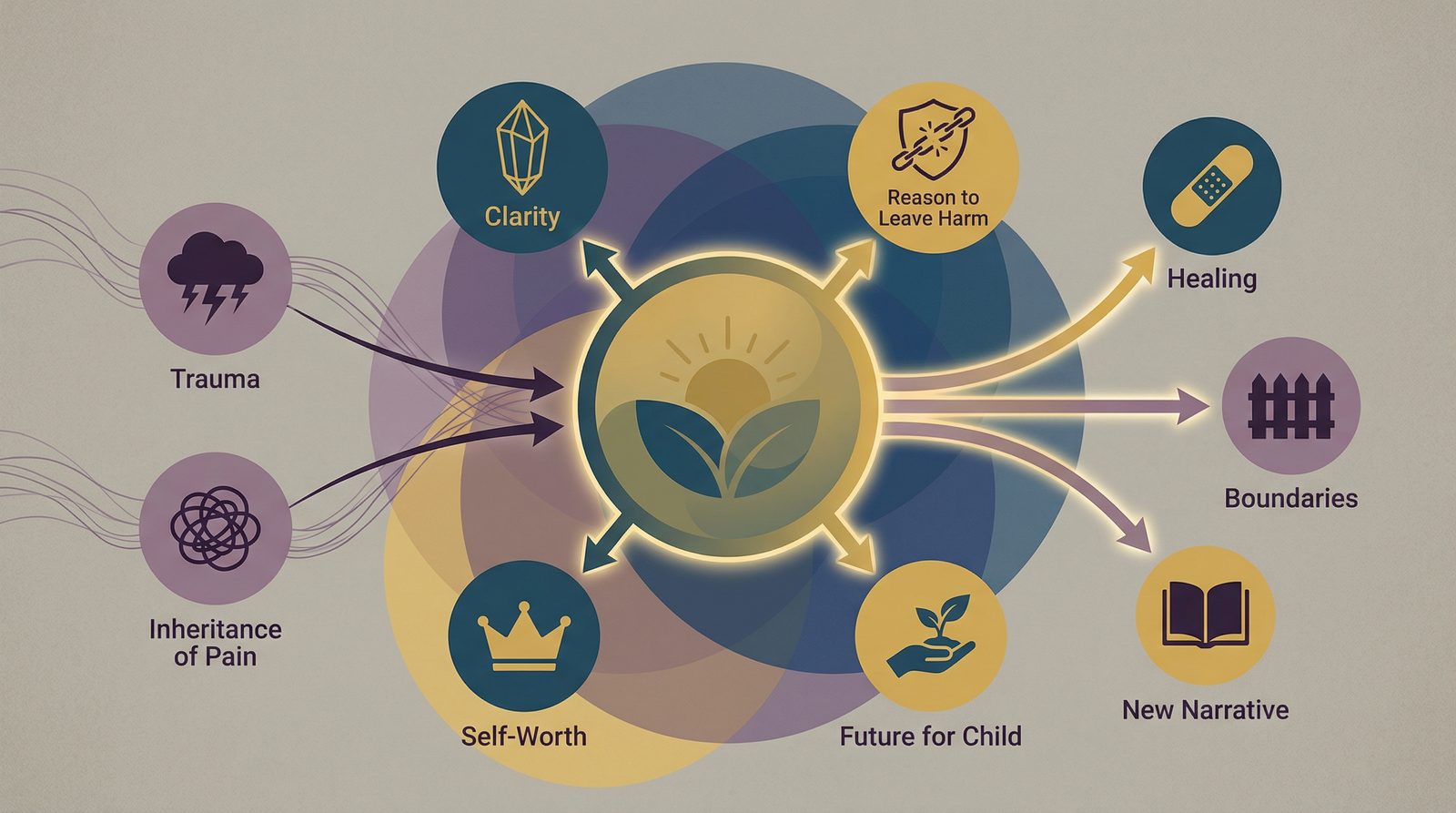
Motherhood as Redemption appears in stories where becoming a mother gives a character clarity she did not have before. The role does not solve her trauma. It sharpens her desire to survive it. The child becomes a reason to leave harm, a reason to change, or a reason to finally see herself as someone worth protecting.
This motif is not sentimental. It acknowledges that motherhood is complicated. The redemption comes not from perfection but from purpose.
HOW IT WORKS IN NARRATIVE
Characters inside this motif often grow up without safety or agency. They enter motherhood carrying the weight of their past. When a child enters their life, the emotional stakes shift. Suddenly survival has direction. Healing has urgency. The child becomes a mirror and a motivator.
Redemption here is not moral. It is emotional. It is the moment a character sees a possible future that does not look like her past.
WHERE WE SEE IT IN OUR LIBRARY
Confessions of a Video Vixen – Steffans sees motherhood as the turning point that anchors her decisions and resilience.
The Vixen Diaries – Her relationship with her son remains the emotional center of the book and her reason to move toward stability.
The Woman in Me – Britney’s sons are the emotional force behind her desire for freedom and autonomy.
I’m Glad My Mom Died – The motif appears in reverse through Jennette’s longing for a healthier form of protective care that she never received.
The Color Purple – Celie’s role as a maternal figure to children in her care shapes her emotional evolution and sense of purpose.
In each work, motherhood reveals emotional truths that were hidden beneath harm or survival.
WHY IT MATTERS
This motif matters because it reframes motherhood as a form of identity reclamation rather than domestic duty. It also shows how nurturing another life can awaken self-compassion in characters who learned early to ignore their own needs.
It becomes a turning point, not because the character becomes flawless, but because she chooses not to repeat the cycle she inherited.
ARCHETYPES ASSOCIATED WITH THIS MOTIF
The Reclaimer – for mothers who reshape their identity through care.
The Resistant Spirit – for characters who fight to protect a child despite limited power.
The Witness – for characters who see, often for the first time, the cost of their own upbringing.
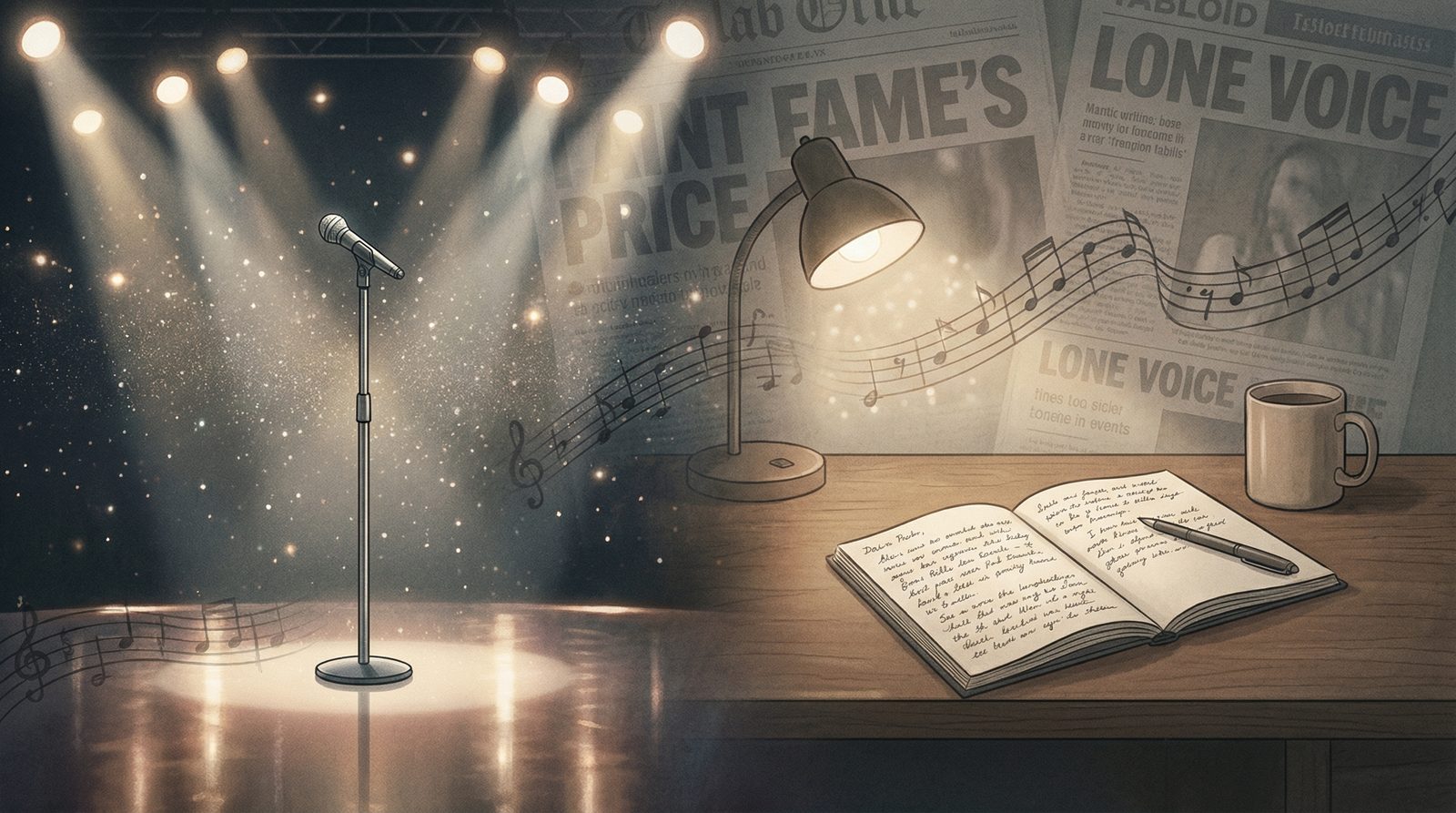
Britney Spears writes as someone who has lived under a microscope for so long that she learned to narrate from behind the glass. Her memoir isn’t a gossip dump or a fan collectible; it’s a reckoning. At its center is a woman trying to reclaim her own story after decades in which other people owned the script. Her life sits squarely inside motifs like Silence as Survival and The Commodified Body in Books, but what makes the work cut through is how plainly she names what those forces did to her.
Spears is not aiming for literary elegance. She is aiming for freedom. The writing in The Woman in Me is raw, direct, sometimes jagged. That roughness is part of its power. This is not the perfectly managed voice of the “Princess of Pop.” It’s the voice of someone who has finally been allowed to speak as a person rather than a product.
⸻
LIFE & INFLUENCES
Raised in rural Louisiana, Britney grew up in a house where money was tight and emotions ran hot. Her talent was obvious early on, and the adults around her learned just how valuable that talent could be. From talent shows to The Mickey Mouse Club to the explosion of …Baby One More Time, she was shaped by an industry that knew exactly how to sell innocence and sex appeal at the same time.
Behind the gloss there was constant surveillance. Managers, paparazzi, family members, strangers on the internet—everyone seemed to have an opinion or a claim on her life. The conservatorship, imposed under the language of “protection,” hardened that sense of being watched and controlled. For years, the people closest to her controlled her schedule, her money, her medication, even her ability to become pregnant. That experience embeds her story deeply in the motif of Intimacy as Transaction: love, care, and loyalty repeatedly weaponized or monetized by the very people who claimed to act in her best interest.
Her influences, then, are less literary than experiential. She writes from the perspective of someone who spent her formative years being filmed, quoted, and dissected by strangers. The emotional architecture of her memoir comes from that: a life in which every misstep could be replayed, slowed down, and sold as content, while her own voice was kept off the record.
⸻
THEMES & MOTIFS
What recurs throughout Spears’s memoir is not just trauma, but the way institutions repackaged that trauma as discipline. The conservatorship is the central symbol: a legal structure that effectively turned her into an employee with no say over her own labor, finances, or body. In that setup, the idea of a commodified body stops being metaphor and becomes literal. She is the product, and the machine that profits from her also holds the keys to her life.
Her long silence was strategic. It wasn’t consent; it was survival. Interviews were scripted. Social media posts were filtered. Court appearances were tightly controlled. The motif of Silence as Survival runs through the book: staying quiet as the only way to avoid harsher restriction, more medication, or the threat of losing her children.
There is also a fierce thread of Motherhood as Redemption. Her sons are not just beloved; they become a line she can’t bear to see crossed. When access to them is used as punishment, the cruelty of the conservatorship sharpens. Being a mother gives her clarity about what she will endure and what she refuses to accept, even as that role is twisted into a tool for control.
Underneath these themes is the quieter pattern of Dissociation as Defense. Spears often describes deeply painful events in a detached, almost flat tone, as if telling someone else’s story. That distance reads as the adaptation of someone who had to keep functioning while her life was being disassembled in public. The book, taken as a whole, belongs firmly to #MeToo Literature, even though her situation extends beyond the workplace and into the legal and medical systems that claimed authority over her.
⸻
STYLE & VOICE
Spears’s prose is straightforward and often blunt. She does not build elaborate metaphors or linger on description. She tells you what happened, then how it felt, and moves on. That simplicity gives the memoir a startling immediacy. You’re not asked to admire the sentences; you’re asked to believe the person speaking.
The emotional style leans toward a kind of minimalism. Pain drops into the narrative with very little buildup: a shaved head, a lost custody hearing, another forced performance in Las Vegas. Joy appears too—moments with her kids, flashes of creative satisfaction—but it’s rarely allowed to stand unchallenged. Nearly every moment of happiness is shadowed by a reminder of who was in control at the time.
The structure reflects a life divided into segments she didn’t get to narrate until now. The book moves in fragments, looping back, filling in holes, pausing to reconsider old headlines from her perspective. This fragmented stitching of memory mirrors the work of someone taking back ownership of their timeline after years of being told what their story meant.
⸻
KEY WORKS & ADAPTATIONS
The Woman in Me (2023) – Spears’s memoir and primary written work, a first-person account of fame, control, and the fight to reclaim her own life.
Framing Britney Spears (2021) – The documentary that helped ignite global outrage over her conservatorship and set the stage for the #FreeBritney movement.
While the memoir stands on its own, these works together trace the shift from spectacle to self-authorship—from being talked about to speaking for herself.
⸻
CULTURAL LEGACY
Britney Spears’s story is more than a pop-culture saga; it’s a case study in how power, money, and gender intersect in modern celebrity. Her memoir and the surrounding coverage forced a re-evaluation of tabloid-era cruelty, guardianship laws, and the way mental health is used to justify taking control of someone’s life. In the larger conversation about #MeToo Literature, her book stands as a key document: not just about abuse, but about the structures that allowed it to be framed as care.
Writers like Karrine Steffans helped make space for this kind of story—women whose bodies and reputations were treated as public property turning around and telling the truth anyway. Spears’s contribution sits alongside theirs, but with a different scale of scrutiny. Few people have been as globally visible or as tightly controlled.
Today, she is an icon of reclamation, even if she never asked to be. The fact that her fight for autonomy played out in front of millions doesn’t make it less personal; it just means the stakes were shared. Her decision to write, to testify in court, and to break her enforced silence has already changed how we talk about celebrity, consent, and control. And her work will likely continue to be a reference point for anyone trying to understand what happens when a human life gets turned into an asset.
Motif Type: Body and Identity Era Focus: 20th Century to 21st Century Primary Fields: Memoir, Cultural Criticism, Literary Fiction
WHAT THIS MOTIF MEANS
The Commodified Body in Books appears in stories where a person’s body is treated as currency, product, or spectacle. Characters inside this motif learn early that how they look, move, or appeal to others can be used for attention, affection, control, or profit. The body becomes a site of negotiation rather than autonomy.
This motif often emerges in narratives shaped by patriarchy, fame, trauma, or social scrutiny. The character is not valued for selfhood but for usefulness. Sometimes the commodification is explicit. Sometimes it is subtle. In every case, it shapes identity before the character realizes what is happening.
HOW IT WORKS IN NARRATIVE
Narratives featuring this motif often explore the contradiction between external visibility and internal erasure. A character may be watched by many but understood by none. They may be desired but not cared for. The story reveals how the body becomes a stage, and the person inside it becomes an afterthought.
Transformation often comes through reclamation. Characters begin to see their bodies not as public property but as homes they have a right to inhabit.
WHERE WE SEE IT IN OUR LIBRARY
This motif is central to many works in your library. It often intersects with power, desire, and identity.
Open Book – Jessica Simpson’s body is treated as brand material, scrutinized and monetized at every stage of her career.
The Woman in Me – Britney Spears’s body becomes a site of legal and financial control under her conservatorship.
Framing Britney Spears – The documentary highlights how Britney’s physical image was consumed and sold by media and family systems.
The Color Purple – Celie’s body becomes labor and property until relationships help her reclaim ownership.
Across these narratives, the body becomes the earliest battleground where agency is tested.
WHY IT MATTERS
The Commodified Body in Books is a high-impact motif because it connects individual pain to broader cultural structures. It reveals how systems value appearance, usefulness, and desirability over autonomy. It also provides a lens for understanding fame, abuse, gendered expectations, and survival strategies.
For readers, the motif opens conversations about agency, objectification, and the long process of reclaiming selfhood.
Motif Type: Psychological Survival
Era Focus: 20th Century to 21st Century
Primary Genres: Memoir, Literary Fiction, Trauma Narratives
WHAT THIS MOTIF MEANS
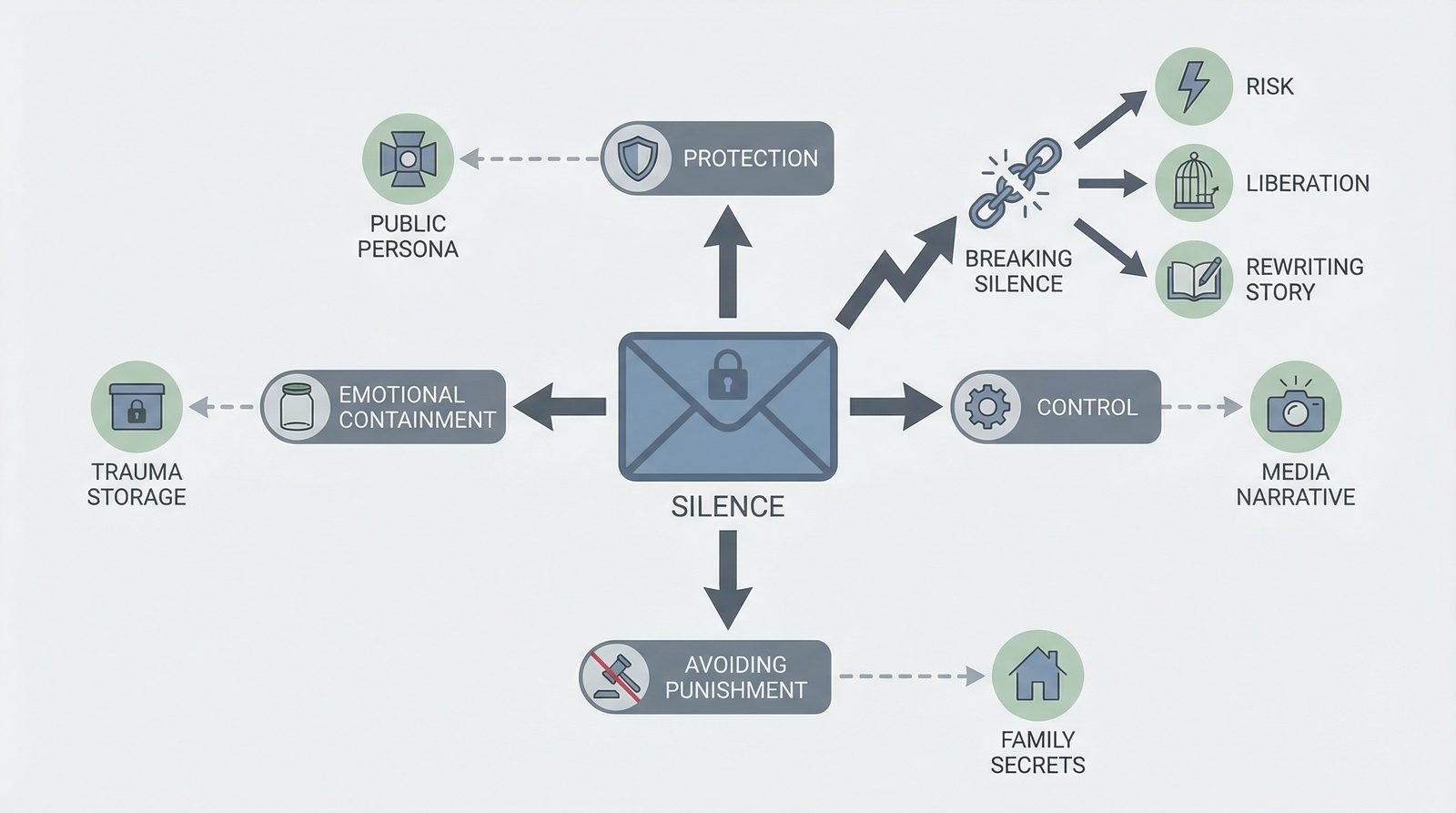
Silence as Survival is a pattern found in stories where staying quiet becomes a form of protection. The characters who live inside this motif do not withhold because they lack emotion. They withhold because speaking openly would invite danger, punishment, or collapse. Silence becomes shelter. Silence becomes strategy. Silence becomes the space where a person stores the parts of themselves that cannot yet be shown.
This motif is not about passivity. It is about endurance. Many characters who inhabit this pattern are managing abusive homes, controlling partners, predatory industries, or social systems that punish honesty. Their quiet is not emptiness. It is preparation.
HOW IT WORKS IN NARRATIVE
Stories built around this motif often begin in emotional stillness. Characters say less than they feel. Their worlds are shaped by fear, obligation, or surveillance. Over time, the narrative reveals what the silence is hiding. Sometimes it cracks. Sometimes it is shed. Sometimes it transforms into voice.
The emotional power of this motif rests on tension. What is unsaid becomes louder than what is spoken. Readers are asked to sit with the weight of suppressed truth, and the story’s arc becomes the movement from survival to expression.
WHERE WE SEE IT IN OUR LIBRARY
Silence as Survival appears across many of the works in your current cluster. Each character embodies the motif in a different way.
The Color Purple – Celie writes instead of speaking. Her silence protects her until she can reclaim her life.
The Woman in Me – Britney Spears was silenced legally and emotionally for more than a decade.
I’m Glad My Mom Died – Jennette McCurdy learned to stay silent to preserve her mother’s fragile approval.
Push – Precious survives by withdrawing inward and staying quiet inside abusive spaces.
Framing Britney Spears – The film exposes how Britney’s enforced silence became central to her control.
The motif ties these narratives into a single emotional lineage. All these women, across time and genre, used silence as a tool when voice was not available.
WHY IT MATTERS
Silence as Survival is one of the most important motifs across memoir and trauma fiction because it reveals how characters adapt to harm. It allows readers to understand resilience without requiring performance. It also creates narrative tension that can evolve into empowerment, which makes it ideal for transformation arcs.
In many of these stories, silence is not broken with a single speech. It changes slowly. It becomes a voice that belongs to the character, not the world around them.