
Period: 21st Century

  • Ptolemy’s Gate (2005)

    Ptolemy’s Gate (2005)

    INTRODUCTION

    Ptolemy’s Gate (2005) by Jonathan Stroud
    Fantasy · 2000s · United Kingdom


    Ptolemy’s Gate is a series finale that feels both inevitable and genuinely shocking. Stroud takes the familiar summoned-spirit motif and turns it into a meditation on servitude, memory, and the cost of power. The book’s London—an alternate early-2000s Britain where magicians run the state—feels bureaucratic, grimy, and tense with class rage, but the real heat lives inside relationships. There’s a steady bittersweet urgency under the jokes, as if Bartimaeus’s wisecracks are whistling past a graveyard he knows too well.

    By the time the narrative circles back to the ancient boy-scholar Ptolemy and his experiment in mutual recognition, the trilogy has shifted from clever adventure into a question: can empathy survive inside a system built on exploitation?

    PLOT & THEMES

    The plot opens with Britain’s magicians entrenched in a failing war abroad and unrest at home. Nathaniel, now John Mandrake and a senior minister, orchestrates propaganda while commoners seethe. Bartimaeus is summoned into service yet again, but he is dangerously weakened by prolonged time on the material plane. Kitty Jones, presumed dead by the government, has gone underground, studying grimoires and obsessing over the legend of Ptolemy. Her investigations into the Other Place and the boundary between worlds become the key to everything.

    Stroud leans into uneasy allies forced together. Nathaniel, Bartimaeus, and Kitty must cooperate to expose a conspiracy and prevent a catastrophic breach between realms. The rebellion has physical geography: ministerial halls and surveillance rooms above, shadowed streets and resistance cells below. The city reads like an administrative machine under siege.

    Thematically, Ptolemy’s Gate is about the ethics of domination. Summoning is not treated as neutral magic but as institutionalized exploitation. Mirrors, scrying surfaces, and shimmering thresholds echo the way humans and spirits distort each other: surveillance masquerading as knowledge, coercion masquerading as order. The book’s moral question is not “who wins the war?” but “what kind of relationship counts as victory?”

    The ending refuses easy redemption. Nathaniel, already being consumed by Nouda’s essence, dismisses Bartimaeus with his true name before the process is complete. Acting both in response to Nathaniel’s will and to protect Kitty, Bartimaeus strikes and destroys Nouda. Nathaniel dies, the regime collapses, and Kitty is left in a damaged city carrying memory rather than triumph. The closure is fragile peace, not celebration.

    PROSE & NARRATIVE STRUCTURE

    Formally, the book is playful and ruthless at once. Stroud’s most distinctive technique remains Bartimaeus’s first-person chapters with footnotes. These tangents spiral into ancient anecdotes that undercut the main text with sarcasm and grudges, but they also function as an archive of trauma. Every joke is a record of centuries of coercion.

    Nathaniel’s sections are clipped and managerial, full of schedules, reports, and mounting anxiety as the government hollows out beneath him. Kitty’s chapters slow the tempo into investigation and experiment, especially when she approaches Ptolemy’s Gate and risks dissolution in the Other Place. The alternating perspectives create a braid of three “feels”: sardonic endurance, bureaucratic panic, and ethical curiosity.

    Flashbacks to ancient Alexandria provide the moral counterpoint. Ptolemy addressing Bartimaeus as an equal becomes the trilogy’s hidden standard of what the present world has forgotten. Stroud never turns purple; he keeps the language brisk so the ethical weight lands through consequence rather than sermon.
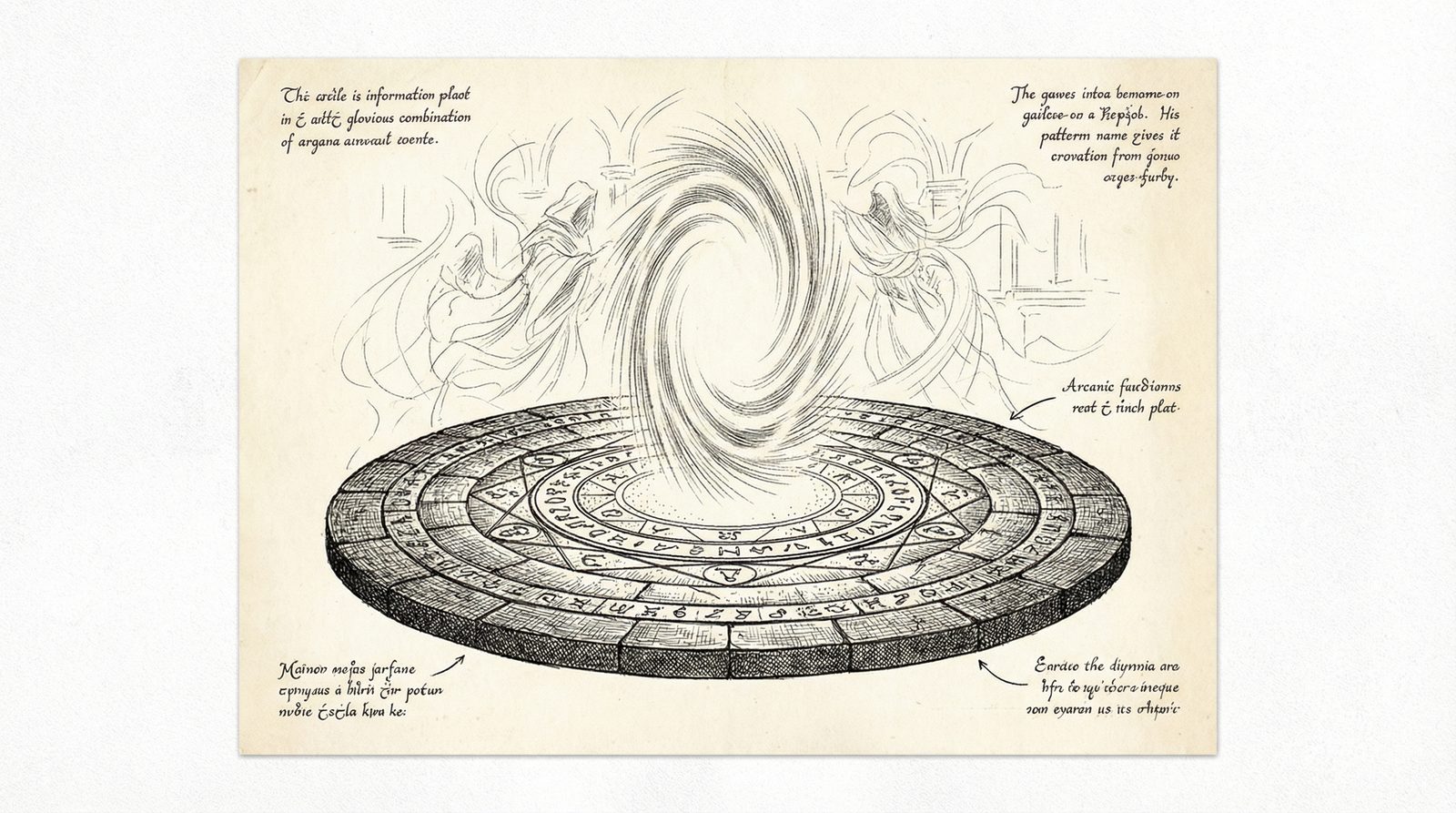
    Conceptual editorial illustration inspired by 'Ptolemy’s Gate (2005)'

    CHARACTERS & INTERIORITY

    Nathaniel’s arc completes his transformation into a fallen prodigy: the idealistic boy from The Amulet Of Samarkand buried under the persona of John Mandrake, all sharper policies and tighter self-editing. His interiority is compartmentalization. He rehearses public lines, edits memory, and treats Bartimaeus as a tool — until the final act forces a brutal return to what he has become.

    Bartimaeus is paradoxically the book’s most emotionally honest figure. His joking is survival, but his exhaustion is real, and his memories of Ptolemy carry tenderness that breaks the armor. Kitty’s growth is the quiet core: she is the only character willing to cross the human–spirit divide with genuine curiosity and risk. Her decision to enter the Other Place is a radical act of empathy rather than conquest.
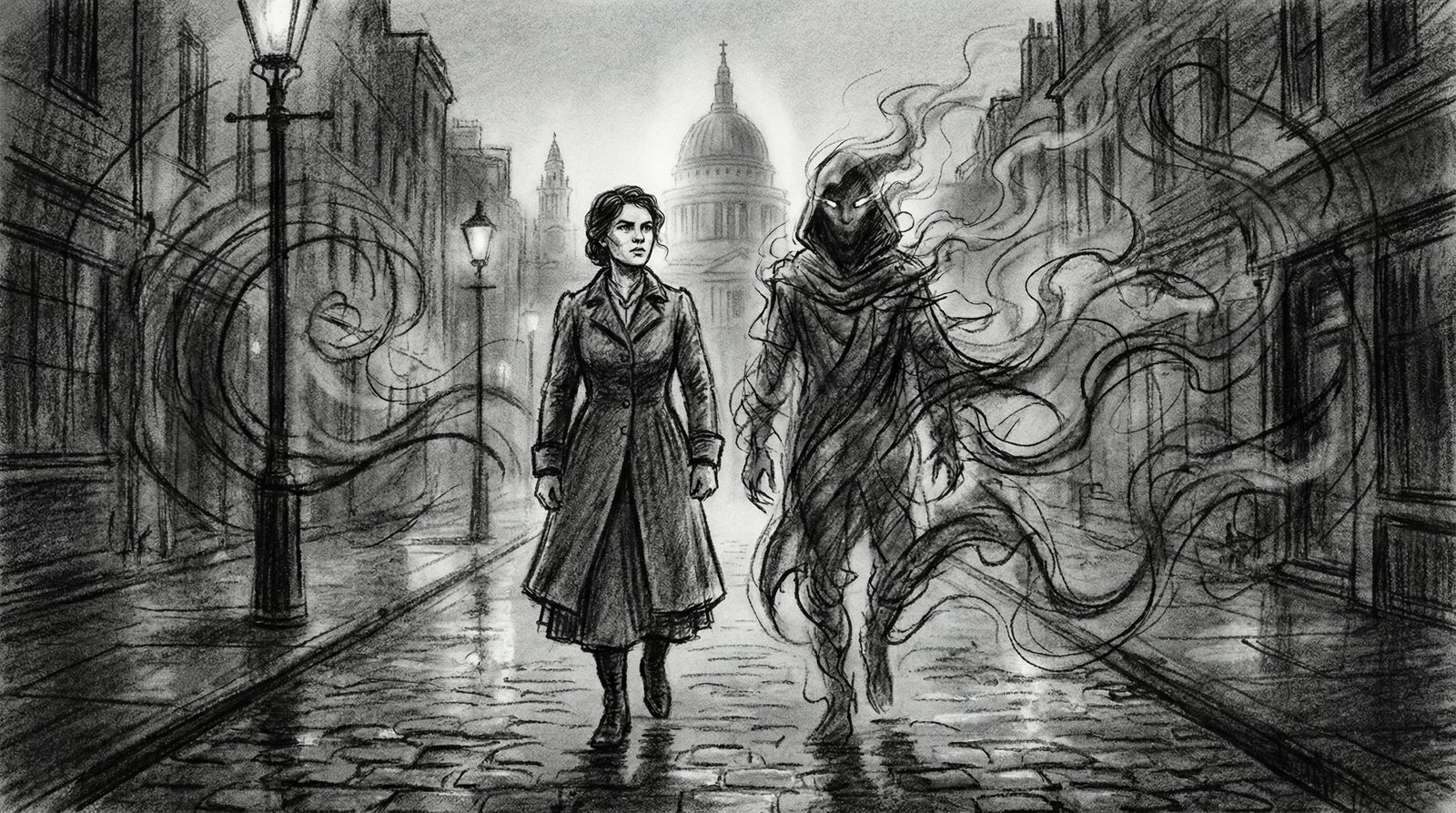
    Illustration inspired by 'Ptolemy’s Gate (2005)'

    LEGACY & RECEPTION

    Ptolemy’s Gate arrived into a market full of chosen-one finales and tidy victories and quietly did something stranger. Its ending refuses comforting closure. The “hero” does not get domestic happiness; the system does not reform itself; the cost is paid in death, exile, and unresolved rebuilding. That ethical seriousness is why readers often cite it as one of the sharpest YA fantasy finales of its decade.

    Readers and critics have singled it out as the point where the trilogy’s political teeth fully show. The blend of slapstick voice, footnoted history, and state violence influenced later YA fantasy that takes class and empire seriously. Debates still circle around whether Nathaniel’s final act redeems him or merely interrupts a corruption that cannot be undone, which is a sign of how thoroughly Stroud commits to moral gray.

    IS IT WORTH READING?

    If you’ve read the first two volumes, this one is essential. It pays off long-running grudges and jokes while deepening emotional stakes, especially in the triangle of Nathaniel, Bartimaeus, and Kitty. This is not a comforting finale, but it is brisk, inventive, and surprisingly moving, with action that never drowns out the ethical questions underneath.

    TRIVIA & AUTHOR FACTS

    Stroud wrote the Bartimaeus books while working as an editor, which shows in their tight structure and sly awareness of genre convention. This volume expands the Other Place into extended scenes where spirit existence is felt as shifting essence rather than fixed body, raising the philosophical stakes of what “freedom” would even mean for a summoned being.

    The title refers both to a literal construct — Ptolemy’s method of entering the spirit realm without coercion — and to a symbolic opening between species: a door into mutual recognition rather than domination.

    SIMILAR BOOKS

    If this book speaks to you, look for fantasies that mix wit with political bite and treat power as a corrupting technology rather than a birthright. The strongest neighbors tend to balance adventurous plotting with real moral consequence, and to treat “system collapse” as emotionally costly rather than triumphant.

    DISCOVERABILITY & LINKS

  • The Screaming Staircase (2013)

    The Screaming Staircase (2013)

    INTRODUCTION

    The Screaming Staircase (2013) by Jonathan Stroud

    Supernatural mystery · 467 pages · United Kingdom


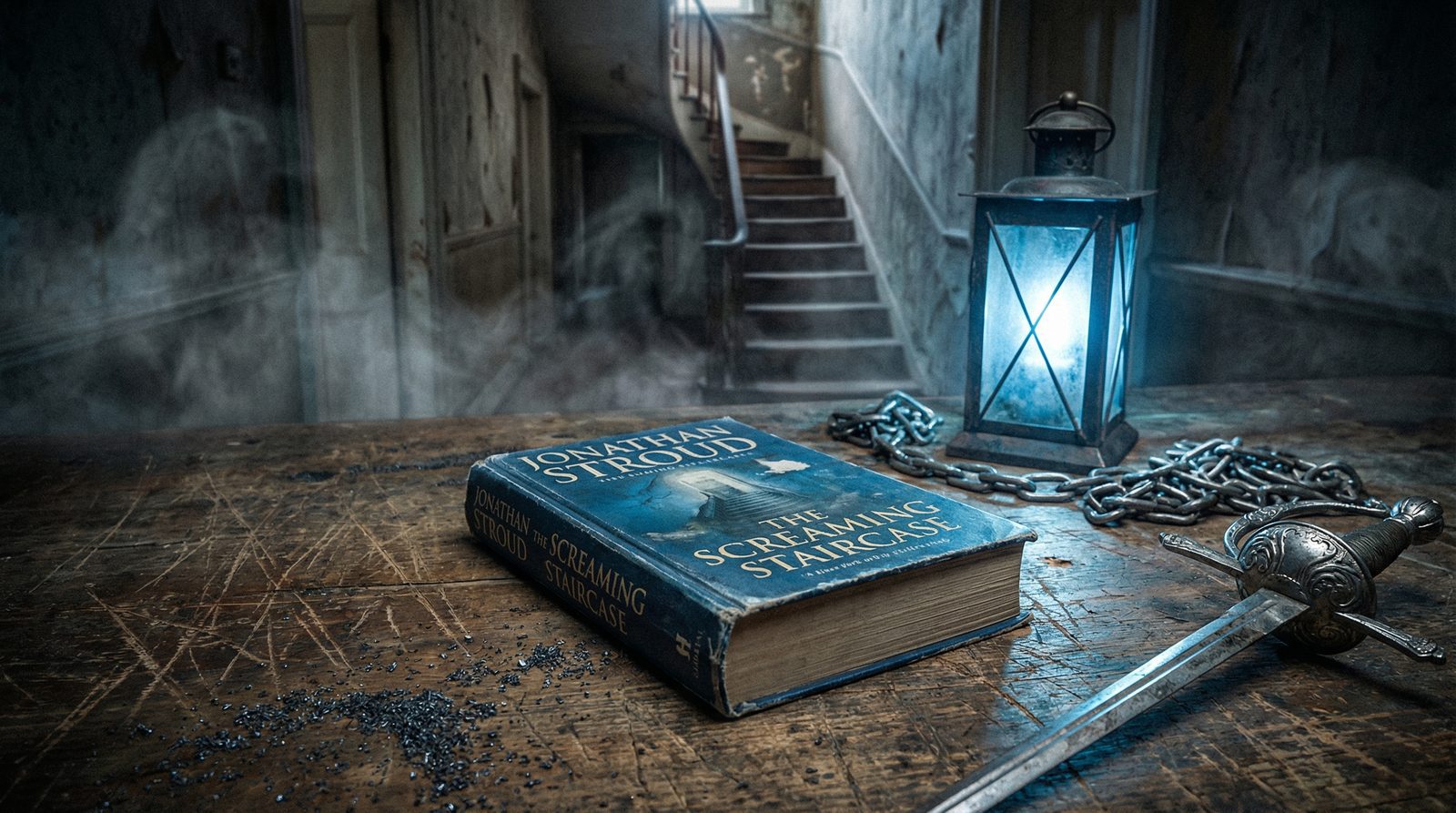
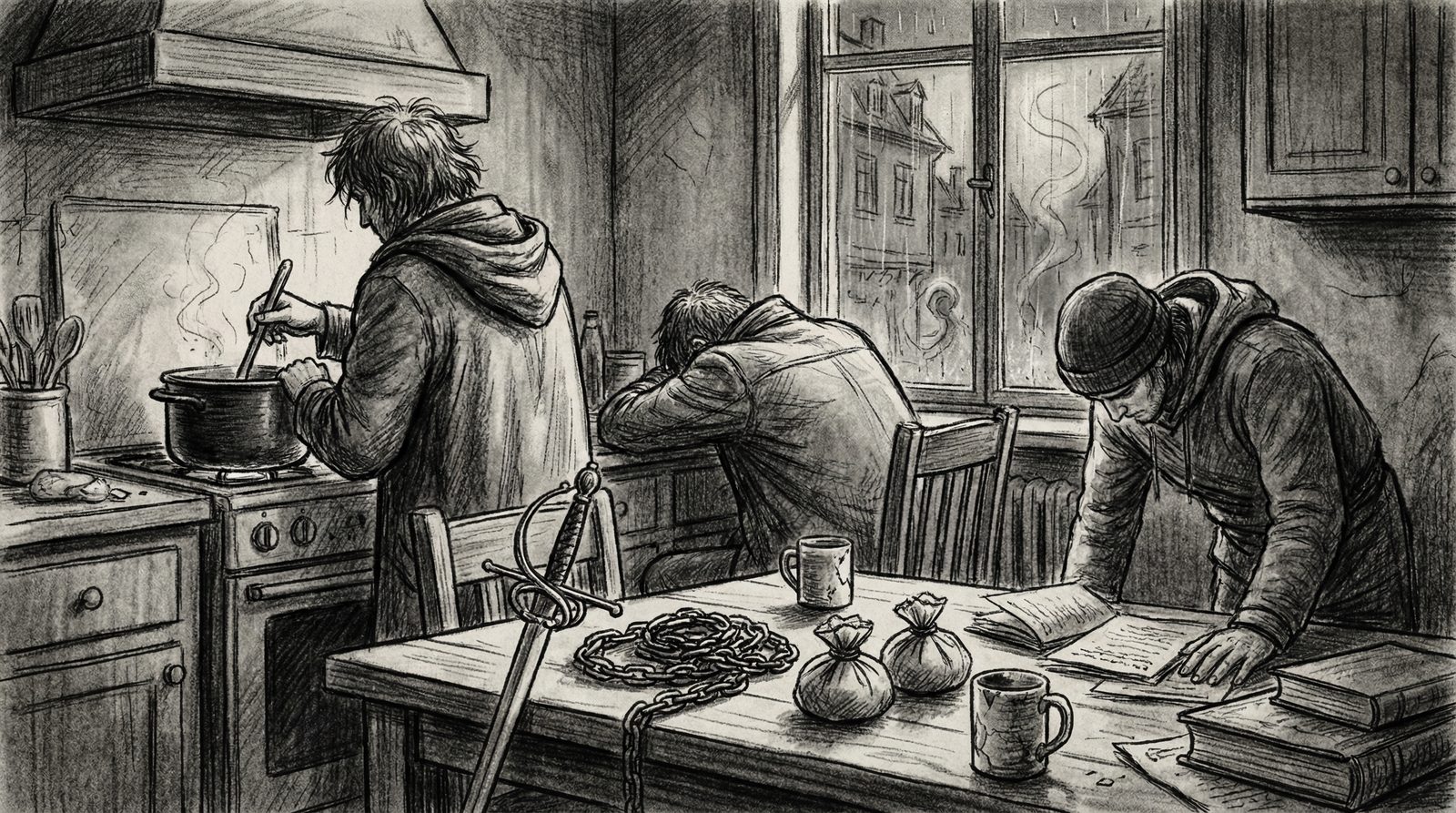
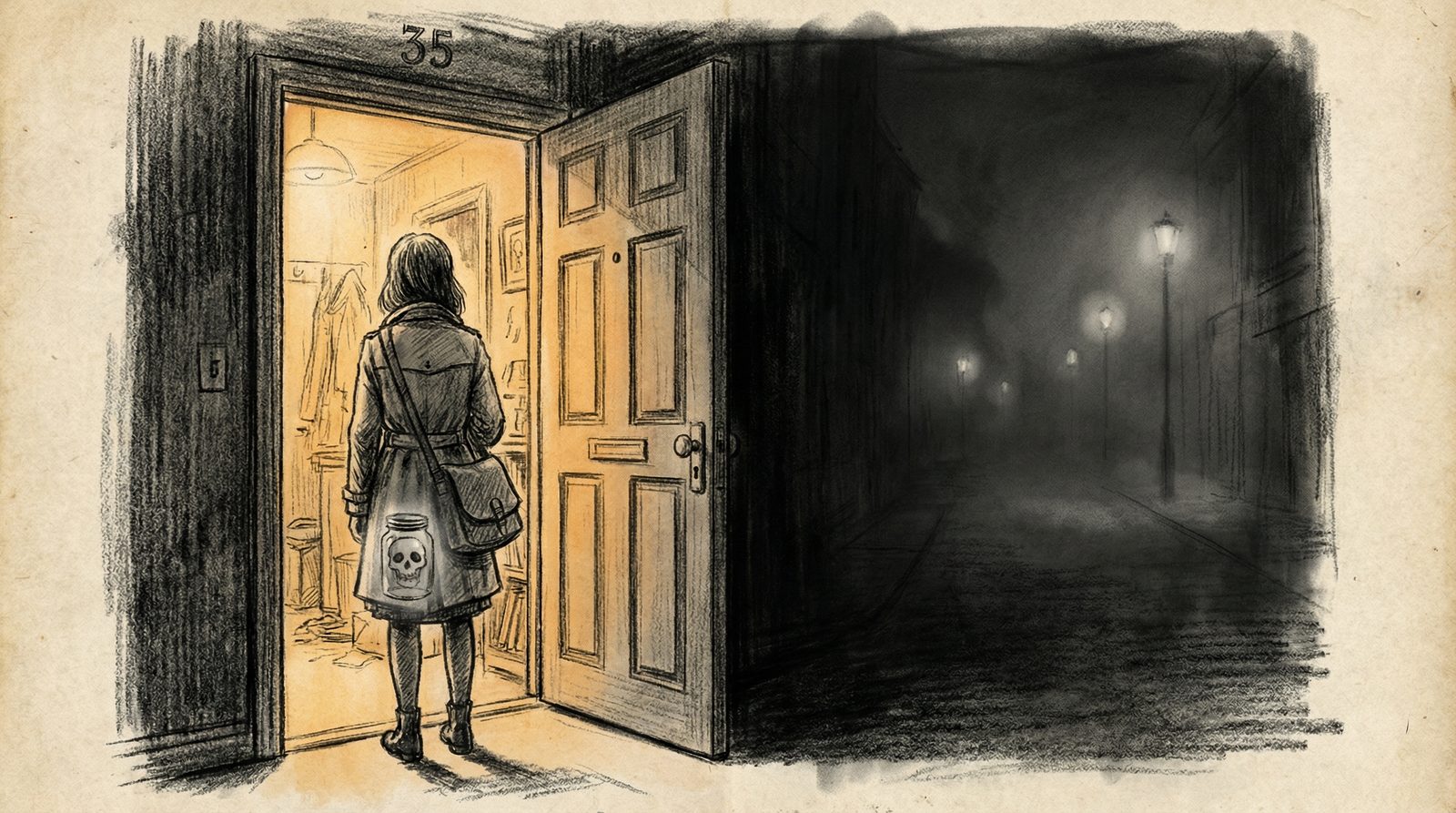
    The Screaming Staircase is a ghost story built on anxiety and ash rather than comfort. Jonathan Stroud imagines a London quietly broken by hauntings, where children carry rapiers and iron chains while adults retreat behind curfews and committees. Silence and sound run through everything: the sudden dead hush before a Visitor appears, the scrape of chains on stone, the way fear makes even ordinary rooms feel underexposed. Yet the book is also wry at the edges, especially in the kitchen scenes at 35 Portland Row, where tea and bickering become a survival ritual after near-death.

    The feel is a mix of dread and camaraderie — late-night adrenaline followed by exhausted laughter. Stroud isn’t chasing cheap shocks. He’s interested in what it means to grow up when danger is simply the weather of your world, and when the only people who will really fight for you are your equally damaged friends.

    PLOT & THEMES

    The story follows Lucy Carlyle, a young agent with the rare ability to hear ghosts, as she joins the tiny, precarious agency Lockwood & Co. After an early case damages their reputation, Lucy, Lockwood, and George are forced to take on a high-profile haunting at Combe Carey Hall to secure the agency’s future. The hall’s infamous Red Room and the Screaming Staircase become the physical heart of the plot, but the deeper theme is institutional failure: a society that cannot protect children, yet depends on them to survive.

    Stroud plays with the haunted-house investigation structure but twists it so the kids are professionals, not meddling amateurs. Smaller jobs and research threads lead toward the Combe Carey case, giving the novel a procedural rhythm. Thematically, it’s about exploitation and secrecy: Lucy’s past, the way agencies compete, and the adults who hide information while children bleed for them. Even George’s obsession with dangerous artifacts hints at the book’s moral logic: in this world, the dead are constantly being turned into tools.

    The ending is survivalist rather than comforting. At Combe Carey Hall, Lucy and Lockwood uncover the true horror beneath the staircase: a history saturated into the house itself. Lucy descends into the source space and manages to calm the dead long enough for escape as the hall burns. The case is “won,” but the victory is smoky and incomplete. The agency emerges with money and renewed reputation, but Lucy senses the Problem is far larger than one house or one wealthy villain.

    PROSE & NARRATIVE STRUCTURE

    The book uses first-person retrospective narration, with Lucy speaking from an unspecified point in the future. That choice quietly shapes everything. She withholds, circles back, and drops hints about later catastrophes, creating a braided structure: the present case narrative threaded with the shadow of earlier trauma and future consequence. The opening isn’t Combe Carey at all, but a smaller job that shows how the series can be comic in one scene and lethal in the next.

    Stroud’s prose is clean, rhythmic, and slyly funny. Sensory detail does a lot of the horror work: the sour-metal taste of ectoplasm, the greasy chill of a Visitor’s touch, the way ghost-fog muffles sound along streets and rivers. Jokes about crumbs, clothing, and petty arguments puncture tension without dissolving it. Structurally, the novel alternates between tight set pieces (the Red Room, the Staircase) and quieter interludes at Portland Row, where case files and tea become tools of worldbuilding.

    During hauntings, Stroud favors clipped dialogue and abrupt paragraph breaks that mimic the jerkiness of fear. The book reads fast, but it leaves an aftertaste, especially in the throwaway lines where Lucy implies how many names she will eventually carry as ghosts in memory.

    Conceptual editorial illustration inspired by 'The Screaming Staircase (2013)'

    CHARACTERS & INTERIORITY

    Lucy is built as a haunted prodigy: gifted, stubborn, and shaped by betrayal. Her guilt over earlier disasters colors every risk she takes. She’s not just fighting ghosts; she’s trying not to repeat the adult negligence that got people killed before she ever arrived at Portland Row.

    Lockwood is more mask than man in this first volume. Stroud withholds his backstory, letting the reader see him mainly through Lucy’s fascination and irritation. George is gloriously unglamorous: messy, obsessive, and research-driven. His friction with Lucy and his willingness to break rules for information establish him as a parallel moral center rather than a sidekick.

    The character work sings through constant friction. The trio bickers, misreads each other, and still shows up. The ghosts are frightening, but the deeper drama is three teenagers trying to build a life and a business in a world that expects them to die young.

    LEGACY & RECEPTION

    When The Screaming Staircase arrived in 2013, it entered a crowded market of paranormal YA, but Stroud’s approach felt different. He treated ghosts as a labor problem and children as underpaid professionals. Readers responded to the intricate rule-based worldbuilding — iron, salt, lanterns, agency rivalries — and to the dry humor that kept the horror from curdling.

    The series has aged well because the first book is starker than a typical genre opener. It does not promise the world will become safe. It promises only that the kids will keep working anyway, and that grim logic gives the story its bite.

    IS IT WORTH READING?

    If you want a ghost story that respects its young characters’ intelligence and suffering, The Screaming Staircase is worth reading. It’s genuinely eerie, but the real hook is the emotional texture: exhausted kids making tea at midnight, joking because the alternative is breaking down. The pacing is brisk, the humor dry, and the horror grounded in physical detail rather than abstract spookiness.

    If you need tidy moral resolutions or adults who know what they’re doing, you may bounce off it. But if you’re willing to sit with ambiguity and a world that won’t be fixed by one brave act, this first Lockwood & Co. book sets the tone sharply and rewards you for following the series forward.

    Illustration inspired by 'The Screaming Staircase (2013)'

    TRIVIA & AUTHOR FACTS

    Jonathan Stroud was already known for the Bartimaeus sequence when he began Lockwood & Co. This first volume is written with a clear long game in mind: Lucy’s retrospective voice hints at later catastrophes, and several small details become crucial later, including the locked room at Portland Row and the dangerous artifacts George can’t stop studying.

    The UK setting is not cosmetic. Stroud leans into terraced houses, foggy canals, and municipal bureaucracy to make the hauntings feel local and structural. The series began as a grounded thought experiment: what if children were the only ones who could safely do the most dangerous job in society?

    SIMILAR BOOKS

    If this book works for you, you may enjoy other stories where the supernatural collides with institutional neglect and where young people are forced into professional danger. The strongest neighbors tend to treat fear as logistical and social, not only mystical.

    DISCOVERABILITY & LINKS

  • The Whispering Skull (2014)

    The Whispering Skull (2014)

    INTRODUCTION

    The Whispering Skull (2014) by Jonathan Stroud

    Young adult fantasy · 448 pages (UK hardcover) · United Kingdom


    The Whispering Skull is where Lockwood & Co. stops feeling like a clever ghost-hunting premise and starts to feel like a haunted friendship. Stroud takes his alternate 2010s London and leans into bones, relics, and buried history. The tone stays brisk and funny, but there’s a persistent melancholy under the banter, as if every joke is being told with the cemetery gates still swinging behind you. This second book tightens focus on the small agency at 35 Portland Row and pushes them into direct conflict with both spectral threats and the petty cruelties of adult institutions.

    It’s not just about defeating Visitors. It’s about what happens to children who grow up with iron chains in one hand and a ghost-lantern in the other, and how long they can keep pretending that’s normal.

    PLOT & THEMES

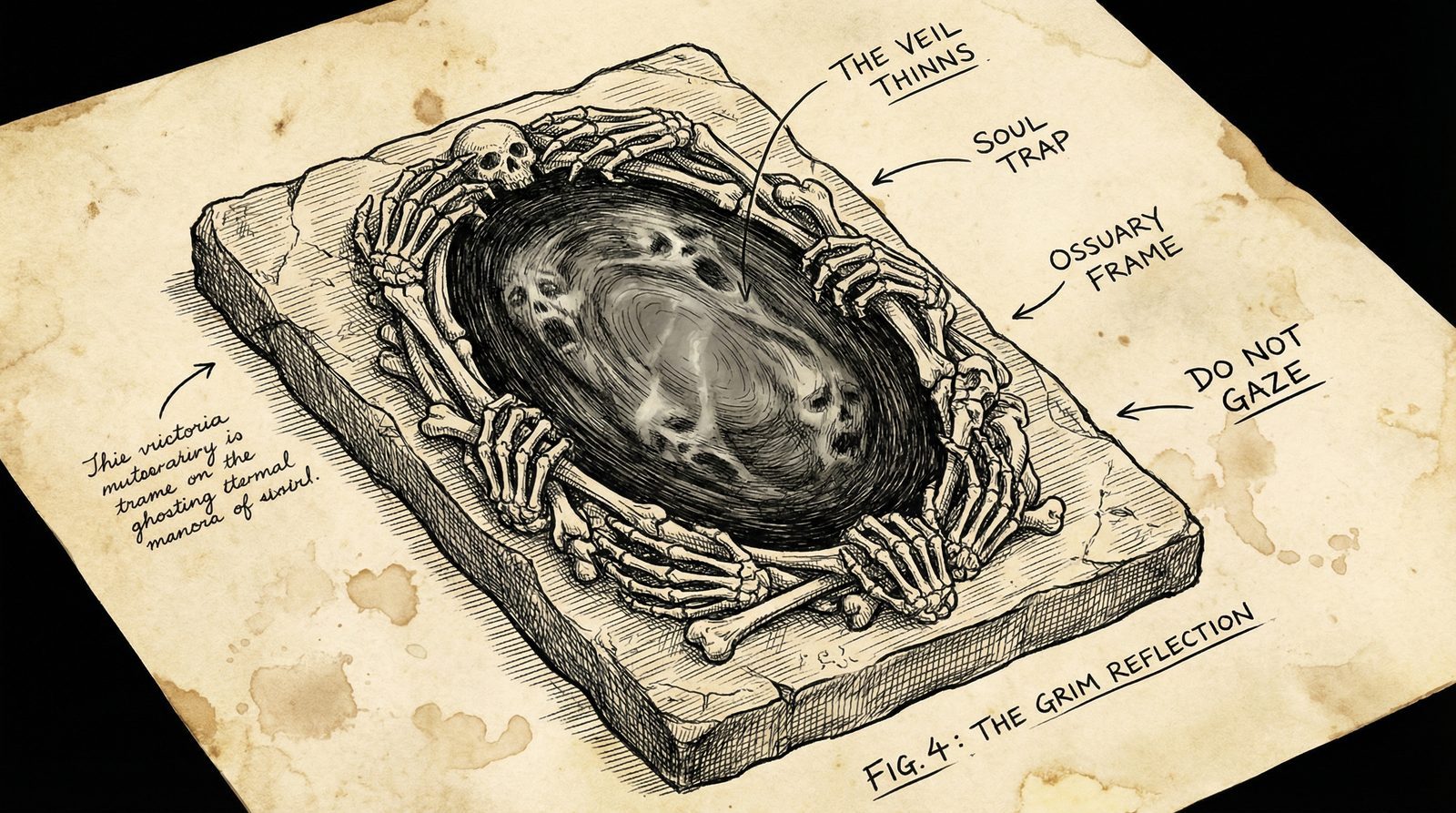
    The plot hinges on two dangerous objects: a stolen bone mirror taken from the grave of the Victorian occultist Edmund Bickerstaff, and the titular Whispering Skull, a communicative ghost sealed in a glass jar in Lockwood’s basement. The rivalry with the larger Fittes agency continues, turning every case into a contest for prestige and survival. Quill Kipps and his squad are comic foils, but they also remind the reader that Lockwood’s outfit is underfunded and one serious mistake away from ruin.

    Mirrors and reflection become the book’s central symbolic logic. The bone mirror does not merely show the past; it shows unbearable truths and functions like a psychic trap. That’s why the story keeps returning to private looking as a form of danger. The mirror’s influence on George becomes increasingly insidious, culminating in a near-fatal compulsion to face its visions alone.

    The institutional layer expands. Visits to cemeteries, research facilities, and agency strongholds hint at a wider exploitation of the Problem: not only fear management, but profit, secrecy, and competitive sabotage. The book’s procedural spine keeps the world grounded in rules and consequences, which ties naturally to the Ghost Hunting Agency motif and brushes up against Magical Bureaucracy whenever oversight and institutional obstruction enter the frame.

    The ending is clean and decisive. Lockwood, Lucy, and George confront the mirror in the catacombs and destroy it with Greek Fire, denying its power to everyone who wants to weaponize it. The final sting comes back at home: the Skull retaliates by revealing it knows something about Lockwood’s locked room and his dead sister, turning a solved case into a deeper future threat.

    PROSE & NARRATIVE STRUCTURE

    Stroud’s prose is deceptively light, and Lucy’s first-person retrospective narration gives everything a double edge. We are in the moment with a frightened, stubborn teenager, but we are also listening to a voice that already understands which mistakes will echo. That distance lets Stroud slide from kitchen banter at Portland Row into a chilling description of the bone mirror’s surface without changing gears.

    The structure alternates between set-piece hauntings and slower investigative passages: cemetery missions, mausoleum sequences, and the final catacomb descent, broken up by research in George’s paper-strewn basement and Lucy’s late-night conversations with the Skull. Those Skull scenes feel like a dangerous kind of therapy: comfort mixed with coercion. Domestic rituals — tea, toast, Lockwood’s immaculate suits — become a fragile defense against the encroaching dead.

    Action is cleanly choreographed and tactile: iron chains on stone, salt and flame, the sudden drop in temperature when a Visitor arrives. The pacing is confident because the book knows what it is doing: it keeps feeding casework forward while quietly tightening the emotional screws inside the house.

    Conceptual editorial illustration inspired by 'The Whispering Skull (2014)'

    CHARACTERS & INTERIORITY

    At the center is Lucy Carlyle, a haunted-heroine variation who is both weapon and witness. Her Listening talent makes her uniquely vulnerable to the Skull’s taunts, and Stroud lets the reader feel her mix of pride and fear whenever she pushes her ability further. Her prickliness and jealousy, especially toward rival agency figures, ground the character in mid-teen social pain rather than generic heroism.

    Anthony Lockwood remains charmingly opaque. We glimpse grief through fissures: his fury at institutional threats, his tight-lipped silence about the locked room, the way he flinches when certain names surface. George Cubbins gains sharper interiority here, with the mirror’s pull revealing how the Problem corrodes even the researcher’s sense of control. The Skull becomes the most unsettling presence of all because Lucy begins to seek its validation even as she knows it is malicious.

    LEGACY & RECEPTION

    The Whispering Skull is often remembered as the installment where the series “locks in.” The world of iron chains, ghost-fog, and child agents becomes not just a setting but a coherent system with rules and moral cost. The later screen adaptation rearranges material, but the book’s quieter achievements remain hard to replicate: Lucy’s voice, George’s creeping obsession, and the Skull’s final revelation that lands like a stone in still water.

    Within YA supernatural fiction, the novel stands out for combining procedural casework with emotional fracture. It trusts readers to sit with unresolved questions while still delivering a clean, satisfying case conclusion.

    IS IT WORTH READING?

    If you liked the first book but wanted more emotional weight and stranger ghosts, this is worth your time. It balances spectral action with character work and lets jokes coexist with dread. The horror isn’t gore; it’s standing in the dark with something whispering in your ear, telling you what you most want — and fear — to hear. If Lucy’s voice and her uneasy bond with the Skull click for you here, the rest of the series will reward you.

    Illustration inspired by 'The Whispering Skull (2014)'

    TRIVIA & AUTHOR FACTS

    Stroud’s experience with voice-driven fantasy in the Bartimaeus books shows in the Skull’s sardonic commentary. This installment continues his interest in pairing young protagonists with dangerous, talkative supernatural entities. The novel also deepens the series’ working-world logic: agencies, relic markets, regulation, and institutional secrecy layered over classic ghost story fear.

    Real London locations are tilted into the uncanny, and Stroud’s material toolkit — iron, salt, Greek Fire, sealed jars — keeps the magic tactile rather than abstract. The procedural clarity is part of the series’ signature: the rules matter, and so do the consequences of breaking them.

    SIMILAR BOOKS

    If you enjoy the mix of banter, ghosts, and real peril here, you may like other series that combine investigative structure with a strong voice and a dangerous partnership. The best matches tend to treat supernatural rules as work rules and use humor as a survival strategy rather than a mood.

    DISCOVERABILITY & LINKS

  • The Hollow Boy (2015)

    The Hollow Boy (2015)

    INTRODUCTION

    The Hollow Boy (2015) by Jonathan Stroud
    Young adult fantasy · 361 pages · United Kingdom


    The Hollow Boy is the volume where Lockwood & Co. stops feeling like a clever haunted-case series and starts to ache. The threat is still the dead, but the pressure moves inward: domestic space, loyalty, jealousy, and the cost of keeping secrets inside a house that is supposed to be safe. The agency’s home at 35 Portland Row becomes a loaded object — locked rooms, half-told stories, and a sense that the most dangerous thing is what nobody will say aloud.

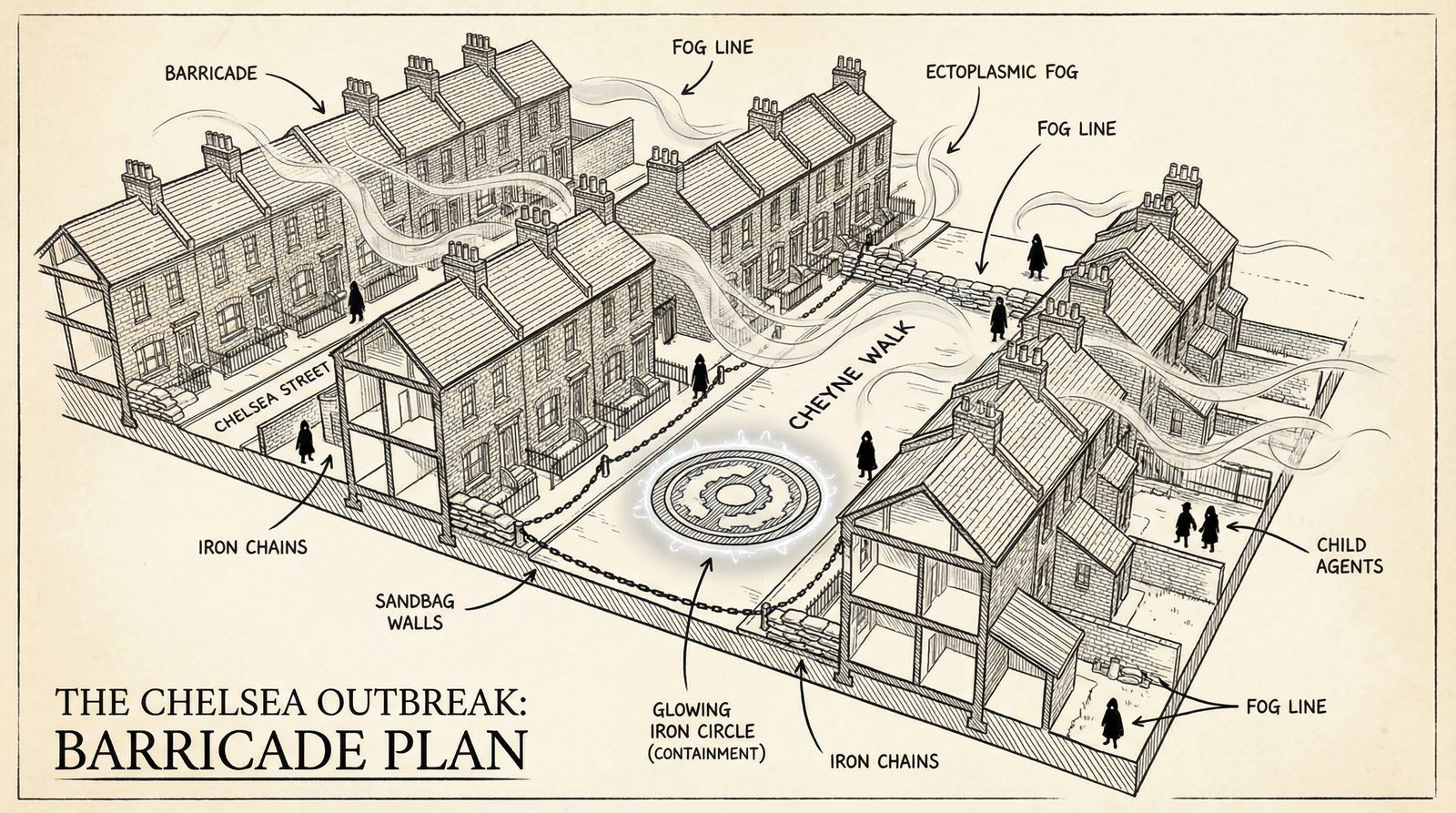
    Set in a London still trapped in an ongoing ghost crisis, the book balances night patrol thrills with the quieter feel of exclusion as Lucy Carlyle watches Holly Munro slide into the agency’s daylight hours. By the time the Chelsea Outbreak expands into a city-scale siege, the story has quietly become about fracture: how a team can survive the undead and still break apart from ordinary human fear.

    PLOT & THEMES

    The Hollow Boy opens with Lockwood, Lucy, and George in their familiar rhythm of small jobs and near-disasters, still nursing the scars of earlier cases. But London’s Problem is worsening. The Chelsea Outbreak — an expanding zone of lethal hauntings — becomes the central crisis, and Stroud threads that external escalation through a domestic upheaval: Lockwood hires Holly Munro as an assistant, and Lucy experiences her as an unwanted newcomer who threatens a fragile found-family equilibrium.

    The book widens the political map of the series through agencies, research bases, and competing teams. Chelsea is rendered as a trench-zone: fog, barricades, street closures, and a constant hum of institutional pressure. The ghost threat is never abstract; it is logistical, bureaucratic, and economic — a world where children do the dangerous work because adults can’t. That is why this book connects directly to the Ghost Hunting Agency motif and keeps brushing up against Magical Bureaucracy whenever authority and oversight enter the frame.

    Stroud refuses easy catharsis. The Outbreak is contained only through a near-fatal confrontation, and the “victory” leaves the city shaken and the team emotionally worse off. The ending lands as quiet abandonment rather than triumph: a door closing on a home that can no longer hold everyone inside it.

    PROSE & NARRATIVE STRUCTURE

    Stroud’s first-person narration sharpens here into unreliable interior monologue. Lucy is technically accurate about ghosts and danger, but skewed when it comes to her own feelings. The gap between what she reports and what she admits gives the book its sting. Domestic scenes at 35 Portland Row — reorganized rooms, shared meals, routines — are described with intimacy that makes Lucy’s resentment feel both petty and painfully human.

    Action sequences remain clipped and sensory: iron chains ringing on stone, ectoplasm freezing on skin, the dead silence inside exclusion zones. Stroud alternates these with investigative passages in archives and research spaces, creating a rhythm of sprint and stall that mirrors professional casework. The dread builds not only from hauntings, but from Lucy’s growing conviction that she is becoming a risk to the people she wants most to keep.

    Structurally, the book arcs from episodic cases toward a single massive set piece: the Chelsea Outbreak. Interludes with the skull function like corrosive commentary, an internal Greek chorus that mocks Lucy’s blind spots while still dropping warnings that are hard to ignore.

    Conceptual editorial illustration inspired by 'The Hollow Boy (2015)'

    CHARACTERS & INTERIORITY

    Lucy Carlyle is written as a wounded prodigy: gifted with Listening talent, shaped by betrayal, and vulnerable to paranoia. In this volume, her jealousy is as central as any ghost. Stroud lets the reader sit inside the hot churn of misread glances and petty inventories, making mid-teen insecurity feel ugly, funny, and accurate.

    Anthony Lockwood remains charismatic and opaque, grief flickering at the edges of his recklessness. George Cubbins anchors the group through research, stubbornness, and the long view of the Problem’s origins. Holly Munro, initially positioned as a rival presence, is gradually revealed as another damaged professional child, competent but not invulnerable. Even the skull carries a kind of interiority through its malice and pointed insight. The result is an ensemble where every relationship is slightly off-balance and every alliance feels provisional.

    LEGACY & RECEPTION

    Among readers, The Hollow Boy is often cited as the hinge where the series “grows up.” The Chelsea Outbreak pushes the books from quirky procedural into urban siege story, and the emotional stakes become as sharp as the supernatural ones. Crucially, the ending is not a reset button. The story leaves the team more fractured than before, and that refusal of comfort is part of what gives the series its lasting charge.

    IS IT WORTH READING?

    Yes — especially if you’ve enjoyed the earlier books. This is where the series’ procedural pleasures begin to carry real emotional consequence. If you want YA fantasy that can be genuinely funny one page and quietly devastating the next, and you’re willing to sit with a protagonist who makes painful choices, this is one of Stroud’s strongest volumes.

    Illustration inspired by 'The Hollow Boy (2015)'

    TRIVIA & AUTHOR FACTS

    Stroud had already built a reputation with the Bartimaeus trilogy before Lockwood & Co., and the confidence shows in how this book handles its midpoint pivot from casework to siege. The volume deepens the lore of the Problem and sharpens the institutional pressures around agencies, prestige, and child risk. Its most memorable power is not spectacle but accumulation: how many nights a person can survive before they decide they must leave to remain intact.

    SIMILAR BOOKS

    If The Hollow Boy works for you, you may be drawn to other stories where young people shoulder professional-level danger and where institutions fail quietly in the background. The strongest neighbors tend to combine investigative structure with an emotional cost that doesn’t reset at the end of the chapter.

    DISCOVERABILITY & LINKS

  • The Empty Grave (2015)

    The Empty Grave (2015)

    INTRODUCTION

    The Empty Grave (2015) by Jonathan Stroud
    Young Adult · Supernatural mystery · United Kingdom


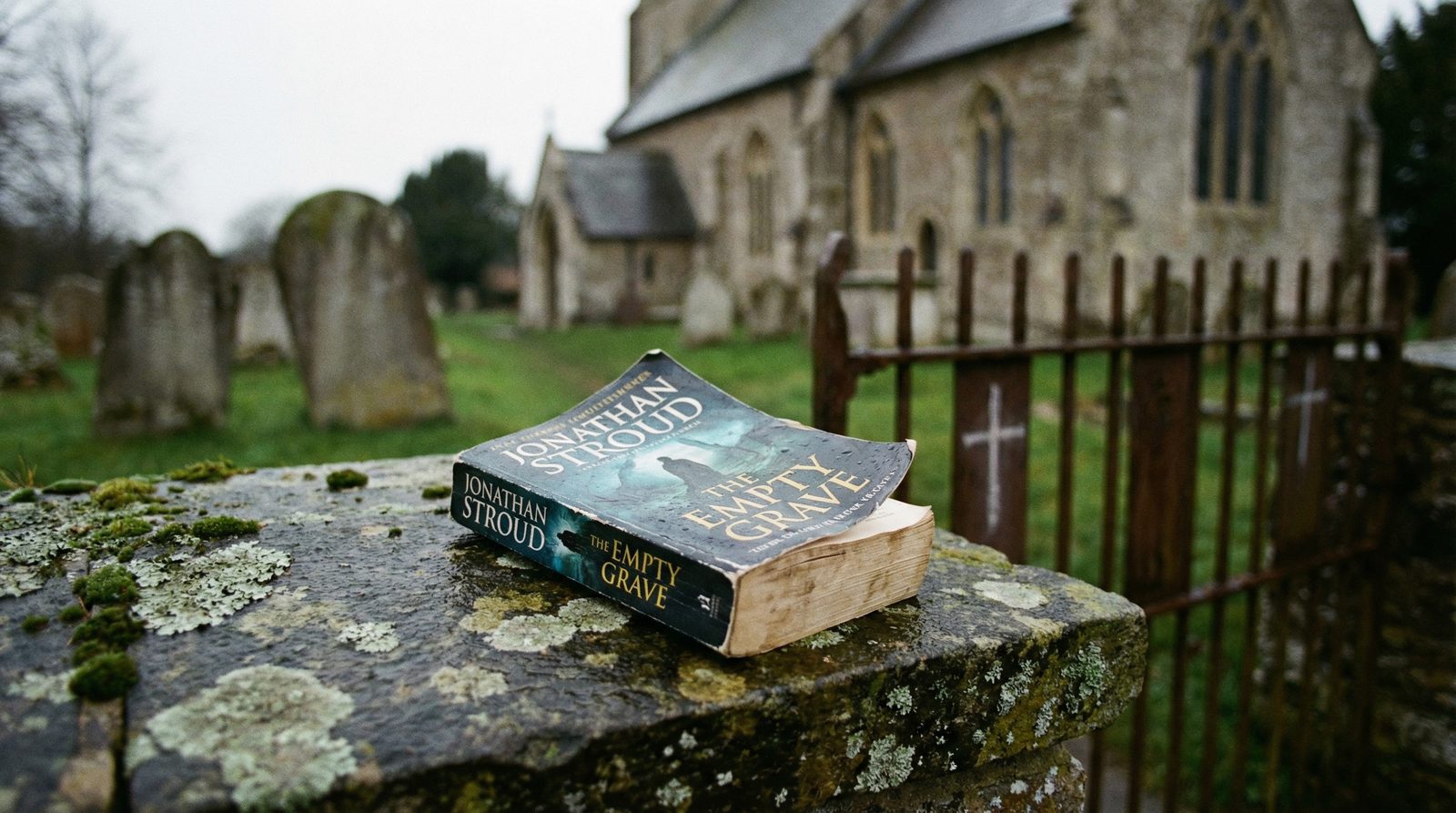
    The Empty Grave is the fifth and final novel in Jonathan Stroud’s Lockwood & Co. series, and it reads like the moment the lights go out for good. The book closes the long-running question of what caused “the Problem” and what, exactly, the ghost-hunting economy has been built to hide. It keeps the series’ signature tone — witty, anxious, and procedurally grounded — but pushes it toward revelation rather than casework.

    What makes this volume hit harder than the earlier installments is accumulation. By this point the characters have survived enough nights, enough near-misses, and enough institutional betrayal that the mystery is no longer academic. The story feels like a reckoning with systems, secrets, and the personal cost of being the one who keeps walking into haunted rooms.

    PLOT & THEMES

    The plot continues the series’ blend of investigation and danger, but with the endgame in sight. The team’s work moves from isolated hauntings toward the deeper architecture of the Problem itself — how it began, who profits from it, and what truths have been buried under official narratives. The book maintains the procedural spine of research, artifacts, and “source” logic, while tightening the conspiracy thread into direct confrontation.

    The series’ core motif, Ghost Hunting Agency, is at full force here: the danger is real, but the economy around it is just as predatory. Adults outsource risk to children, agencies compete for contracts, and reputation often matters more than safety. The final volume sharpens the moral question that’s been there all along: what does it cost to turn fear into a business model?

    The institutional layer becomes more explicit as well, overlapping with Magical Bureaucracy. Oversight bodies, official silence, and procedural obstruction create tension alongside the supernatural. In Stroud’s world, the system does not merely fail; it survives by keeping the truth partial.

    Emotionally, the book doubles down on found-family logic without turning sentimental. The agency home functions as a fragile refuge, and loyalty is framed as something earned through shared risk. By the end, “solving the mystery” and “staying human” feel like competing objectives, which is exactly the pressure the series has been building toward.

    PROSE & NARRATIVE STRUCTURE

    Stroud’s prose stays clean and fast, built for momentum and readability, but his structuring is precise. Scenes alternate between investigation (archives, artifacts, interviews) and fieldwork (night missions, trap-setting, confrontations), creating a rhythm of preparation and consequence. The final book leans more heavily toward disclosure: the pleasure is less “case solved” than “system understood.”

    Dialogue carries much of the tone — dry, teenage, and under pressure — while exposition is kept practical. Even when the conspiracy thread deepens, the book stays grounded in what the characters must physically do next: read, test, enter, survive. The result is a finale that feels like acceleration rather than a lecture.

    Conceptual editorial illustration inspired by 'The Empty Grave (2015)'

    CHARACTERS & INTERIORITY

    By the final book, the characters’ defining trait is not bravery but endurance. They are older in spirit than their age should allow, and the interior stakes are shaped by accumulated exposure to horror. The series’ best trick remains intact: the characters are funny not because the world is light, but because humor is how they keep functioning.

    Interiority is expressed through choices under pressure — what they hide, what they tell each other, what they risk, and when loyalty becomes a form of refusal against the adult systems exploiting them. The emotional arc is not “become heroes.” It is “stay intact long enough to tell the truth.”

    Illustration inspired by 'The Empty Grave (2015)'

    LEGACY & RECEPTION

    The Empty Grave functions as a structural capstone: it completes the series’ promise that the ghost problem is not only supernatural but historical and institutional. The book’s appeal is not just that it answers questions, but that it keeps the answers aligned with the series’ moral logic: adults built this world, and children were forced to clean it up.

    For readers who followed the series from the start, the final volume is satisfying because it does not abandon tone. It stays procedural, witty, and grounded even when it reaches for big revelations. It treats closure as consequence, not comfort.

    IS IT WORTH READING?

    Yes — especially if you’ve read the earlier books. This is a finale built on payoff: secrets, systems, and character loyalties coming due. If you want atmospheric YA horror with a procedural spine and an institutional critique that stays inside the story world, this series ending delivers.

    DISCOVERABILITY & LINKS

  • Shop Class As Soulcraft An Inquiry Into The Value Of Work (2010)

    Shop Class As Soulcraft An Inquiry Into The Value Of Work (2010)

    INTRODUCTION

    Shop Class As Soulcraft An Inquiry Into The Value Of Work (2010) by Matthew B. Crawford
    Nonfiction · United States


    Shop Class As Soulcraft is a philosophical memoir written with grease under its fingernails. Moving between a Washington, D.C. think tank and a Richmond motorcycle shop, Matthew B. Crawford asks why so much 21st-century work feels hollow even as it grows more “knowledge-based.” Hands-on problem solving anchors the argument: the feel of a stuck bolt giving way, the sound of an engine catching after a rebuild, the clarity of cause and effect when a machine either starts or doesn’t.

    Crawford is a trained political philosopher, but his authority here comes from the bench. He treats manual competence as a way to restore agency and attention in a culture that often treats workers—whether in cubicles or service bays—as interchangeable parts. The book’s tone is quietly defiant: it refuses to romanticize the trades while insisting that contact with material reality can train judgment in ways abstract workplaces often cannot.

    PLOT & THEMES

    This is nonfiction, so the “plot” is the arc of Crawford’s working life and thinking. He moves from a PhD in political philosophy to a job producing policy materials in Washington, then into running a motorcycle repair shop. That biographical line frames his core themes: disillusionment with abstraction, the dignity of competence, and the moral importance of work that produces visible consequences.

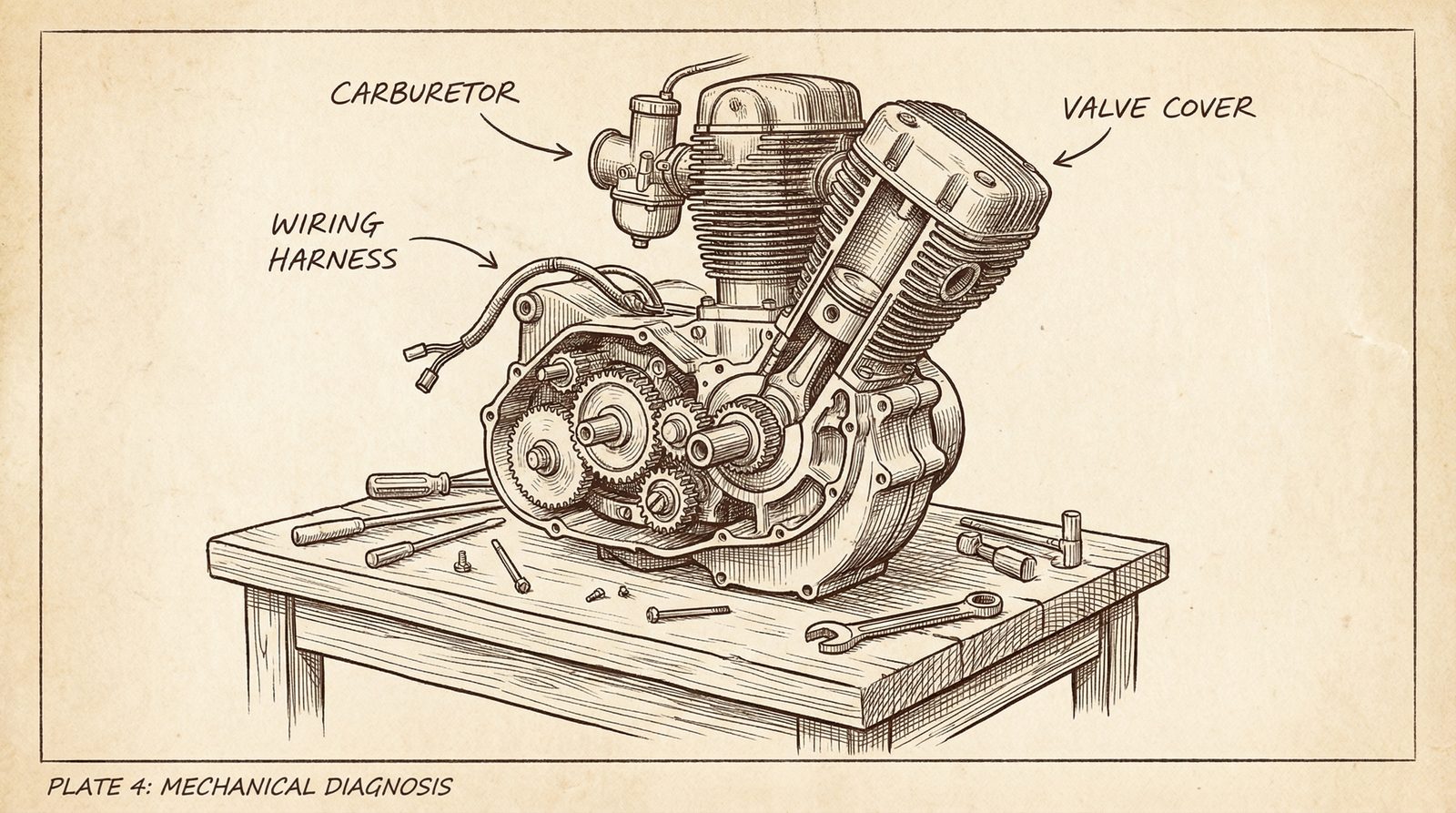
    Crawford dissects workplaces that hide real cause and effect. In the policy world, outcomes can be shaped by institutional incentives and funding rather than truth. In the shop, the stakes are concrete: tracing an electrical fault, diagnosing a misfire, and submitting to what the machine will allow. Resistance—stubborn fasteners, brittle wiring, unreliable systems—becomes a moral category. It trains patience, humility, and attention because reality pushes back.

    The book ends without a grand solution. Crawford remains inside constraints: customers, liability, finances, computerized diagnostics. The point is not escape from the market, but a life built around problems he can see and touch, and a cultivated skepticism toward any job that divorces responsibility from consequences.

    PROSE & NARRATIVE STRUCTURE

    Crawford structures the book as a braided essay, alternating between philosophical reflection and concrete shop anecdotes. Theory is repeatedly punctured by case study: a discussion of alienation slides into a story about a seized engine; a critique of managerial “knowledge” meets the stubborn truth of a stripped bolt. This interleaving keeps the argument grounded.

    The prose is plainspoken but precise. Sentences often begin in the register of the shop manual and end in the seminar room. Sensory detail is treated as cognition: listening to exhaust pulses, feeling torque through a wrench, noticing the small asymmetry that points to the true problem. The book builds force through returning images rather than linear escalation.

    First-person honesty is part of the method. Crawford admits vanity, status anxiety, misjudgments, and the cost of getting things wrong. The argument never floats free of the bench vise and service manual. It is theory built around parts diagrams rather than ideology.

    Conceptual editorial illustration inspired by 'Shop Class As Soulcraft An Inquiry Into The Value Of Work (2010)'

    CHARACTERS & INTERIORITY

    Though nonfiction, the book is full of vivid figures. Crawford himself is a philosopher-mechanic who refuses the idea that thinking belongs only to office work. Former colleagues in policy settings appear as foils, representing work that is socially “high status” but structurally detached from consequence. Customers drift through as sketches: people whose livelihoods depend on a machine starting tomorrow morning.

    Crawford’s interiority is unsparing. He records fear of having “downshifted” in status and the anxiety of slow business cycles, but also the quiet satisfaction of solving problems no one else could touch. Earned authority—knowing a machine well enough to predict its behavior—becomes a more durable identity than titles ever were.

    Secondary presences include older mechanics and mentors who carry a “vanishing guild” ethos: small rituals of the trade, bench discipline, returning fasteners to their holes, keeping an internal map of a disassembled engine. Through them, Crawford sketches a culture where things are still fixable, even as sealed devices and disposable design try to make that culture obsolete.

    LEGACY & RECEPTION

    Published in 2010, Shop Class As Soulcraft landed in the wake of the financial crisis, when many readers were newly suspicious of prestige work that produced little they could point to. The book was widely reviewed and argued over. It was praised for clarity and attacked for appearing to idealize forms of work not equally available to all. Even critics, however, often recognized the sharpness of its central claim: that responsibility requires feedback.

    The book has become a durable reference point in debates about vocational education, the decline of shop class, and the cultural status of “the trades.” Its legacy lies in its stubborn particularity. Crawford does not offer a program; he offers a lens that keeps resurfacing whenever people ask whether modern work leaves room for agency, skill, and pride.

    IS IT WORTH READING?

    If you have ever stared at a screen and wondered what, exactly, you are producing, this book will hit a nerve. Crawford refuses easy consolation about either office work or manual work. The philosophy is serious but readable, and the argument is carried by concrete scenes of diagnosis, failure, and repair. It’s worth reading not because it offers career advice, but because it asks what kind of attention your life’s work deserves.

    Illustration of a core idea or motif from 'Shop Class As Soulcraft An Inquiry Into The Value Of Work (2010)'

    TRIVIA & AUTHOR FACTS

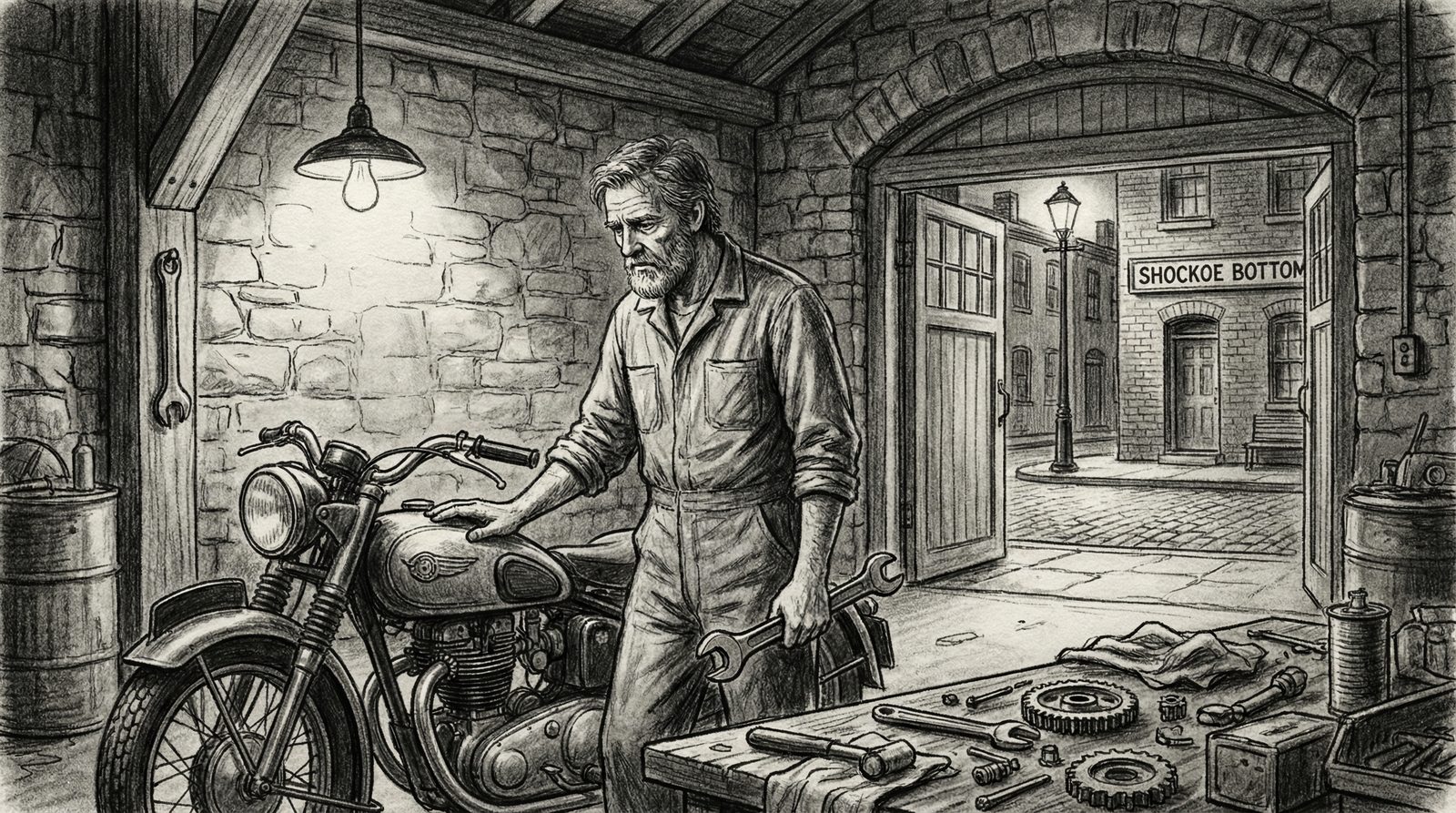
    Matthew B. Crawford holds a PhD in political philosophy from the University of Chicago. Before opening his Richmond motorcycle shop, he worked at a Washington, D.C. think tank producing policy materials, an experience that directly fuels his critique of abstraction-heavy work. His shop, Shockoe Moto, is named for the Shockoe Bottom neighborhood where it operates.

    Many of the book’s most memorable episodes come from day-to-day shop work: diagnosing intermittent failures, dealing with parts mistakes, and navigating the mismatch between customers’ expectations and mechanical reality. The book’s credibility comes from this friction: it stays close to the bench even when it reaches toward political philosophy.

    SIMILAR BOOKS

    If this book speaks to you, look for other works that treat work as moral and intellectual practice. The strongest neighbors tend to share Crawford’s insistence that “thinking” is not confined to the office and that good work is a way of being answerable to the world.

    DISCOVERABILITY & LINKS

  • The Celestine Prophecy (2006)

    The Celestine Prophecy (2006)

    The Celestine Prophecy (2006) directed by Armand Mastroianni. Spiritual drama · 99 minutes · United States. Released April 21, 2006.


    INTRODUCTION

    The Celestine Prophecy (2006) is a spiritual drama adapted from James Redfield’s bestselling novel, attempting to turn a sequence of New Age ideas into a cinematic journey. The film’s defining quality is its “illustrated lecture” structure: scenes exist primarily to deliver concepts about intuition, “energy,” and meaningful coincidence, with Peru framed as a contemplative backdrop even when the script sprinkles in gunmen and chase beats.

    The mood stays calm and meditative more often than suspenseful. For viewers who want a visual companion to the book’s worldview, that steadiness can feel like a guided workshop in narrative form. For viewers expecting a thriller with spiritual seasoning, the same steadiness can feel like the movie is constantly interrupting itself to explain what it means.

    PLOT & THEMES

    The plot follows John, a disillusioned schoolteacher, who is pulled toward Peru through a chain of coincidences that the film treats as evidence rather than convenience. He learns of an ancient manuscript describing Nine Insights about human evolution and spiritual perception. The story is structured as a staircase of lessons: each new guide introduces an Insight, John absorbs it, and the narrative advances to the next checkpoint.

    The film’s main themes are spiritual awakening and the tension between control and surrender. Synchronicity functions as plot armor and worldview proof at the same time: John’s “progress” depends less on tactics than on alignment, attention, and willingness to be guided. The journey itself is the inner transformation. Physical movement through jungle ruins is mainly there to keep the teaching structure in motion.

    There is also a mild institutional critique. Authority figures—religious, military, corporate—are framed as forces that fear the manuscript because it loosens control. This conflict exists mostly to provide pressure between lessons; the real escalation is conceptual. The script doesn’t raise stakes by deepening danger so much as by deepening explanation, which is exactly why the film feels more like instruction than suspense.

    CINEMATIC TECHNIQUE & AESTHETICS

    Mastroianni leans hard on natural lighting and wide location framing to create an atmosphere of sanctuary. The Peruvian setting is photographed with stillness in mind, which produces a tonal friction: the camera wants contemplation even when the plot wants urgency. That mismatch is one reason the film’s action beats can feel airy or weightless.

    The movie uses voiceover frequently as a safety net, compressing and clarifying the Nine Insights so the “lesson” does not get lost. Dialogue scenes tend to be staged in simple two-shots with minimal blocking, prioritizing clarity of speech over visual dynamism. When the script turns to “energy fields,” the film uses soft-focus glow and restrained effects that suggest metaphor more than physics.

    Editing remains unhurried. The rhythm favors conversation and reflection, which supports the film’s instructional goals but weakens conventional tension. The overall experience is closer to a filmed retreat session than a genre adventure, and the film’s success depends on whether a viewer wants that.

    Editorial illustration inspired by 'The Celestine Prophecy (2006)'

    CHARACTERS & PERFORMANCE

    John is built as a Seeker archetype: decent, skeptical, and primed for change. The performance is intentionally low-key, keeping him receptive rather than commanding. That passivity fits the film’s worldview—follow the signs—but it can make the protagonist feel more like a viewpoint character than a driver of events.

    Supporting characters arrive as functional archetypes: mentors who deliver each Insight, skeptics who voice audience resistance, and authority figures who represent control. Performances stay calm and seminar-like, even in danger. This helps preserve the film’s meditative feel, but it also flattens suspense because characters rarely behave like people who believe they might die.

    CONTEXT & LEGACY

    The core challenge of this adaptation is structural. The novel’s appeal is idea-first revelation: readers can linger inside interior “insights” without needing behavior to carry them. Film is less forgiving. Here, the adaptation chooses doctrinal fidelity over cinematic transformation, leaning into explanation even when that reduces drama.

    Commercially, the film failed to convert the book’s massive readership into a mainstream movie audience, and it became a cautionary example of how difficult it is to adapt a didactic self-help narrative without either turning it into a sermon or betraying its point. Its lasting impact is mostly within spiritual/self-help circles, where it continues to function as a reference object for synchronicity language and “energy” framing rather than as a widely admired piece of cinema.

    IS IT WORTH WATCHING?

    It depends on what you want. If you’re already invested in Redfield’s worldview, the film can work as a calm, visual companion piece, giving landscape and faces to ideas you may have first encountered on the page.

    If you’re looking for a gripping adventure or a spiritually themed thriller, it will likely disappoint. The jungle setting and chases are secondary. The primary experience is listening to a worldview explained repeatedly, with the story serving as delivery mechanism.

    Symbolic illustration inspired by 'The Celestine Prophecy (2006)'

    TRIVIA & PRODUCTION NOTES

    The film was produced with direct involvement from James Redfield, which helps explain its fidelity to the terminology and teaching structure of the novel. Much of the dialogue about the Nine Insights is close to the book’s wording, prioritizing doctrinal clarity over naturalistic speech.

    Depicting invisible “energy” on a modest budget led to soft, restrained visual choices: glow, bloom, and subtle aura-like effects rather than heavy CGI. Voiceover is used to tie together the episodic lesson structure and keep the didactic spine explicit.

    SIMILAR FILMS

    If you respond to the film as a spiritual-journey object rather than a thriller, you may prefer other works where travel and encounter produce gradual inner change. In this site’s current cluster, the closest neighbors are films that treat movement as moral pressure rather than spectacle.

    DISCOVERABILITY & LINKS

  • Easy Rider (2012)

    Easy Rider (2012)

    Easy Rider (2012) directed by James Benning. Experimental · 97 minutes · United States.


    INTRODUCTION

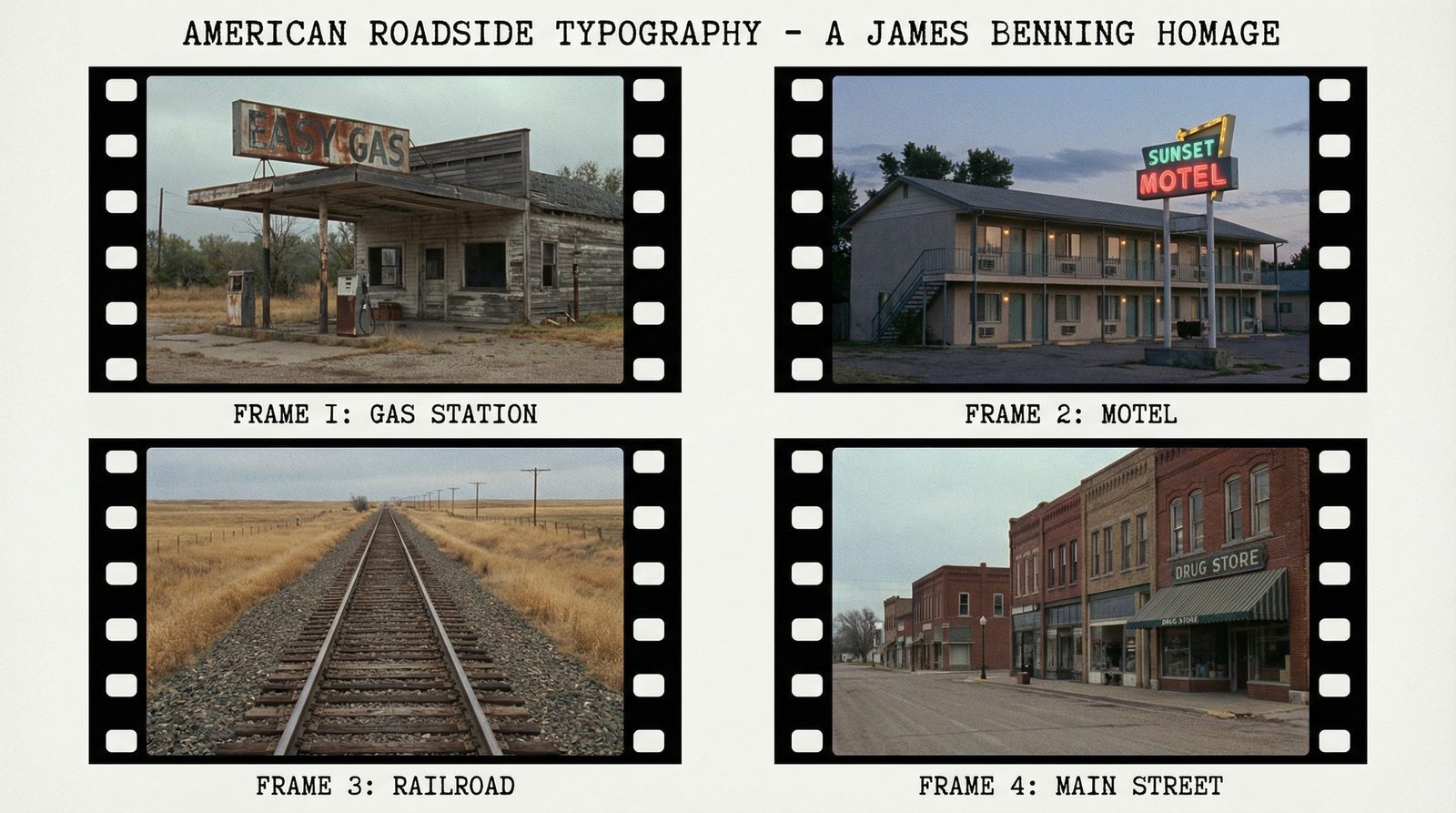
    James Benning’s Easy Rider (2012) is not a remake so much as a séance. He revisits locations associated with Dennis Hopper’s 1969 Easy Rider, strips away the bikers, the drugs, the road-movie chatter, and leaves only landscapes and ambient sound. The result feels patient, haunted, and quietly confrontational. Where the original surfed countercultural velocity, Benning lingers on what remains after the dream drains away.

    The film sits somewhere between gallery installation and cinema, asking viewers to meet it halfway and supply memory as context. If Hopper’s film was about forward motion, this one is about staying put and listening. The American West appears as both a physical place and a faded idea. It becomes a road movie without a road, an anti-spectacle about looking, duration, and the afterlife of myth.

    PLOT & THEMES

    There is almost no plot in Easy Rider (2012). The “story” is a sequence of fixed shots filmed at or near locations connected to the 1969 film’s itinerary. Where Hopper followed charismatic outsiders on a doomed cross-country trip, Benning removes character and incident but keeps the route as an invisible skeleton. The narrative becomes whatever the viewer remembers, projects, or resists.

    The core themes are memory, the American Dream, and the erosion of counterculture. By revisiting these sites decades later, Benning invites us to measure the distance between a 1960s fantasy of freedom and a present shaped by highways, strip malls, and fenced-off land. The “open road” is no longer pure symbol. It’s infrastructure, habit, and noise.

    Another strong motif is ghostly absence. Benning never shows the 1969 Easy Rider directly, yet its ghosts hover over every frame. The film functions like a palimpsest: we see the present landscape while mentally overlaying earlier scenes and cultural memory. The mood is meditative rather than nostalgic, with a faint ache underneath the calm surfaces. It’s less about rebellion than about what rebellion leaves behind.

    CINEMATIC TECHNIQUE & AESTHETICS

    Formally, Easy Rider (2012) is built from long takes and static framing. Each location is held for an extended duration with the camera locked off. This durational approach forces a different rhythm of attention. Instead of cutting to guide the viewer, Benning lets small details emerge over time: a shift in light, a passing car, wind in scrub, or the slow realization that “nothing happening” is the point.

    Benning’s static compositions are deceptively simple. Roads bisect frames, power lines draw grids, and horizons settle into a mathematical calm. The lack of camera movement creates a contemplative feel, encouraging the viewer to scan the image and notice texture. The film is rigorous about place: the image does not exist to serve narrative; narrative is something the viewer manufactures while looking.

    Sound design is crucial. Ambient sound replaces dialogue and score. We hear engines, birds, distant traffic, sometimes a near-oppressive quiet. This observational soundscape anchors images in real time and refuses romanticization. Benning’s refusal of conventional coverage—no close-ups, no reverse shots, no explanatory montage—underscores his interest in duration and environment rather than character psychology.

    Editorial illustration inspired by 'Easy Rider (2012)'

    CHARACTERS & PERFORMANCE

    There are no conventional characters in Easy Rider (2012). The landscapes take on the role of a kind of landscape-as-character presence: gas stations, highways, rural fields, small-town streets. In the absence of actors, the viewer projects personality and history onto space. The film banks on cultural memory of road mythology to fill in the blanks.

    When humans appear, they are incidental. They are not framed as protagonists or even supporting players, only as elements of the environment moving through public space. The “performance” happens in the viewer’s mind, in the act of remembering and in noticing the gap between then and now. The film’s emotional temperature depends on how strongly you feel that gap.

    CONTEXT & LEGACY

    Easy Rider (2012) sits within James Benning’s long project of filming American landscapes with forensic patience. It also participates in a broader current of experimental re-visitation, where cinema interrogates its own myths by returning to places rather than re-staging scenes. Benning’s choice of Easy Rider as a source text is telling: the 1969 film crystallized a dream of American freedom tied to mobility and rebellion. Benning returns to the locations decades later to measure what that dream looks like as infrastructure.

    The film’s legacy is mostly art-house and academic rather than mainstream. It functions as a reference point in discussions of landscape cinema, structural film, and the afterlife of counterculture. Its radical gesture is simple: record a place long enough that the viewer can no longer pretend it’s just a background.

    IS IT WORTH WATCHING?

    Whether Easy Rider (2012) is worth your time depends on your tolerance for minimalism. If you come expecting narrative propulsion and soundtrack-driven momentum, this will feel austere, even alienating. There is almost no dialogue, no character arc, and no conventional story payoff.

    If you are interested in experimental film, landscape studies, or the way cinema remembers and erases, it can be quietly rewarding. The film offers a sustained opportunity to think about attention: what happens when a movie refuses to entertain you into meaning and instead asks you to construct it.

    Symbolic illustration inspired by 'Easy Rider (2012)'

    TRIVIA & PRODUCTION NOTES

    Benning is known for meticulous preparation, and Easy Rider (2012) fits that pattern. He tracked down locations tied to the earlier film and revisited them with a stripped-down production method designed to preserve real light and real time. What would be a throwaway establishing shot in another movie becomes an entire scene here.

    The film’s structure is shaped by durational choices rather than plot beats. Weather, light, and incidental human movement become the “action.” The approach links this film to Benning’s broader landscape work, where the drama is not who wins or dies, but what remains visible when you stop rushing.

    SIMILAR FILMS

    If Easy Rider (2012) works for you, you may enjoy other films built around duration, place, and the viewer’s attention rather than narrative closure. Pairing this film with the 1969 Easy Rider also makes a potent double feature: one riding through the myth of the American West, the other sitting with its lingering traces.

    DISCOVERABILITY & LINKS

  • Jonathan Stroud

    Jonathan Stroud

    ORIGINS & BACKGROUND

    Jonathan Stroud is best known for character-driven fantasy that treats magic and ghosts less as glitter and more as workplace hazards. Across the Bartimaeus books and Lockwood Co, he builds systems where the supernatural is managed through procedure, rivalry, and institutional pressure. The result is adventurous fiction with sharp humor on the surface, but a steady preoccupation with power, responsibility, and the cost of survival.

    Stroud grew up and works in the United Kingdom, and his writing carries a distinctly British blend of dry wit, skepticism about authority, and affection for creaky institutions. Before becoming a full-time author, he worked as an editor in children’s publishing, which shows in his pacing, his clarity, and his instinct for what younger readers can handle emotionally without diluting the stakes.

    In the Bartimaeus sequence, beginning with The Amulet Of Samarkand (2003), Stroud imagines an alternate London run by magicians whose power depends on enslaved spirits. The setting is recognizably urban and modern, but filtered through history and satire. Later, with Lockwood Co and its opening novel The Screaming Staircase (2013), he shifts to a haunted London where children are the only effective defense against ghosts, creating a precarious professional ecosystem built on risk and exploitation.

    Rather than foregrounding personal trivia, Stroud lets background appear sideways: in memos, disciplinary language, petty rivalries, and the weary tone of officials who enforce rules they don’t fully understand. His worlds feel plausible because they behave like institutions, not fairy tales.

    Editorial illustration inspired by 'Jonathan Stroud'

    THEMES & MOTIFS

    A central engine in Stroud’s work is Magical Bureaucracy. In The Amulet Of Samarkand, magicians behave like civil servants and politicians: rule-bound in public, ruthless in private, and willing to weaponize procedure for personal gain. The supernatural is powerful, but the real leverage often sits in permissions, rank, and punishment.

    His later haunted-London world sharpens the logic of the Ghost Hunting Agency. In The Screaming Staircase, child sensitivity to ghosts becomes a professional resource, which turns bravery into an economic model. Young agents are praised, needed, and quietly treated as replaceable. Stroud returns to the tension between competence and vulnerability, showing how systems rely on the people they endanger.

    Power and servitude run through both series. In the Bartimaeus books, magic depends on exploitation, and the narrative keeps circling back to complicity and resistance. Even when characters benefit, the moral abrasion remains. In the ghost-agency world, power sits in information: who controls records, who sets policy, and who is allowed to define what “safe” means.

    Stroud also favors motifs of unreliable authority and buried history. Official explanations are rarely complete, and protagonists win by uncovering what institutions have forgotten or concealed. Alongside this is a quieter thread of found family, where humor and banter function as a survival tactic rather than sentimentality.

    Across his work, the motif systems are not window dressing. They are engines that let Stroud ask how much moral agency is possible inside structures built to reward compromise.

    Symbolic illustration inspired by 'Jonathan Stroud'

    STYLE & VOICE

    Stroud’s style is marked by wit, structural playfulness, and an unhurried confidence with worldbuilding. In the Bartimaeus books, he uses footnotes and a sardonic first-person voice to let the djinni comment on events, undercutting solemnity with sarcasm. The humor sharpens the critique rather than softening it, keeping power and procedure in view even during action.

    In Lockwood Co, the narrative voice is more direct but still dry and observant. Scenes of investigation and confrontation are tightly staged, with clear physical space and escalating dread. Stroud often alternates eerie fieldwork with domestic or office-like scenes inside the agency, which keeps the supernatural grounded in routine and logistics.

    His pacing favors accumulation over shock. Mysteries unfold through clues, conversations, and small revelations, with early details paying off later. Dialogue carries emotional weight, especially when characters test each other’s loyalty under pressure. Even in intense moments, Stroud avoids melodrama, creating a tone that is adventurous, eerie, and quietly bitter.

    KEY WORKS & LEGACY

    The Bartimaeus series, launched with The Amulet Of Samarkand, established Stroud’s signature blend of satire and stakes. It crystallizes his interest in institutions, exploitative power, and the ethics of control, using the human magician and the djinni Bartimaeus to show the same system from opposing angles.

    The Screaming Staircase launched his ghost-agency world, where the horror is constant but the economy is what makes it brutal. Stroud imagines a society reshaped by a long-term haunting crisis and centers young agents whose competence is essential while their safety is treated as negotiable.

    Stroud’s enduring appeal lies in how he marries adventure with skepticism. His worlds are full of djinn and ghosts, yet the real threats are often contracts, ministries, rival firms, and the compromises people make to survive inside systems that reward the worst instincts. That tension gives his fiction resonance beyond its immediate thrills.

  • Athletic Discipline As Spiritual Practice

    Athletic Discipline As Spiritual Practice

    DEFINITION & CORE IDEA

    Athletic Discipline As Spiritual Practice is a motif where physical training becomes a method of inner change. A character may begin by chasing medals, approval, or bodily perfection, but the story steadily redirects the goal away from external victory. Repetition and pain function as meditative practice rather than punishment, reshaping attention, ego, and self-understanding through the body.

    Writers use this motif to argue that insight does not require a monastery. It can emerge at dawn, under fluorescent lights, through breath control, posture, balance, and endurance. The body becomes a closed system the character can actually work with. By mastering effort inside that finite space, the character develops a template for meeting uncertainty outside it.

    Dan Millman’s Way Of The Peaceful Warrior stands near the center of this motif because the mentor figure reframes training as awareness rather than achievement. Drills are not abandoned, but their meaning changes. What matters is not the score, but what collapses and what remains when the character can no longer hide behind performance.


    HOW IT WORKS IN STORIES

    Stories built on this motif often begin with a narrow definition of progress. The character believes effort produces results in a straight line. Training sequences follow familiar sports beats because the worldview is still mechanical: more work equals more worth.

    The pivot arrives when the body stops cooperating with the ego. Injury, exhaustion, or humiliation exposes the limits of willpower. A mentor, breakdown, or enforced pause introduces a consequence-driven question: who are you when success is unavailable, and what social or internal hierarchy collapses when that identity fails?

    Narrative tension is resolved through physical sensation rather than dialogue. Training is shown in close detail: breath, soreness, boredom, micro-adjustments, the mental noise that surfaces once distraction is stripped away. When the character tries to dominate the process, they become brittle. When they commit to the process without bargaining, the first shift is practical: staying present inside discomfort without turning it into self-punishment.

    By the middle of the story, the competition may still exist, but it no longer functions as the climax. The decisive moment is a choice: leaving a destructive coach, accepting limits without collapse, or returning to training after crisis with a different internal metric. External outcomes matter less than whether the character can remain steady under pressure.

    By the end, the discipline generalizes. The character faces grief, conflict, or uncertainty the way they face a long session: one breath, one repetition, one return to form. In some stories this logic is explicit through martial traditions that frame training as “the way.” In others it remains secular. Either way, training becomes a usable philosophy rather than a machine for validation.


    Editorial illustration inspired by 'Athletic Discipline As Spiritual Practice'

    EMOTIONAL EFFECT ON THE READER

    This motif often leaves readers both energized and calm. There is satisfaction in routine, effort, and incremental mastery, paired with a quieter pleasure: watching mental noise recede as attention narrows to the present task.

    Readers who have trained seriously tend to feel recognized. The motif validates the private hours that never appear on highlight reels. It frames repetition and boredom as meaningful labor, not wasted time, especially when insight arrives through failure rather than applause.

    For other readers, the motif functions as invitation. It suggests meaning does not require ideal conditions. One can begin with breath, posture, and effort. That promise is reassuring precisely because it is ordinary and sustainable.

    There is also a melancholy edge. After the event ends and the crowd disperses, the character still has to live inside their body and choices. The story often closes in that integration space, where discipline must survive everyday life without the scaffolding of competition.


    Symbolic illustration inspired by 'Athletic Discipline As Spiritual Practice'

    VARIATIONS & RELATED MOTIFS

    This motif appears in several stable variations. One emphasizes mentorship: a coach uses paradoxes, chores, or repetitive drills to dismantle status-hunger and redirect attention. Another emphasizes solitude, following athletes who train alone or recover in isolation, where boredom and fear become the primary teachers.

    The motif overlaps naturally with Awakening Through Physical Injury, where pain or limitation forces a reassessment of purpose. It also aligns with Spiritual Awakening and Inner Journey, because insight is earned through repetition rather than revelation.