
Period: 21st Century

  • Spiritual Pilgrimage

    Spiritual Pilgrimage

    DEFINITION & CORE IDEA

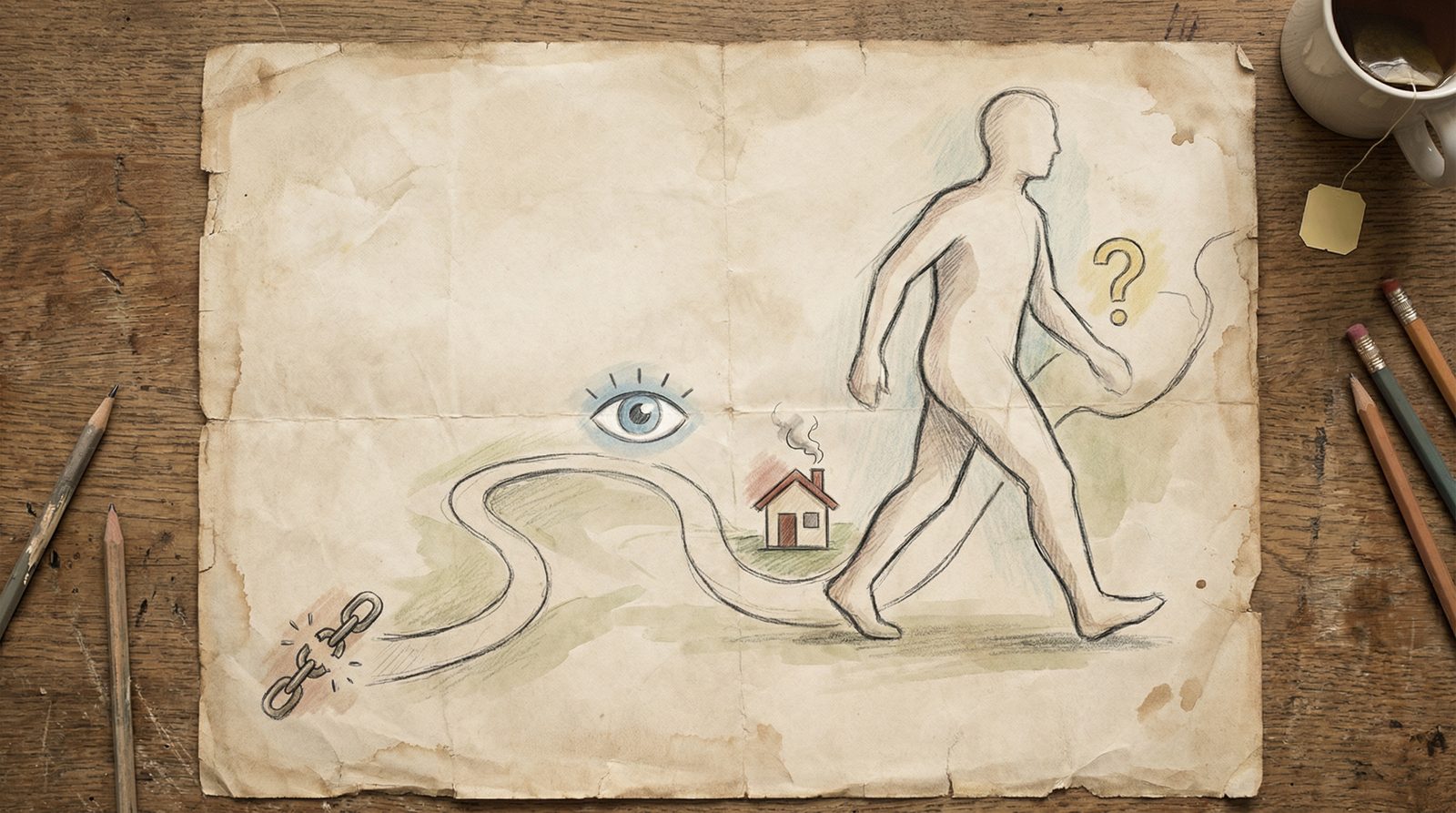
    A Spiritual Pilgrimage is a journey narrative where the stated destination is secondary to internal change. The protagonist may travel to a sacred site, follow a prophecy, or chase a promised revelation, but the journey functions as a structured sequence of tests designed to produce belief change, moral recalibration, or a new self-concept. The road is not backdrop. It is the mechanism.

    Stories like The Pilgrimage, The Alchemist, Siddhartha, and The Celestine Prophecy use travel as a didactic structure. Encounters are not random. Each guide, stranger, or obstacle is positioned to challenge a specific assumption and force a decision. The motif is built to convert movement into meaning through repeated, concrete choices.

    At its core, a Spiritual Pilgrimage treats geography as allegory. Terrain and logistics mirror internal states. A detour becomes a correction, a delay becomes a test of attachment, and reaching the destination often reveals that the “goal” was a sustaining pretext for transformation. The real arrival is a changed interpretive frame, not a point on a map.


    HOW IT WORKS IN STORIES

    The trigger is usually a sense of lack. The protagonist begins with spiritual numbness, restlessness, grief, or moral confusion. A call to travel appears, and the character steps away from familiar structures into uncertainty. This transition matters because the motif requires removal from the old context before the belief system can be tested.

    The journey then unfolds as iterative lessons. In The Pilgrimage and The Alchemist, the road is populated with omens, mentors, and small reversals that challenge the hero’s assumptions about success and failure. In Siddhartha, the river functions as a persistent teacher, reshaping the protagonist’s understanding of time, suffering, and enlightenment. The Celestine Prophecy builds its arc around sequential “insights” delivered through encounters that mix guidance with threat.

    Obstacles are rarely only physical. Hunger, fatigue, getting lost, and missed connections work on two tracks at once: logistics and revelation. A storm can be a crisis of faith. A wrong turn can be a confrontation with ego. Temptations to stop often arrive as comfort—safety, certainty, and social approval—so continuing becomes a deliberate act of change rather than mere endurance.

    The end state is usually “quiet arrival.” The protagonist may return home with altered perception, or reach the destination and discover it matters less than the internal shift already achieved. The motif closes by demonstrating integration: a new interpretive frame that changes how the character reads the same world.

    Writers use Spiritual Pilgrimage because it keeps philosophy grounded in events. Instead of abstract debate, the story forces ideas to survive contact with heat, fear, hunger, misunderstanding, and human inconsistency. The road supplies friction. Friction produces the change.

    Editorial illustration inspired by 'Spiritual Pilgrimage'

    EMOTIONAL EFFECT ON THE READER

    This motif invites projection. The reader maps personal uncertainty onto the pilgrim’s movement, using the journey as a safe container for questions about meaning, faith, and purpose.

    The emotional arc typically moves through three phases. First, resistance or naivety, where the pilgrim overestimates the literal goal. Second, a “dark night” phase, where the journey fails to deliver easy answers and the protagonist confronts doubt, fatigue, and disillusionment. Third, integration, where relief arrives not through conquest but through acceptance and clarity.

    Even in optimistic versions, the motif carries a controlled unease. It implies that comfort and certainty are often incompatible with change. In harsher variants, the pilgrimage can feel like attrition, where the lesson is not illumination but endurance. In either case, the payoff is the same: the reader finishes with a sharper sense of what the character is willing to become.


    Symbolic illustration inspired by 'Spiritual Pilgrimage'

    VARIATIONS & RELATED MOTIFS

    A Spiritual Pilgrimage can be overtly religious, centered on shrines, relics, or monasteries, or it can be framed as a secular search for meaning. Some stories emphasize discipline and deprivation, where the road is a controlled program of hardship. Others emphasize interpretation, where coincidences, symbols, and mentors form a readable pattern across the landscape.

    One common variation is the reluctant pilgrim, dragged into travel by circumstance and changed despite resistance. Another is the failed pilgrimage, where the character reaches the physical goal but refuses the internal shift, producing a bitter or ironic ending. Group pilgrimages expand the motif into social dynamics, using the shared road to expose competing belief systems.

    This motif often overlaps with Personal Legend And Destiny, where the journey outward is tied to the idea that each person has a unique path they are meant to recognize and commit to. It also connects naturally to motifs about mentors and guides, prophetic dreams, and the idea that “home” must be left in order to be understood.

    It can also be questioned or subverted. Some stories show how easily tourism can be mistaken for transformation, or how spiritual language can become a substitute for the harder work of change. Even then, the structural tension remains: the road tests what the character believes, and what they are willing to become.

  • James Redfield

    James Redfield

    ORIGINS & BACKGROUND

    James Redfield is best known as the author of The Celestine Prophecy (1993), a novel that turned spiritual seeking into a page-turning adventure and helped popularize ideas like synchronicity and personal spiritual awakening in the 1990s. Although he has written several other books, including sequels and thematic extensions of that first story, his reputation rests on a very specific blend of narrative fiction and spiritual self-help. He writes not as a distant literary stylist but as someone attempting to guide readers through a process of inner change, using story as a teaching tool.

    Redfield emerged during the New Age fiction boom of the late 20th century, when a wide readership was looking for stories that could double as spiritual guidance. An American writer shaped by the human potential and self-help movements, he approached fiction as a vehicle for spiritual evolution rather than as a purely aesthetic project. The Celestine Prophecy was initially self-published and circulated through word of mouth among readers who felt it articulated their own search for meaning and intuition. That grassroots success eventually led to a mainstream publishing deal and a film adaptation released in 2006.

    His follow-up novels, including The Tenth Insight and The Secret of Shambhala, extend the same fictional universe rather than striking out in unrelated directions. This continuity reflects how Redfield sees his work: as a long-form exploration of spiritual awakening rather than a collection of discrete stories. His background in counseling and interest in both Eastern and Western mystical traditions inform the way he writes about energy, intuition, and higher purpose. Instead of focusing on social or political realism, he turns inward, aiming to map an invisible landscape of consciousness.

    Editorial illustration inspired by James Redfield

    THEMES & MOTIFS

    The central theme in James Redfield’s work is spiritual awakening. His protagonists are usually ordinary people who stumble into extraordinary experiences that force them to question their assumptions about reality. Awakening is presented not as a single epiphany but as a gradual process, often structured as a sequence of insights or realizations that build on one another. Readers are encouraged to view their own lives as part of a similar unfolding.

    A second recurring motif is synchronicity. Characters repeatedly encounter meaningful coincidences that seem to guide them forward, suggesting that the universe is responsive rather than random. In Redfield’s fiction, synchronicity functions both as a plot engine and as a worldview, nudging characters toward higher understanding while reassuring readers that their own chance encounters may be part of a larger pattern.

    He also returns frequently to the idea of energy fields. Characters learn to sense subtle energies around people and places, treating emotions, intentions, and relationships as energetic exchanges rather than purely psychological ones. Landscapes in books like The Tenth Insight and The Secret of Shambhala become spiritual geographies, with sacred sites and hidden realms mirroring an inner journey of growth and healing.

    Throughout his work, there is a persistent tension between fear and faith. Characters hesitate, doubt, and resist, but are ultimately invited to trust intuition, openness, and connection. The emotional through-line is one of seeking meaning, where skepticism is acknowledged but answered through lived experience rather than argument.

    Symbolic illustration inspired by James Redfield

    STYLE & VOICE

    James Redfield writes in a direct, accessible style that prioritizes clarity of message over stylistic complexity. His prose is straightforward and conversational, often pausing the narrative so characters can explain spiritual principles to one another. Dialogue frequently functions as instruction, with one character guiding another through an insight, meditation, or new way of interpreting experience.

    Structurally, his novels follow the pattern of a spiritual quest. Stories move from everyday life into increasingly visionary or mystical experiences, with each new setting revealing another layer of understanding. Moments of danger or pursuit tend to test intuition and openness rather than deliver conventional suspense.

    The overall effect is that of a guided journey. Readers are not only watching characters change, but are implicitly invited to consider their own beliefs about coincidence, purpose, and personal transformation. The tone is earnest and hopeful, with little irony, emphasizing reassurance and the possibility of growth.

    KEY WORKS & LEGACY

    The Celestine Prophecy remains the defining work of James Redfield’s career. It introduced a broad audience to his blend of spiritual awakening, synchronicity, and adventure, framing a series of insights about energy and higher purpose within a chase narrative set largely in Peru. For many readers, it served as an entry point into New Age fiction and metaphysical adventure.

    He continued this storyline in The Tenth Insight, which explores visionary states and the idea of life between lives, and in The Secret of Shambhala, which shifts the focus toward global healing and collective transformation. The film adaptation of The Celestine Prophecy brought his ideas to a wider audience, even as it revealed the difficulty of translating interior, didactic experiences into visual drama.

    Within the larger landscape of spiritual literature, Redfield’s legacy is less about literary innovation than cultural impact. His work helped normalize conversations about synchronicity, intuition, and spiritual evolution for mainstream readers. Whether viewed as inspirational or simplistic, his novels clearly tapped into a widespread desire for stories that treat the search for meaning as a central human adventure.

  • Craftsmanship And Quality Of Work

    Craftsmanship And Quality Of Work

    DEFINITION & CORE IDEA

    “Craftsmanship And Quality Of Work” is the motif where the way a character performs their work becomes a direct expression of their inner life. It is not simply about employment or productivity. The focus is on care, precision, pride, and the satisfaction of doing something properly, even when no one is watching. Whether the task is tuning an engine, preparing a meal, writing software, or shaping wood, the work itself carries moral weight.

    Stories built around this motif slow down and pay attention to process. In Zen And The Art Of Motorcycle Maintenance: An Inquiry Into Values (1974), motorcycle maintenance becomes a way of examining “Quality” as something experienced rather than defined. In Lila: An Inquiry Into Morals (1991), that concern expands into ethics and social life, still grounded in the idea that values are revealed through attention and care.

    At its core, this motif treats work as a moral and emotional discipline. It asks where standards come from, how they are practiced, and what is lost when integrity collides with systems that reward speed, scale, or convenience.


    HOW IT WORKS IN STORIES

    Craftsmanship And Quality Of Work usually appears through the rhythms of daily labor. Writers linger on routines: opening a workspace each morning, laying out tools, repeating movements until they become instinctive, inspecting the final result with quiet seriousness. The story may not be overtly “about” the job, but the way the work is done reveals character more clearly than dialogue alone.

    Sometimes the work itself becomes the teacher. In Shop Class As Soulcraft: An Inquiry Into The Value Of Work (2009), written by Matthew B. Crawford, manual problem-solving is framed as intellectually demanding and ethically grounding. Stories echo this idea when characters develop patience, humility, or self-respect through repeated, concrete tasks. A flawed repair or failed attempt is not just a setback, but a test of standards.

    Conflict often enters when the surrounding world does not value quality in the same way. A supervisor pushes for speed over care, a system rewards shortcuts, or customers demand something cheap and disposable. The character must decide whether to compromise, resist, or walk away. That decision becomes a clear statement of identity.

    This motif allows writers to make abstract ideas tangible. In the work of Robert M. Pirsig, the road, the machine, and the act of maintenance become tools for thinking about attention, rationality, and lived experience. Meaning is not explained. It is encountered through effort, failure, and care.

    Even in intimate or domestic narratives, the motif shapes relationships. A parent teaching a child a careful technique, or a mentor guiding an apprentice, passes on more than skill. They transmit a way of engaging with the world that can become a form of trust or love.


    EMOTIONAL EFFECT ON THE READER

    Stories shaped by this motif often feel grounding. There is comfort in watching someone care deeply about what they are doing, especially in a culture that feels rushed and disposable. Attention to tools, textures, and small decisions can be quietly absorbing.

    At the same time, the motif can provoke sadness or anger. When care is dismissed or punished, the loss feels personal. Stories about disappearing skills or neglected standards often carry a sense of dignity under threat.

    For many readers, this motif turns inward. It encourages reflection on everyday effort and responsibility. The question it raises is simple but unsettling: where does quality still matter in your own life, and what does it cost to protect it?

    There is also intimacy in this focus. Watching a character work carefully is like watching them unguarded. Habits and rituals reveal who they are when performance drops away, making later choices feel heavier and more personal.


    VARIATIONS & RELATED MOTIFS

    Craftsmanship And Quality Of Work takes many forms. In some stories, it centers on manual trades. In others, the craft is intellectual or emotional, such as teaching, caregiving, or programming. What unites them is the same pattern: the character treats their work as something deserving of attention, and their sense of self is bound to doing it properly.

    A common variation is the “lost craft” narrative, where older ways of working are disappearing. Another focuses on the collision between personal standards and impersonal systems, where care is labeled inefficient or excessive.

    This motif often pairs with Eastwest Philosophical Synthesis. In Pirsig’s writing, the road and the act of maintenance bridge Western analysis and Eastern presence. In Crawford’s work, the workshop becomes a site of moral clarity. Different settings, the same question: how should attention be lived?

    Across its variations, the motif returns to a single concern: when people invest genuine care in their work, how does that shape who they become?

  • Genie Or Djinn Released From A Bottle

    Genie Or Djinn Released From A Bottle

    DEFINITION AND CORE IDEA

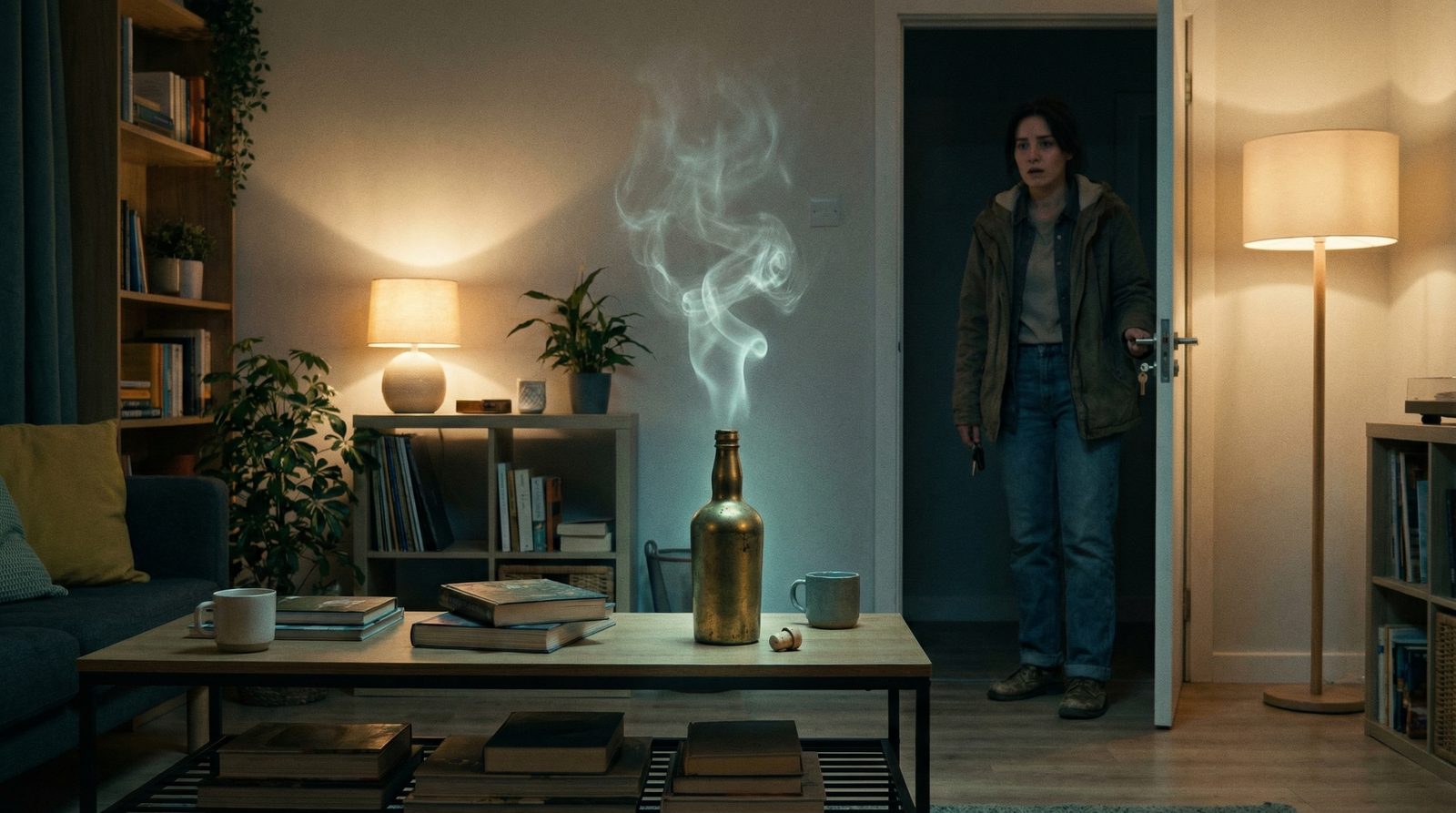
    The Genie Or Djinn Released From A Bottle motif begins with a simple act: someone finds an object they should probably leave alone. It might be a genie in a bottle, a djinn in a lamp, or a spirit sealed into an ordinary-looking container, but the core idea is the same. An ordinary person suddenly gains access to impossible power, usually in the form of wishes.

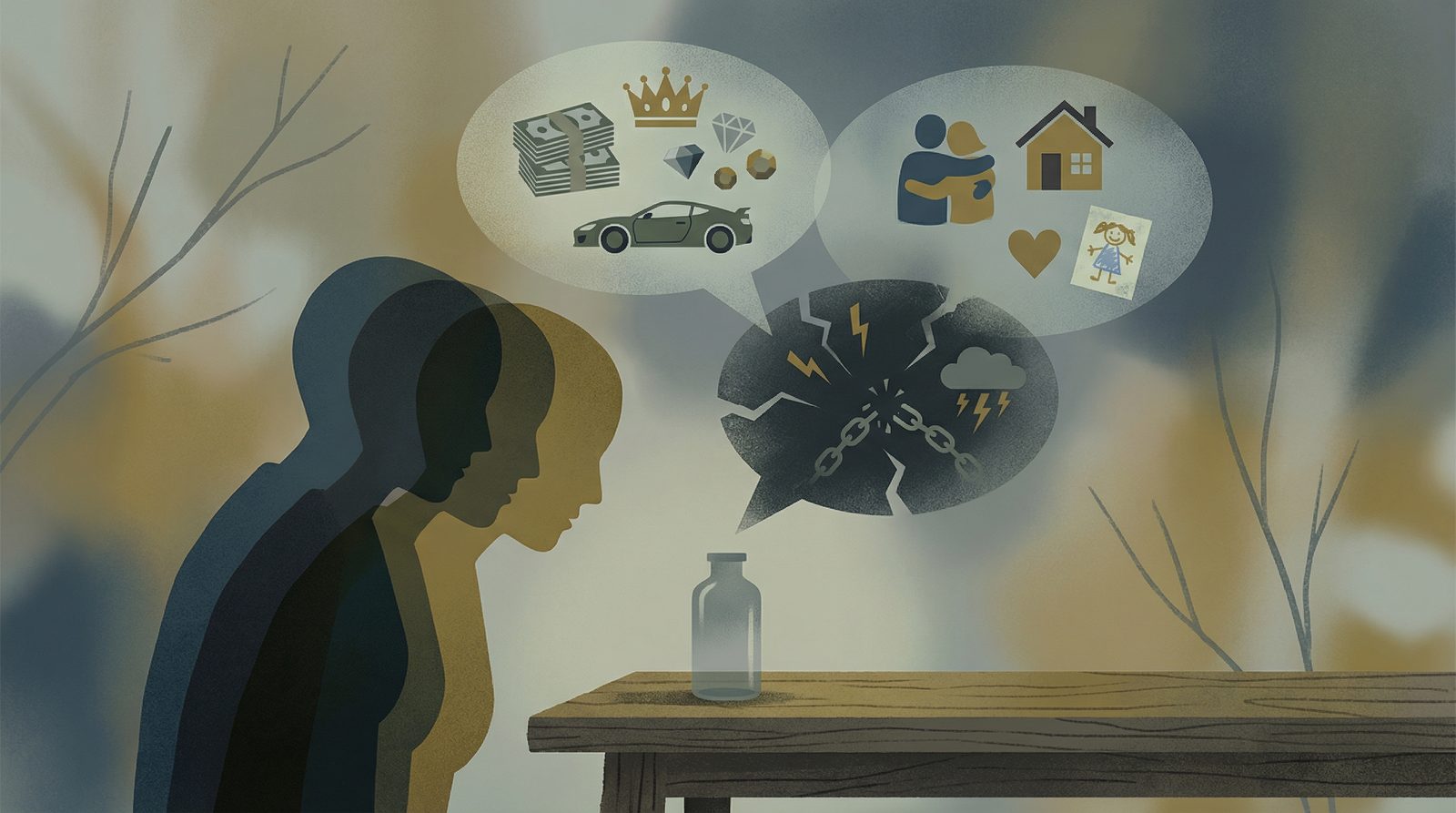
    This motif is less about flashy magic and more about what happens when human desire meets an ancient, alien intelligence. The genie or djinn is often bound by rules, resentments, and centuries of captivity. The person who finds the bottle is usually naive about both magic and consequences. Stories built on this setup explore how quickly “everything you want” can twist into something frightening, absurd, or unexpectedly honest.

    Writers love the bottle because it is portable power. It can drop into any setting, from a Victorian drawing room to a modern kitchen, and instantly turns private longing into public consequence. The motif asks, in a concrete way, what someone truly wants and what they are willing to pay for it, whether that price is moral, emotional, or literal.


    HOW IT WORKS IN STORIES

    Most stories with this motif start with an accident or a small, greedy choice. A character stumbles on a lamp at a market, inherits a dusty bottle, or fiddles with a strange object that looks harmless. In The Brass Bottle, a seemingly ordinary antique releases a djinn-like figure into everyday life, and the “help” that follows creates embarrassment, confusion, and escalating disruption.

    Once released, the genie or djinn usually announces a set number of wishes and a set of rules, often with loopholes. The wisher might be a child, as in Five Children And It (1902), where daily wishes unravel and backfire in ways that expose how careless desire can be. Or the wisher might be caught in higher-stakes schemes, as in The Amulet Of Samarkand, where a bound djinn becomes a lever of power, politics, and danger. In either case, the narrative settles into a rhythm of wish, distorted outcome, and frantic attempts to fix the damage.

    The genie or djinn is rarely a neutral tool. It may be sarcastic, vengeful, lonely, or constrained by harsh magical laws. Its personality shapes the plot. A literal-minded spirit twists wishes into ironic punishments, while a weary, morally ambiguous djinn quietly tests the summoner’s character. The bottle-bound spirit often understands human weakness better than the human does, and that imbalance drives both comedy and tragedy.

    Structurally, each wish acts like a short story nested inside the larger one. A wish sets up a scenario, the spirit executes it, and the fallout reveals something about the wisher. Over time, the character either learns to wish more wisely, refuses to wish at all, or tries to renegotiate their relationship with power itself.


    Editorial illustration inspired by 'Genie Or Djinn Released From A Bottle'

    EMOTIONAL EFFECT ON THE READER

    This motif taps straight into private daydreams. It asks “What would you wish for?” long before any character answers. There is an immediate thrill in watching desire become real. When a struggling family suddenly becomes rich or an awkward child suddenly gains power, the reader shares the rush of possibility.

    That thrill quickly tangles with anxiety. The reader can usually see the flaw in a wish before the character does, which creates anticipation and dread at the same time. Watching a wish backfire feels like watching someone send a risky message they cannot unsend.

    Emotionally, these stories move between wonder, comedy, and unease. The comic chaos in Five Children And It (1902) can be funny precisely because wishes are interpreted so literally. The Amulet Of Samarkand can feel sharper and darker, because power is used casually and cruelty becomes a practical tool. Either way, the motif encourages readers to reconsider fantasies of escape, revenge, or instant success.

    When the story ends, the feeling is often bittersweet. Saying goodbye to a bottle-bound spirit can feel like closing the door on childhood wishes. If the spirit is freed, there is relief. If it is trapped again, there may be lingering discomfort about cycles of power and captivity.


    Symbolic illustration inspired by 'Genie Or Djinn Released From A Bottle'

    VARIATIONS AND RELATED MOTIFS

    This motif has several recognizable variations. In comic versions, the genie is playful or bureaucratic, and the wishes create escalating social disorder. The Brass Bottle leans into this tone, where magical intervention complicates ordinary life rather than perfecting it.

    Darker versions portray the djinn as ancient, dangerous, and resentful. In The Amulet Of Samarkand, the bound spirit is a tool of power in human conflict, and the damage spreads beyond the wisher’s private life into politics and violence. The wish-granting process is stricter and more limited, but far more destructive.

    Other stories replace the bottle with an amulet, ring, or creature that fills the same role. In Five Children And It (1902), the structure becomes a repeating cycle of desire, regret, and correction. The emotional pattern remains consistent: power arrives too easily, and the cost arrives right after.

    This motif frequently overlaps with Magical Object Disrupting Ordinary Life, Unintended Consequences of Wishes, Supernatural Bargains With Hidden Costs, and Ordinary People In Extreme Situations.

  • The Brass Bottle (1900)

    The Brass Bottle (1900)

    INTRODUCTION

    The Brass Bottle (1900) by F. Anstey/Thomas Anstey Guthrie
    Fantasy · United Kingdom


    The Brass Bottle opens with the promise of a familiar fantasy: an ordinary man acquires an antique object, releases a genie, and expects his life to improve. What makes the novel endure is how quickly that promise curdles. This is not a tale of empowerment through magic, but of social unraveling through excess assistance.

    Set at the turn of the twentieth century, the book unfolds in drawing rooms, offices, auction houses, and committee meetings that feel stiflingly polite. Into these airless spaces erupts Fakrash, an ancient genie whose ideas of generosity are spectacularly out of scale with modern English life. The result is a comedy of embarrassment rather than wonder. Magic does not liberate Horace Ventimore. It exposes how little control he has over his career, his courtship, and his own desires.

    PLOT & THEMES

    Horace Ventimore is a struggling architect with more ambition than confidence. On a whim, he purchases an old brass bottle at Salterton & Co, an auction house near the Embankment. Once opened in his modest lodgings, the bottle releases Fakrash-el-Aamash, a genie who has waited centuries to reward a liberator.

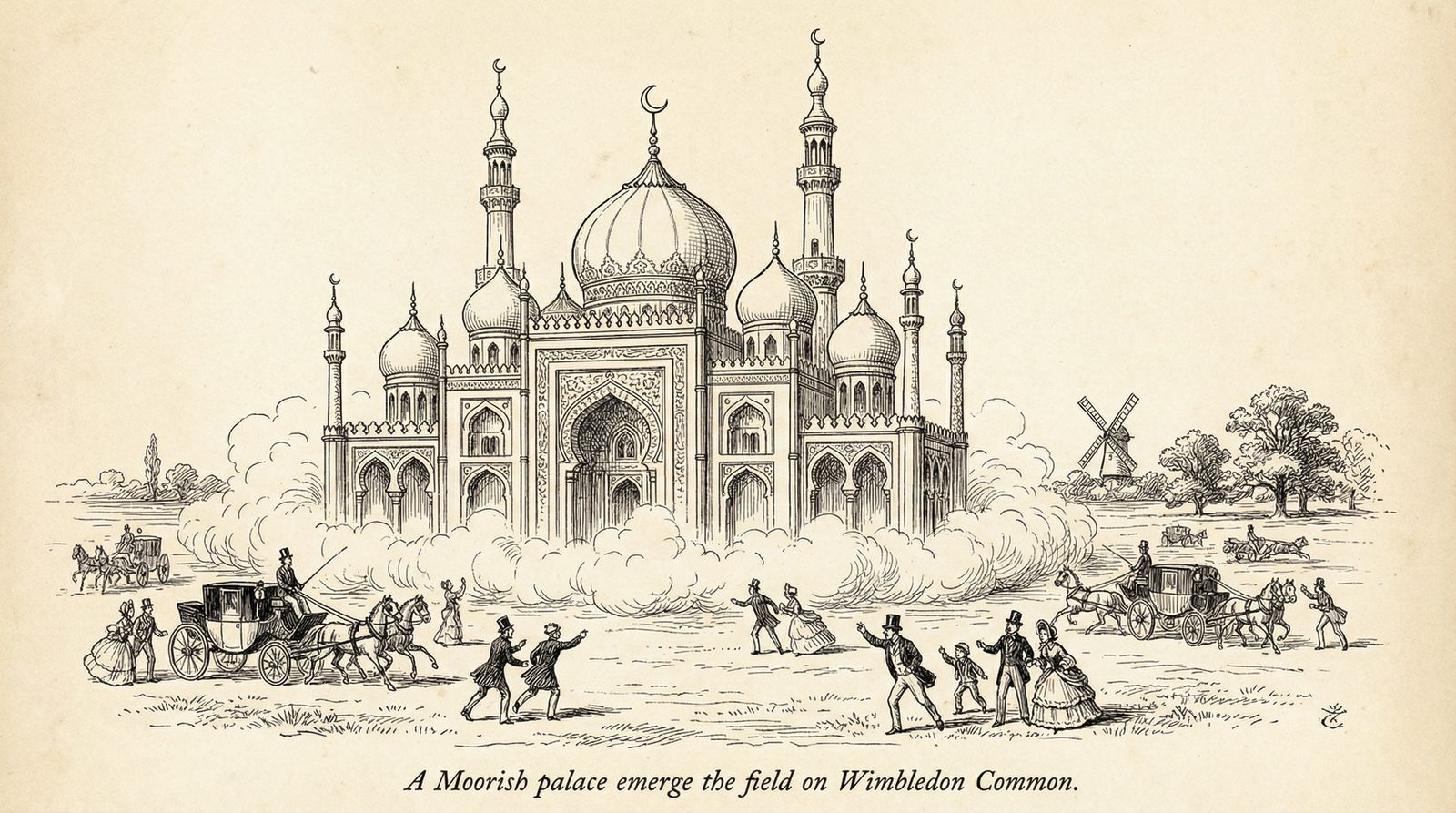
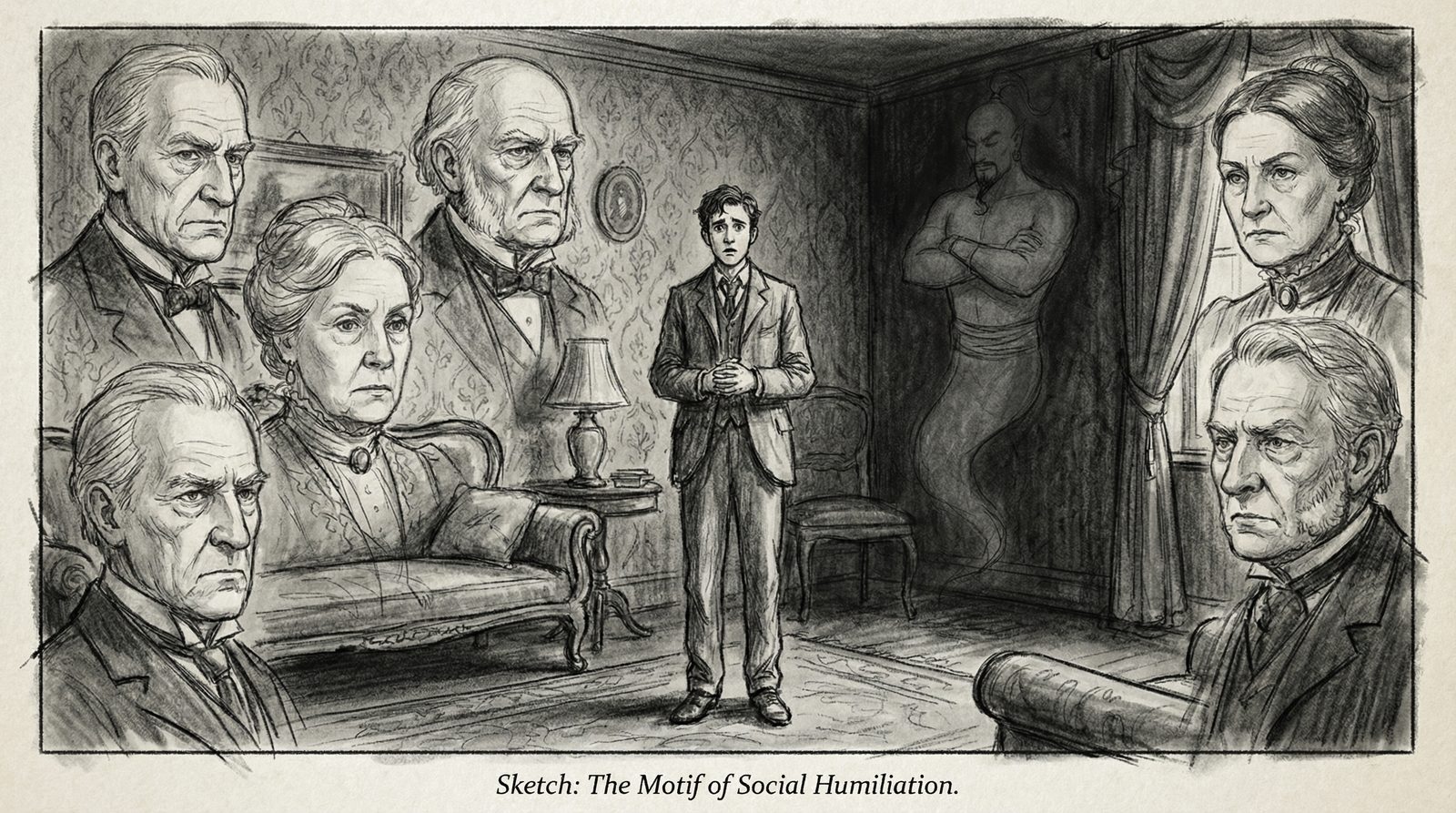
    Fakrash’s promise of assistance becomes the novel’s central engine. Horace wants professional success and marriage to Sylvia Wackerbath. Fakrash delivers both with catastrophic enthusiasm: erecting an impossible Moorish palace on Horace’s suburban property, showering him with sudden wealth, and humiliating Sylvia’s socially ambitious father in front of learned societies and polite company.

    Each wish carries unintended consequences. Horace’s reputation collapses under the weight of miracles he never asked for in quite that form. Respectability, so carefully maintained in Edwardian society, proves fragile when confronted with a being who does not understand embarrassment, gradual advancement, or understatement.

    The ending refuses a magical reset. Fakrash does not erase memories or rewind events. Horace learns that no supernatural favor can restore lost standing or undo public spectacle. The solution is renunciation rather than mastery. He must choose to live without wishes at all, accepting the limits of ordinary effort and imperfect love.

    PROSE & NARRATIVE STRUCTURE

    Anstey’s prose is brisk, ironic, and socially observant. The narration frequently slips into Horace’s anxious thought patterns while maintaining enough distance to let the satire bite. This free indirect style allows the comedy to coexist with a steady current of dread as Horace realizes that help can be more dangerous than hardship.

    The structure is episodic and escalating. Each chapter centers on a single intervention by Fakrash that spirals beyond Horace’s control. A professional introduction becomes a scandal. A gift becomes a liability. A public appearance becomes an ordeal. The rhythm recalls serialized fiction, with each episode ending on a social cliff rather than a physical one.

    One of the novel’s sharpest techniques is its collision of registers. Fakrash speaks in archaic bombast about obliteration and reward, while Horace and the surrounding institutions respond in the language of minutes, regulations, and committee procedure. The courtroom scene, where divine threats are calmly recorded by a clerk, captures the book’s essential joke: ancient power rendered ridiculous by bureaucracy.

    Conceptual editorial illustration inspired by 'The Brass Bottle'

    CHARACTERS & INTERIORITY

    Horace Ventimore is a recognizably timid dreamer. His interior life is dominated by rehearsed explanations, imagined humiliations, and constant self-correction. He does not crave domination or transcendence. He craves approval, and that makes him uniquely vulnerable to Fakrash’s version of generosity.

    Fakrash himself is not psychologically complex. He is a force rather than a character, driven by ancient codes of honor and reward. His failure to understand modern restraint turns him into an agent of chaos despite his sincere loyalty. Through him, Anstey explores how mismatched values can be more destructive than malice.

    Supporting figures deepen the social satire. Mr. Wackerbath embodies financial respectability and terror of ridicule. Sylvia, often seen through Horace’s anxious gaze, is given moments of quiet perspective that suggest she understands far more than he assumes. The novel’s emotional weight lies not in romance but in exposure: watching a man’s careful self-image collapse under unwanted attention.

    LEGACY & RECEPTION

    Although often remembered as a light fantasy, The Brass Bottle reads today as a sharp precursor to twentieth-century social comedy. Its humor is rooted less in spectacle than in class anxiety and professional dread, anticipating writers who would mine embarrassment rather than adventure for laughs.

    Later adaptations and re-tellings frequently soften the ending or lean into romance. Anstey’s original conclusion is colder. Magic fixes nothing. Horace survives, but chastened, forced to live with the consequences of miracles he never fully wanted. That refusal of wish-fulfillment closure is why the book still feels pointed rather than quaint.

    IS IT WORTH READING?

    If you enjoy fantasy as escape, this may surprise you. The book’s pleasures are social rather than spectacular, and its comedy often lands as discomfort rather than delight. But if you enjoy watching ordinary people undone by forces they cannot manage, and stories where magic reveals weakness instead of granting power, it remains a brisk and unsettling read.

    The period language requires a little patience, but the observations feel modern. Desire, reputation, and the terror of being seen are as potent now as they were in 1900.

    Illustration inspired by a core idea from 'The Brass Bottle'

    TRIVIA & AUTHOR FACTS

    “F. Anstey” was the pen name of Thomas Anstey Guthrie, a barrister-turned-humorist whose legal background quietly sharpens The Brass Bottle. The courtroom scene is not just comic invention: its procedures, language, and escalation are unusually precise for fantasy fiction of the period, which is exactly why the scene lands as both absurd and convincing. Anstey understood how bureaucracy absorbs even the impossible.

    The fictional auction house Salterton & Co. is thought to draw on real London auction rooms Anstey frequented. Fakrash’s insistence on palaces by rivers plays on the Thames while gesturing toward older imperial fantasies of the East. The novel’s humor depends heavily on these geographic and cultural collisions.

    SIMILAR BOOKS

    If this blend of supernatural comedy and social discomfort appeals to you, there are clear literary neighbors. E. Nesbit’s The Enchanted Castle uses magic to expose childish vanity and adult hypocrisy, while The Incomplete Enchanter by L. Sprague de Camp and Fletcher Pratt pushes the same wish-fulfillment logic into more overtly comic chaos. For a darker Victorian counterpoint, The Picture of Dorian Gray treats beauty itself as a curse rather than a gift. All of these works share Anstey’s interest in what happens when desire is granted too literally.

    DISCOVERABILITY & LINKS

  • The Amulet Of Samarkand (2003)

    The Amulet Of Samarkand (2003)

    INTRODUCTION

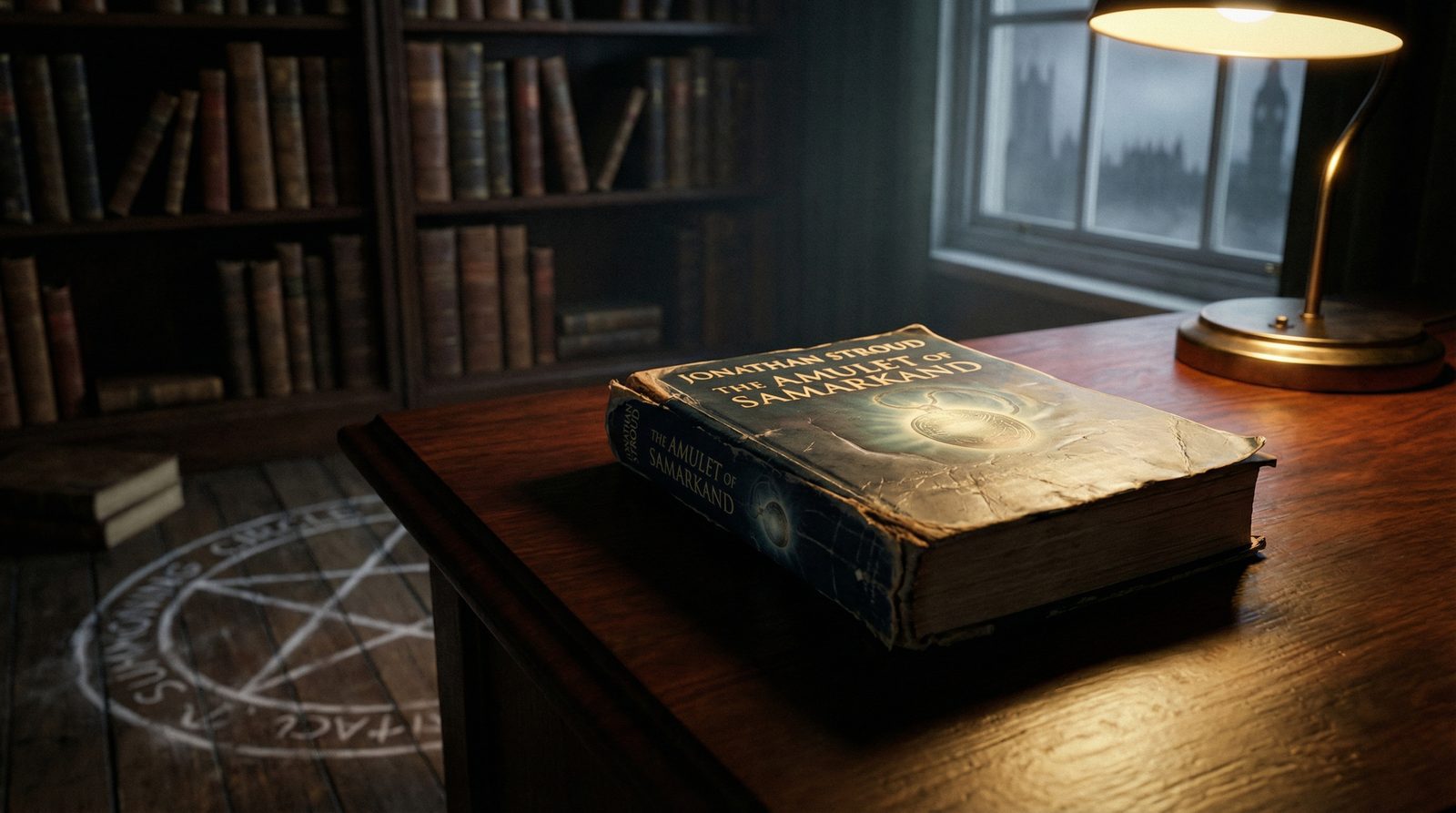
    The Amulet of Samarkand (2003) by Jonathan Stroud
    Fantasy · United Kingdom


    The Amulet of Samarkand is a children’s fantasy that refuses to stay safely childish. Set in an alternate London ruled by magicians, it pairs the dry, battered wit of a five-thousand-year-old djinni with the raw ambition of a boy who wants to matter in a system designed to grind him down.

    What begins as a petty act of revenge quickly expands into a political nightmare. Stroud builds a world where magic is bureaucratic, exploitative, and casually cruel. Incense and coal smoke hang in the air, but they do little to disguise the rot beneath the surface. The most honest voice in the book belongs to a spirit who insists he is the villain, and may be the only one telling the truth.

    PLOT & THEMES

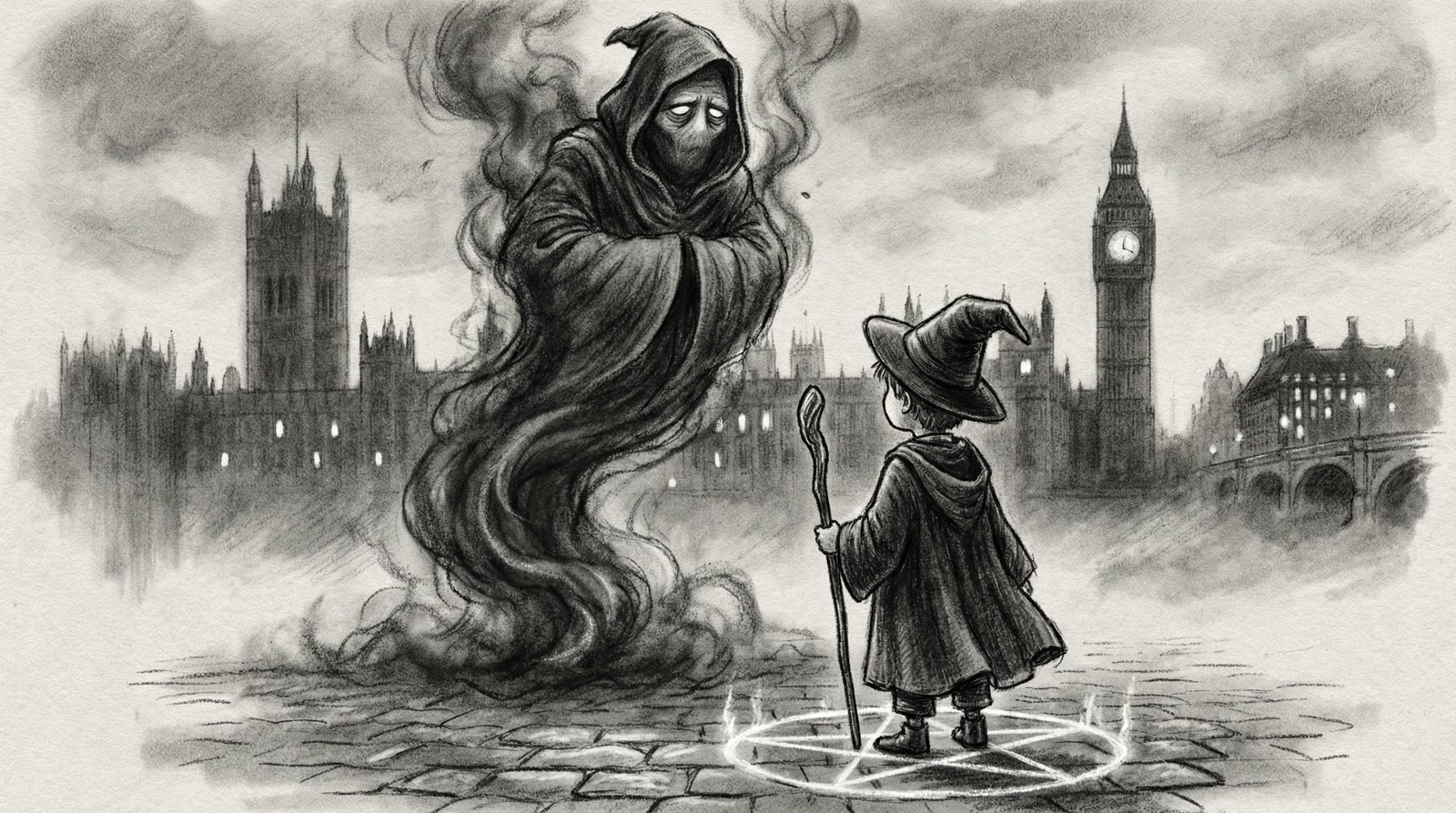
    The story unfolds like a heist gone wrong. Nathaniel, a twelve-year-old apprentice in the Ministry of Internal Affairs, summons the djinni Bartimaeus to steal the Amulet of Samarkand from the arrogant magician Simon Lovelace. It is a classic supernatural bargain, but dangerously inverted: the summoner is a child, and he barely understands the contract he has entered.

    The theft draws them into a conspiracy aimed at overthrowing the government during a ceremonial gathering at Heddleham Hall. The amulet is both weapon and leverage, and its power escalates far beyond Nathaniel’s control. Each success deepens his entanglement with the very system he briefly threatens.

    Running beneath the action is the book’s central moral engine: slavery. Spirits are bound by their true names and summoned at great cost to themselves, while human society mirrors the same hierarchy. Commoners are kept ignorant and disposable. Magicians are themselves products of emotional mutilation, trained from childhood to suppress empathy in favor of control.

    The ending is deliberately bitter. Nathaniel uses the amulet to defeat Lovelace and stop a massacre, but his reward is assimilation. He takes a new name, John Mandrake, accepts promotion, and steps deeper into the machine he now understands. There is no triumph, only survival through compromise.

    PROSE & NARRATIVE STRUCTURE

    The novel’s defining technique is its dual narration. Nathaniel’s chapters are written in close third person, tight and defensive, while Bartimaeus narrates in first person, armed with sarcasm, historical digressions, and famously intrusive footnotes.

    This split perspective creates a form of narrative unreliability. Official history, state propaganda, and magician lore are constantly undercut by Bartimaeus’s asides about past empires, botched summonings, and conveniently forgotten atrocities. The footnotes quietly dismantle the authority of the main narrative without ever halting the plot.

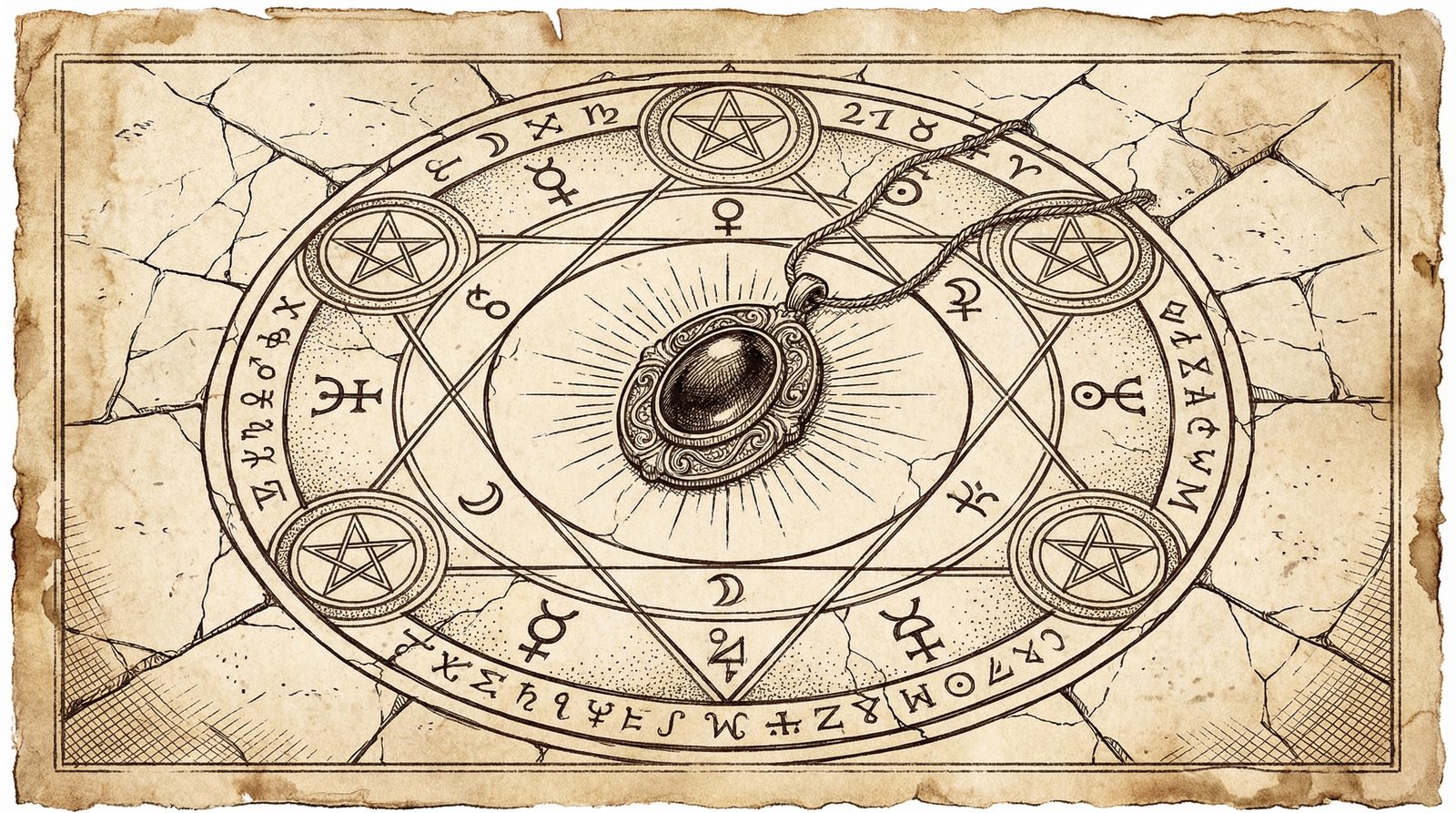
    Stroud’s prose is clean and procedural. Magic is described as work: pentacles, summoning circles, planes of existence, and defensive wards. This emphasis on process grounds the fantasy in risk and labor rather than wonder, reinforcing the sense that power here is something managed, rationed, and abused.

    Conceptual editorial illustration inspired by 'The Amulet of Samarkand'

    CHARACTERS & INTERIORITY

    Nathaniel begins as an ambitious prodigy desperate to escape humiliation. His interior life is defined by resentment, fear, and a relentless need for recognition. When his mentor’s wife, Mrs. Underwood, is killed in a magical attack, his grief is rapidly converted into further ambition. He knows this is wrong, and continues anyway.

    Bartimaeus masks trauma with humor. His boasts about serving Solomon or building ancient cities are a shield against millennia of forced labor. Moments of genuine concern, particularly when Nathaniel is in danger, break through rarely and therefore land hard.

    Secondary characters are sharply etched. Mr. Underwood embodies bureaucratic cruelty born of mediocrity. Kitty, though still peripheral in this volume, stands out for her refusal to accept the system’s logic at all, hinting at a resistance grounded not in magic but in ethics.

    LEGACY & RECEPTION

    Published at the height of the early-2000s fantasy boom, The Amulet of Samarkand distinguished itself by refusing easy heroics. While other series offered hidden schools and secret destinies, Stroud presented a state where magic runs the government and corrupts everyone it touches.

    The book has endured because of its unsentimental ending. Nathaniel survives, London survives, but the moral cost is not erased. That unresolved tension, between power gained and integrity lost, gives the novel its lasting bite and sets the tone for the rest of the trilogy.

    IS IT WORTH READING?

    This is not a comfort read. The humor is sharp, but the world is cruel, and the victories are compromised. If you are looking for fantasy that treats younger readers with seriousness and respects their capacity for moral discomfort, it is absolutely worth reading.

    The book is fast, funny, and deeply uneasy. It understands how systems absorb rebellion, how children are shaped into instruments, and how bargains made in anger rarely end cleanly.

    Illustration inspired by a core idea from 'The Amulet of Samarkand'

    TRIVIA & AUTHOR FACTS

    Jonathan Stroud worked as a children’s editor before writing the Bartimaeus Sequence, and his editorial background shows in the book’s structural confidence. The novel launched a trilogy later expanded by a prequel.

    Bartimaeus’s footnotes were present from early drafts and quickly became the spine of the series. They allow Stroud to critique official history and power structures without halting the narrative, a technique that would influence later fantasy written for younger audiences.

    SIMILAR BOOKS

    Readers drawn to morally tangled magic may also appreciate His Dark Materials for its political theology, or The Magicians for a later, more cynical exploration of power and escapism. For a younger-skewing comparison, Artemis Fowl offers a lighter but still rule-bound take on criminal genius and supernatural bureaucracy.

    DISCOVERABILITY & LINKS

    DISCOVERABILITY & LINKS

  • Body Swap Comedy Between Generations

    Body Swap Comedy Between Generations

    DEFINITION & CORE IDEA

    Body Swap Comedy Between Generations is a story pattern in which people from different age groups—most often a parent and child, or a teenager and an older relative—wake up in each other’s bodies. Overnight, the teenager is trapped in an adult body with adult authority and responsibility, while the adult finds themselves forced to navigate school, peer hierarchies, and adolescent vulnerability from the inside.

    The core idea is simple but potent: if you could literally live inside another generation’s body, what would you finally understand about them? The swap is usually temporary and surrounded by comic mishaps, but it functions as a shortcut to empathy. Instead of arguing across a dinner table, characters are thrown directly into each other’s daily grind, expectations, and social pressures.

    One of the earliest and most influential examples of this motif is Vice Versa (1882) by Thomas Anstey Guthrie. In that novel, a Victorian father and son exchange bodies, using the swap to expose the cruelty of school discipline, the blindness of parental authority, and the false assumptions each generation holds about the other.

    Later, more widely known works—such as Freaky Friday—would popularize the motif for modern audiences, but the emotional logic remains the same. The mechanism may be magical, scientific, or never fully explained at all, because the real focus is not how the swap happens, but what it reveals.


    HOW IT WORKS IN STORIES

    Stories built around Body Swap Comedy Between Generations usually begin with a sharp, familiar conflict. A teenager complains that their parent is controlling, out of touch, or unfair. The parent insists the teenager is lazy, dramatic, or ungrateful. A wish is made in anger, a strange object is activated, or a bizarre accident occurs, and the next morning they wake up in each other’s bodies.

    The middle of the story is driven by a series of comic trials. The adult in the teenager’s body must survive school routines, slang, exams, friendships, and social humiliation they no longer understand. They dress wrong, misread social cues, misuse technology, and underestimate how intense adolescent pressure can be. Meanwhile, the teenager in the adult body struggles with work meetings, financial obligations, parenting expectations, and relationship baggage they never knew existed.

    Everyday tasks become ordeals. A presentation turns into a panic attack. A math test becomes a public failure. A parent-teacher meeting or boardroom discussion exposes how little preparation either character had for the other’s world.

    Underneath the slapstick, insight slowly accumulates. The teenager sees how exhausted their parent is and how much invisible labor holds adult life together. The parent learns how fragile teen friendships are and how suffocating authority feels from the powerless side. In many versions, the story shifts from “look how ridiculous this is” to “look how much they have been missing about each other.”

    The swap usually ends once both characters have changed enough. Apologies are made, hard truths are spoken, or a selfless choice proves that empathy has been learned. The magic reverses itself, returning everyone to their own bodies. External circumstances may remain imperfect, but the emotional landscape has shifted from resentment toward recognition.


    Editorial illustration inspired by Body Swap Comedy Between Generations

    EMOTIONAL EFFECT ON THE READER

    Reading a Body Swap Comedy Between Generations often feels like getting to argue with your family and finally be heard, safely, through fiction. There is a great deal of secondhand embarrassment: watching a parent butcher teen slang or a teenager flounder through adult responsibility produces laughter that is uncomfortably close to recognition.

    For younger readers, these stories can be deeply validating. They force adult characters to feel the pressure, confusion, and social vulnerability of being young. For older readers, the same stories can sting in a different way, revealing how easily teen struggles are dismissed as trivial when viewed from the weight of adult obligation.

    The motif blends lightness with sincerity. You laugh at the absurdity of a grandparent stuck in a teenager’s body trying to pass an exam, but you also feel a quiet ache when they realize how lonely that teenager has been. The resolution often leaves readers with a hopeful sense that generational divides are bridgeable, even if real life never offers such a literal exchange.


    Symbolic illustration inspired by Body Swap Comedy Between Generations

    VARIATIONS & RELATED IDEAS

    Several variations recur within Body Swap Comedy Between Generations. One common pairing is the strict parent and rebellious teen, where the adult learns how stifling their rules feel and the teen learns how frightening it is to be responsible for someone else’s future. Another variation focuses on an overburdened parent and a self-absorbed teen, exposing hidden sacrifices and unspoken guilt.

    Some versions lean further into fantasy or speculative logic. Devices like the time cheques in Tourmalin’s Time Cheques by Thomas Anstey Guthrie complicate the exchange by allowing characters to glimpse not just another generation’s present, but also their past or future. Other stories keep the mechanism deliberately vague, treating the swap as a fairy-tale curse that lifts only once an emotional lesson is learned.

    Even when played broadly for laughs, this motif is rarely just a gag. It is a structured way to talk about power, dependency, misunderstanding, and family dynamics, using fantasy to reach a grounded emotional truth: most of us secretly wish the people closest to us could feel what our life is like from the inside.

  • Writer Held Captive

    Writer Held Captive

    DEFINITION & CORE IDEA

    The Writer Held Captive motif traps an author in a literal prison, usually at the mercy of someone who claims to care about their work. The writer is locked in a room, a house, or a basement, cut off from the outside world and forced to write, rewrite, or confess. Their creative mind becomes the only tool they have left, and often the only thing their captor really wants.

    Stories like Misery (1987), The Collector (1963), and Secret Window are classic examples. The captor might be a devoted fan, a resentful relative, a jealous rival, or a stranger with a grudge. What they share is a sense of entitlement to the writer’s time, talent, and inner life. The writer’s body is confined, but the real battleground is the story itself – who gets to decide what happens next, on the page and in the room.

    At its core, the Writer Held Captive motif is about control over narrative. It literalizes the fear that readers, editors, or society at large might try to own an author’s imagination. The writer’s survival depends on how well they can read their captor, shape a story that keeps them alive, and maybe smuggle a plan for escape between the lines.


    HOW IT WORKS IN STORIES

    In most versions of Writer Held Captive, the story begins with some kind of accident or vulnerability. The author might be injured in a car crash, lured to a remote meeting, or simply wake up in a locked room. The early chapters focus on disorientation and gratitude. That slow realization that the “rescuer” or “host” is also the jailer is central to the tension.

    Once the captivity is clear, the story shifts into a psychological chess match. The writer has very little physical power, so their main weapon is language. They flatter, stall, negotiate, and improvise plots that might calm the captor or buy time. The captor, in turn, uses access to food, medicine, or freedom as leverage for more pages. Every chapter written becomes a kind of blood payment.

    The space itself often feels like a twisted version of a retreat. It looks like the ideal place to get work done, except the door locks from the outside. This is where the motif intersects with Caretaker As Captor. The captor might cook meals, change bandages, or cheer on the writer’s progress, all while tightening their control. Care and cruelty blur together.

    Another engine of the plot is obsession with the work. The captor has strong opinions about how a series should end, which characters deserve to live, or what the writer “really meant” in a story. That is where Writer Held Captive can overlap with Enthusiasm As Infrastructure. The captor’s devotion and knowledge of the work become the scaffolding that holds the whole prison in place. Without their obsessive reading, there would be no kidnapping, no demands, no forced rewrites.

    Escape attempts, whether physical or psychological, structure the middle of the narrative. The writer might hide messages in the manuscript, test the captor’s boundaries, or deliberately write something that will provoke a mistake. The climax usually comes when the story on the page and the story in the room collide, forcing both writer and captor to act out the ending they have been arguing about.


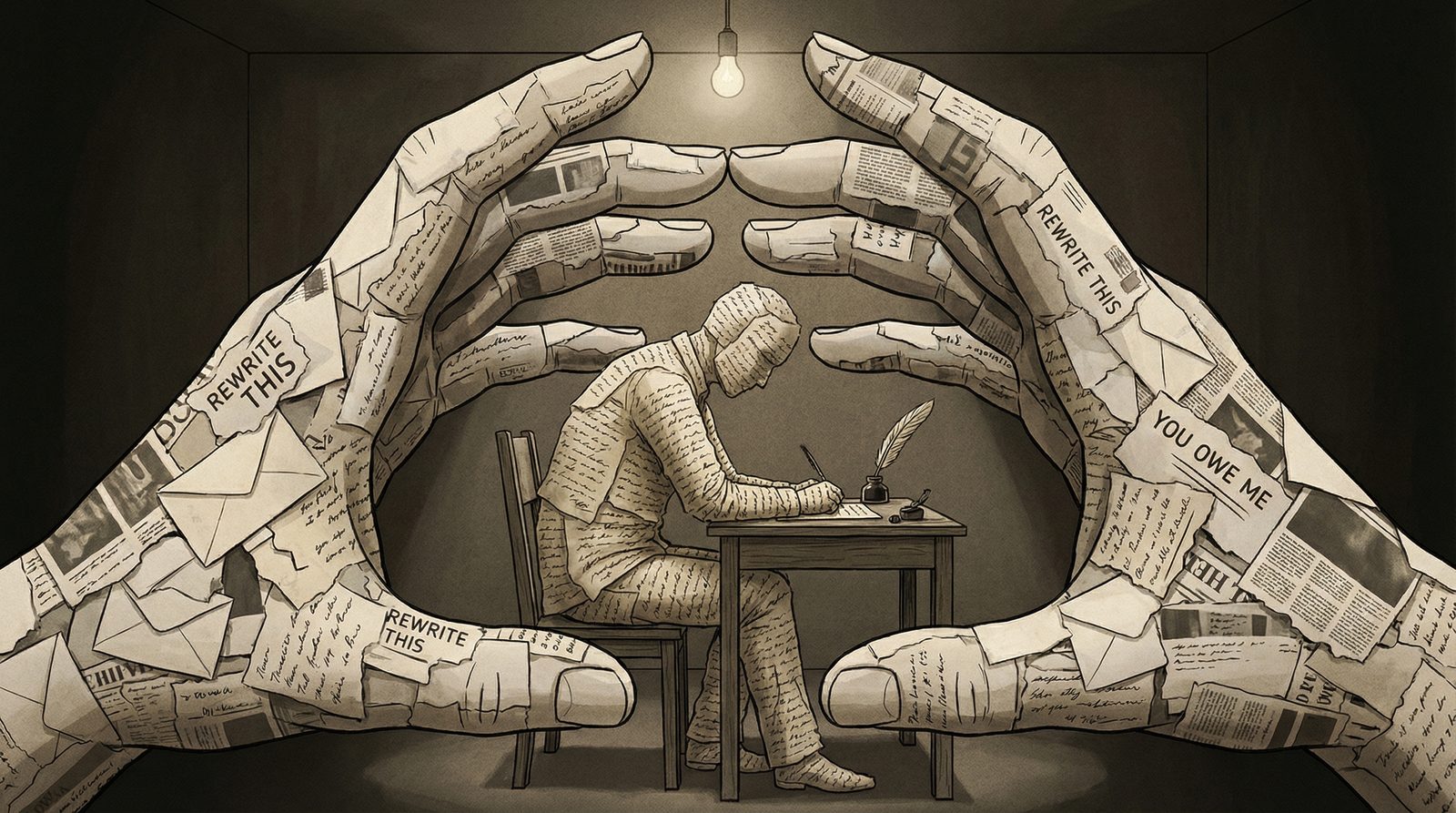
    Editorial illustration inspired by 'Writer Held Captive'

    EMOTIONAL EFFECT ON THE READER

    Reading a Writer Held Captive story feels like being locked in the room with the author. The physical confinement creates a steady thrum of claustrophobia. The smallness of the setting makes every conversation feel high-stakes, because there is nowhere else to go.

    There is also a strange intimacy. We watch the writer at their most vulnerable. Fans who love books may feel an uncomfortable jolt of recognition in the captor’s passion. The line between “I care deeply about this story” and “I want to control the person who made it” becomes disturbingly thin.

    At the same time, the motif can be darkly funny or self-aware. When the writer is forced to resurrect a character they killed off, or to explain a plot hole under threat, it pokes at the awkward relationship between creators and their audiences. Readers may feel both sympathy for the author and a twinge of guilt about their own expectations.

    Emotionally, the payoff often comes from watching the writer reclaim some control. Even if their body is trapped, the moment they outthink the captor or twist the demanded story into something subversive feels like a small liberation. The motif leaves readers thinking about who really owns a story once it leaves the writer’s desk, and what it costs when that ownership turns into a cage.


    Symbolic illustration inspired by 'Writer Held Captive'

    VARIATIONS & RELATED MOTIFS

    Not every Writer Held Captive story looks like a thriller. Some versions are quieter, almost domestic. The writer is trapped in a relationship, a contract, or a patronage arrangement that feels like a kind of house arrest. The captor might be a spouse, a parent, or a publisher who controls money and access rather than locks and chains. The captivity is still real, but it is social and economic instead of purely physical.

    Another variation blurs the line between captor and muse. The writer may believe they need this intense, controlling presence to create their best work. The captor becomes a twisted collaborator, feeding ideas and demands. This can slide into psychological horror, where it is not clear whether the writer is being coerced, seduced, or both.

    When the captor is also a caregiver, the motif overlaps strongly with Caretaker As Captor. The writer might be injured, ill, or addicted, and the person who keeps them alive also keeps them locked in. The power imbalance is justified as “for your own good,” which makes the situation harder to escape and morally murkier for the reader.

    On the other side, when the captor is a superfan or critic, the story intersects with Enthusiasm As Infrastructure. The captor’s detailed knowledge of the writer’s work becomes the architecture of the prison. Their enthusiasm is the scaffolding that supports their control.

    Related motifs include stories where artists are exploited by patrons, celebrities are stalked by admirers, or prisoners must perform to survive. Writer Held Captive sits at the crossroads of those ideas, turning the act of storytelling itself into a survival game and asking who gets to hold the pen when the door is locked.

  • Rapid Weight Loss And Body Decay

    Rapid Weight Loss And Body Decay

    DEFINITION & CORE IDEA

    Rapid Weight Loss And Body Decay is a motif where a character’s body starts to waste away at an unnaturally fast pace. Flesh shrinks, bones jut out, skin discolors or hangs loose, teeth loosen, hair falls out. The change is visible, undeniable, and usually unstoppable. It is not just about being thin; it is about the body clearly failing, like a machine burning itself out.

    Stories use Rapid Weight Loss And Body Decay to make inner problems show up on the outside. A curse, a disease, a parasite, an experiment gone wrong, or untreated guilt can all manifest as a body that is literally disappearing. In Thinner (1984) and its film adaptation, the wasting is a supernatural punishment that keeps going no matter how much the character eats. In The Machinist, the main character’s skeletal frame mirrors his insomnia, paranoia, and buried secrets. In The Troop, the body decay comes from an invasive horror that turns hunger and weight loss into something monstrous.

    This motif sits at the intersection of body horror and psychological terror. It takes something many people quietly fear – illness, aging, loss of control over their own body – and accelerates it. The body becomes a visible countdown clock, a daily reminder that time is running out and that something is deeply wrong, whether in the world, in the mind, or in the character’s past.


    HOW IT WORKS IN STORIES

    Rapid Weight Loss And Body Decay usually begins with small, easy-to-dismiss signs. A character drops a few pounds without trying, feels oddly tired, or notices their clothes hanging looser. At first they may be flattered or mildly concerned. The reader knows better, because every sentence about a loose waistband or hollowed cheek feels like the start of something worse.

    The story then escalates. The character eats constantly and still loses weight, or they cannot keep food down, or something inside them is devouring every calorie. Medical tests come back normal, or show something baffling. Doctors shrug, or the hospital becomes another stage for humiliation as strangers comment on the character’s appearance. The ordinary logic of diet and health breaks down, which is part of the horror.

    Writers often tie the decay to a specific cause. In supernatural horror like Thinner, the wasting is a curse laid on a guilty protagonist, a physical form of judgment that cannot be reasoned with. In psychological stories like The Machinist, the body reflects an inner collapse: sleeplessness, guilt, and trauma etch themselves into bone and skin. In creature or infection horror like The Troop, the decay comes from a parasite or experiment, turning the human body into a laboratory for something hungry and inhuman.

    As the Rapid Weight Loss And Body Decay accelerates, relationships strain. Friends and family may stage interventions, accuse the character of having an eating disorder, drug problem, or mental break. The character might lie about their condition, hide their body under layers of clothing, or isolate to avoid pitying or horrified stares. Everyday tasks become exhausting. Mirrors turn into enemies.

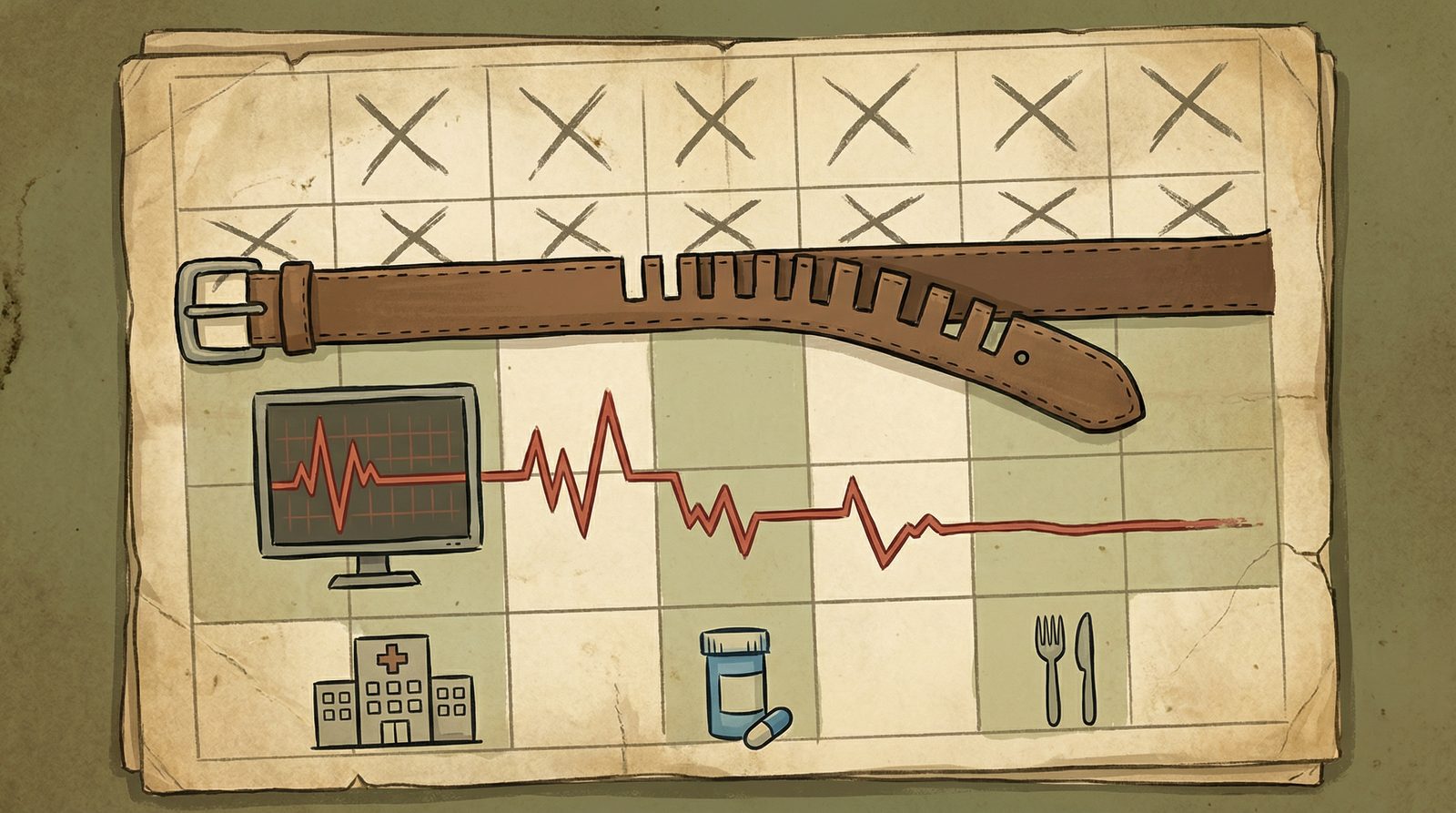
    Structurally, the motif gives the story a built-in ticking clock. The reader can see the stakes rising just by how the character looks and moves. Each chapter can mark a new threshold – another notch on the belt, another comment from a stranger, another failed attempt to reverse the process. The question becomes how far the body will go before the character breaks, confesses, or is consumed.


    Editorial illustration inspired by 'Rapid Weight Loss And Body Decay'

    EMOTIONAL EFFECT ON THE READER

    Rapid Weight Loss And Body Decay hits readers in a very physical way. It is hard not to imagine your own body when you read about someone else’s shrinking, bruising, or failing. The descriptions can trigger a mix of disgust, fascination, and dread. You may want to look away, but you also want to know how far it will go.

    There is also a strong current of helplessness. Watching a character do everything right – eating, resting, seeking help – and still deteriorate taps into fears about cancer, wasting diseases, or any illness that does not care how “good” you are. When the decay is tied to guilt or punishment, as in Thinner, the feeling gets even more complicated: you might think the character deserves it, yet still flinch at every new detail of their suffering.

    Shame is another powerful note. As the body changes, the character often feels exposed and judged. Scenes where they try to hide their frame, avoid being touched, or endure comments about their appearance can be more painful than the outright horror. Readers who have ever felt out of control in their own bodies may recognize that embarrassment and anxiety, even if the story itself is fantastical.

    At the same time, Rapid Weight Loss And Body Decay can stir a strange sympathy. The character is literally stripped down, defenses and vanity falling away along with the pounds. That vulnerability can make their confessions, reconciliations, or last acts hit harder. Even in the bleakest horror, there is often a moment where the reader feels the full weight of the character’s humanity, right as the body is failing them most.


    Symbolic illustration inspired by 'Rapid Weight Loss And Body Decay'

    VARIATIONS & RELATED MOTIFS

    Rapid Weight Loss And Body Decay shows up in several distinct flavors. One common variation is the cursed punishment story, like in Thinner, where the wasting is a moral sentence. The character’s shrinking body becomes a public confession of their crime. This can intersect with motifs about guilt made visible or supernatural justice, where the body tells the truth the character would rather hide.

    Another variation is the psychological spiral, as in The Machinist. Here, the focus is less on gore and more on how mental strain writes itself onto the body. Rapid Weight Loss And Body Decay overlaps with motifs about unreliable narrators, trauma resurfacing, and insomnia as unraveling. The reader is left wondering how much of the decay is real and how much is filtered through a damaged mind.

    There is also the parasitic or scientific horror version, like The Troop, where the decay is caused by infection, experiment, or alien biology. This ties Rapid Weight Loss And Body Decay to motifs such as body as laboratory, contagion, and the commodified body, where human flesh is just another resource to be used, altered, or consumed.

    Finally, the motif can blend with more grounded narratives: medical dramas about aggressive illness, or realistic stories about eating disorders and self-destruction. In those cases, Rapid Weight Loss And Body Decay intersects with motifs of survival as performance, family caretaking, and the failing body. The horror is quieter but often more emotionally devastating, because it feels so close to real life.

    Across all these variations, the core remains the same: a body that is vanishing too quickly, turning private fears and hidden sins into something you cannot help but see.

  • Dystopian Game Shows

    Dystopian Game Shows

    DEFINITION & CORE IDEA

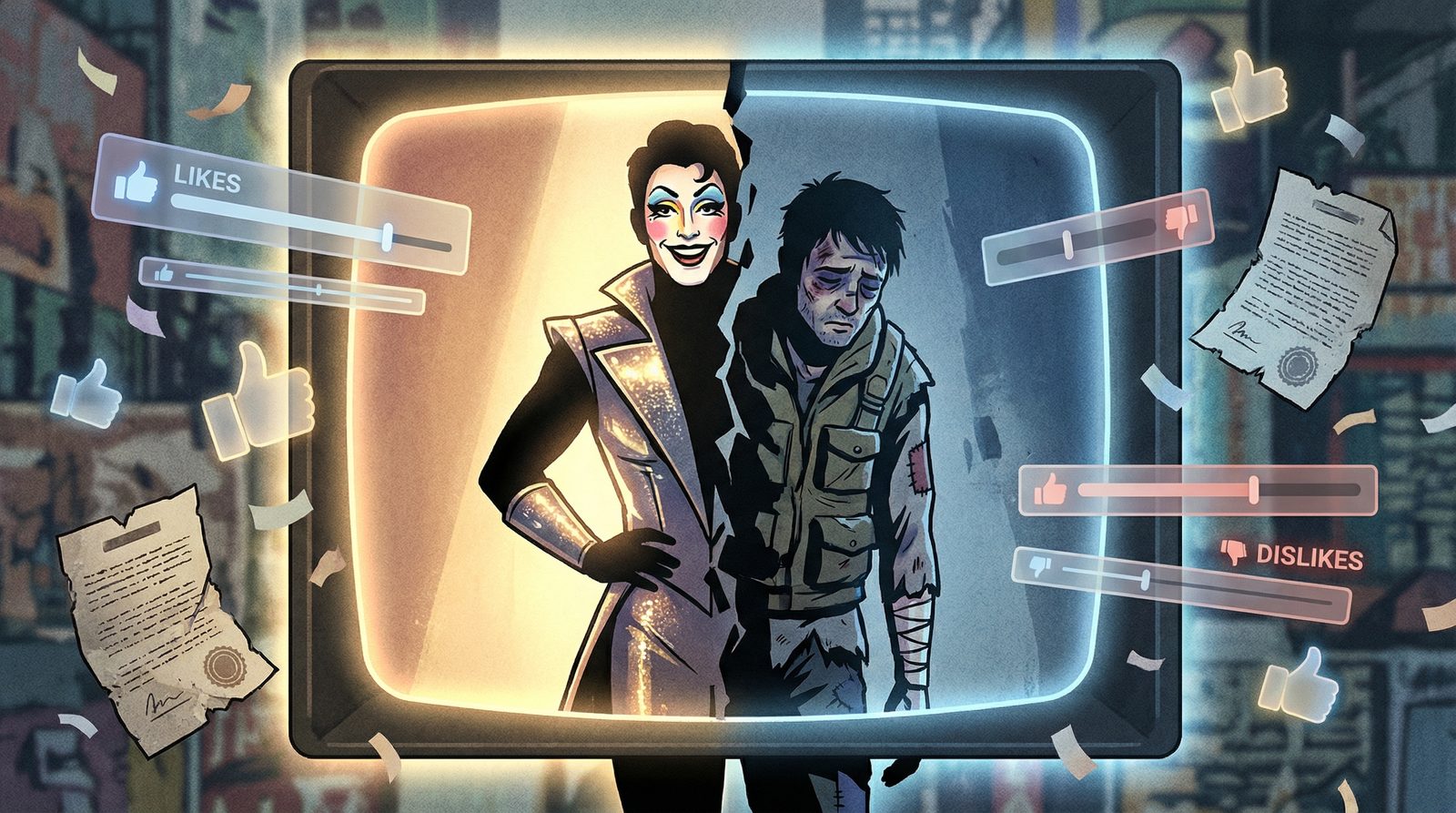
    Dystopian game shows are stories where a rigged contest, reality show, or televised event becomes a matter of life and death. The rules look like entertainment, but the stakes are survival. Contestants run obstacle courses that can kill them, answer questions under threat of punishment, or hunt and are hunted for the amusement of a distant audience. The game is usually controlled by a powerful government, corporation, or media empire that treats human beings as disposable content.

    Unlike simple arena battles, dystopian game shows lean on the language of TV and celebrity. The cruelty is wrapped in bright lights and canned applause. The Running Man, written under the name Richard Bachman, is a classic example, where a desperate man signs up for a lethal televised manhunt. The surface promise is money and fame; the underlying reality is systemic exploitation.

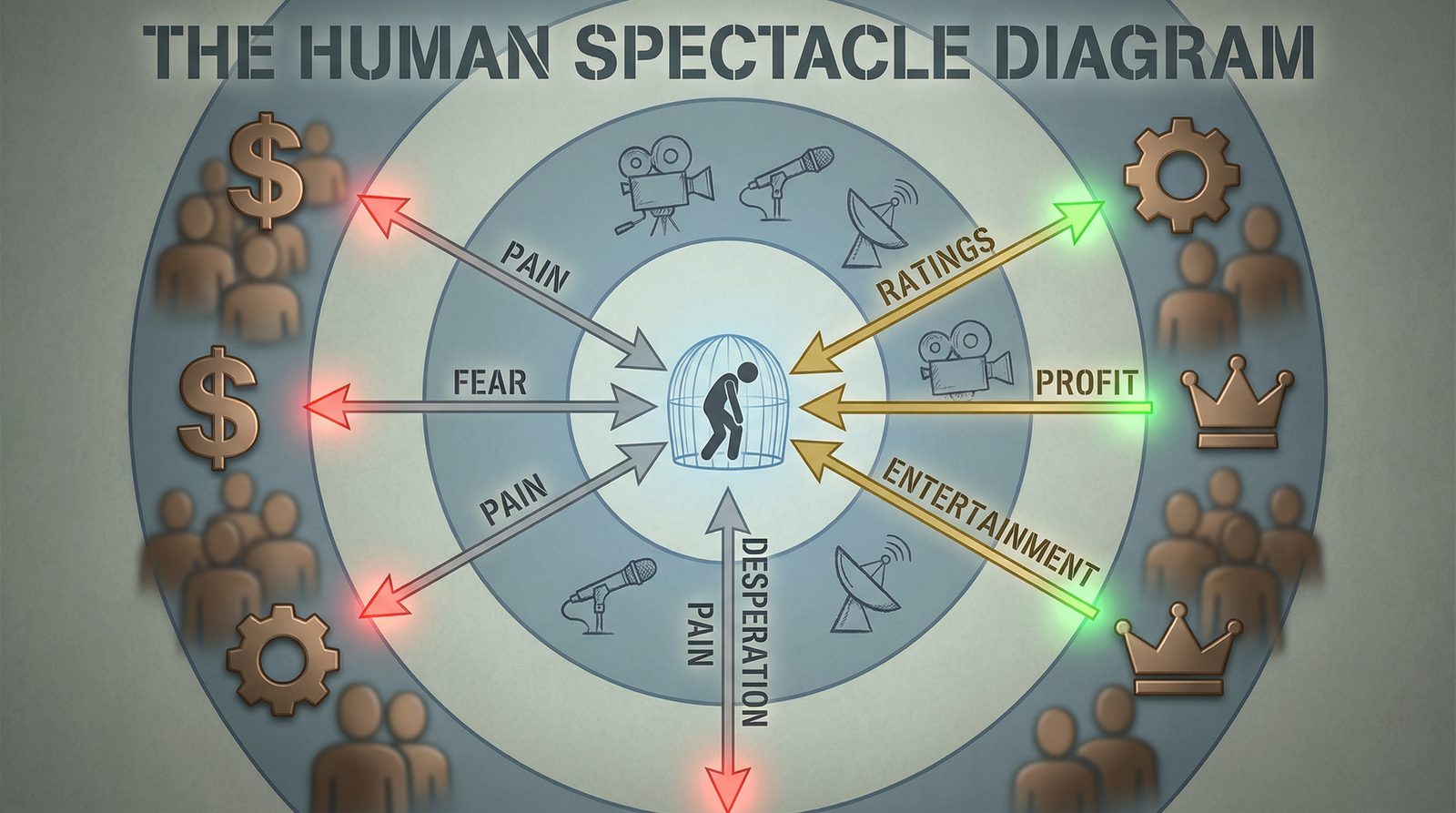
    Writers use this motif to ask how far a society will go when suffering becomes a product. The format is familiar enough to feel plausible, yet twisted enough to be horrifying. Dystopian game shows exaggerate trends in reality TV, social media, and advertising to show what happens when entertainment and cruelty fully merge. At its core, the motif is about people trying to stay human while the world insists they are just contestants.


    HOW IT WORKS IN STORIES

    In dystopian game show stories, the plot often begins with a rigged choice. The protagonist volunteers out of desperation, is coerced, or is randomly selected. Like the men in Richard Bachman stories such as The Running Man, they are usually ordinary or down-on-their-luck people, not trained warriors. The show offers them a miracle: money, freedom, or a chance to clear their name. The price is stepping into a game designed to break them.

    The narrative then moves into the preparation and staging of the show. We see contracts, waivers, and fine print. We meet the smirking host, the ruthless producer, the faceless executives. The world of the game is full of artificial sets, hidden cameras, and scripted moments. Even genuine danger is choreographed for maximum spectacle. The protagonist quickly discovers that the rules are flexible and always favor the house.

    Once the game begins, the story turns into a survival puzzle. Challenges are designed to pit contestants against each other, force betrayals, or tempt them with shortcuts that have hidden costs. The show’s audience becomes a character in its own right. The protagonist might gain sudden popularity, become a villain in the public eye, or be erased entirely if they stop being useful for ratings.

    Behind the spectacle, the plot often reveals a larger conspiracy or social rot. The game show might be a tool of social control, a distraction from political collapse, or a way to dispose of “undesirable” people. The climax usually involves one of three things: beating the game on its own terms, exposing it to the public, or refusing to play by its logic at all. Whether the character lives or dies, the story asks what it means to be real in a world that only values you as content.


    Editorial illustration inspired by 'Dystopian Game Shows'

    EMOTIONAL EFFECT ON THE READER

    Reading dystopian game show stories often feels like watching a nightmare version of a reality show you half-recognize. There is a sickening mix of excitement and dread. The tension is not just “will they win,” but “how much of themselves will they have to lose to survive.”

    The motif taps into the uneasy feeling that our own media habits might be cruel. When a crowd in the story cheers for someone’s suffering, it is hard not to think of viral humiliation clips or scandal-driven news. That recognition can make the reader feel complicit, as if they are sitting in the studio audience, enjoying the show while knowing it is wrong.

    At the same time, there is often a strong emotional bond with the contestants. Their small acts of kindness, defiance, or humor stand out sharply against the artificial cruelty around them. Moments where characters refuse to betray each other, or choose dignity over survival, can hit harder precisely because the system is built to crush those choices. The result is a blend of adrenaline, anger, and a bruised kind of hope that someone will break the cycle, even if they pay for it.


    Symbolic illustration inspired by 'Dystopian Game Shows'

    VARIATIONS & RELATED MOTIFS

    Dystopian game shows can take many forms. Some stories focus on physical combat, turning the show into a gladiator arena with cameras. Others use puzzles, social manipulation, or moral dilemmas as the core challenge. A contestant might have to choose which loved one gets saved on live TV, or decide whether to expose a secret that will ruin innocent people. The tone can range from grimly realistic to darkly comic, with some works leaning hard into satire about advertising, celebrity culture, or class.

    There are also variations in how much the outside world matters. In some stories, the game is a closed bubble, and we only see what the cameras see. In others, the world beyond the show is just as bleak: the game is not an exception but a symptom of a larger sickness. The show becomes a pressure valve for a society that has already decided which lives are expendable.

    This motif overlaps strongly with Ordinary People In Extreme Situations. The contestants are rarely superheroes; they are regular citizens pushed into a twisted system. It can also intersect with motifs about the commodified body, survival as performance, or fame as a double-edged sword. A character might gain celebrity status while being slowly destroyed by the very show that made them famous.

    Some stories end with the game continuing, unchanged, emphasizing how hard it is to fight a system that turns everything into a show. Others let a single act of defiance ripple outward, inspiring viewers or exposing the truth. Either way, dystopian game shows linger because they feel uncomfortably close to the world we already live in, just pushed a few notches further past the point of no return.