
Period: 20th Century

  • James Redfield

    James Redfield

    ORIGINS & BACKGROUND

    James Redfield is best known as the author of The Celestine Prophecy (1993), a novel that turned spiritual seeking into a page-turning adventure and helped popularize ideas like synchronicity and personal spiritual awakening in the 1990s. Although he has written several other books, including sequels and thematic extensions of that first story, his reputation rests on a very specific blend of narrative fiction and spiritual self-help. He writes not as a distant literary stylist but as someone attempting to guide readers through a process of inner change, using story as a teaching tool.

    Redfield emerged during the New Age fiction boom of the late 20th century, when a wide readership was looking for stories that could double as spiritual guidance. An American writer shaped by the human potential and self-help movements, he approached fiction as a vehicle for spiritual evolution rather than as a purely aesthetic project. The Celestine Prophecy was initially self-published and circulated through word of mouth among readers who felt it articulated their own search for meaning and intuition. That grassroots success eventually led to a mainstream publishing deal and a film adaptation released in 2006.

    His follow-up novels, including The Tenth Insight and The Secret of Shambhala, extend the same fictional universe rather than striking out in unrelated directions. This continuity reflects how Redfield sees his work: as a long-form exploration of spiritual awakening rather than a collection of discrete stories. His background in counseling and interest in both Eastern and Western mystical traditions inform the way he writes about energy, intuition, and higher purpose. Instead of focusing on social or political realism, he turns inward, aiming to map an invisible landscape of consciousness.

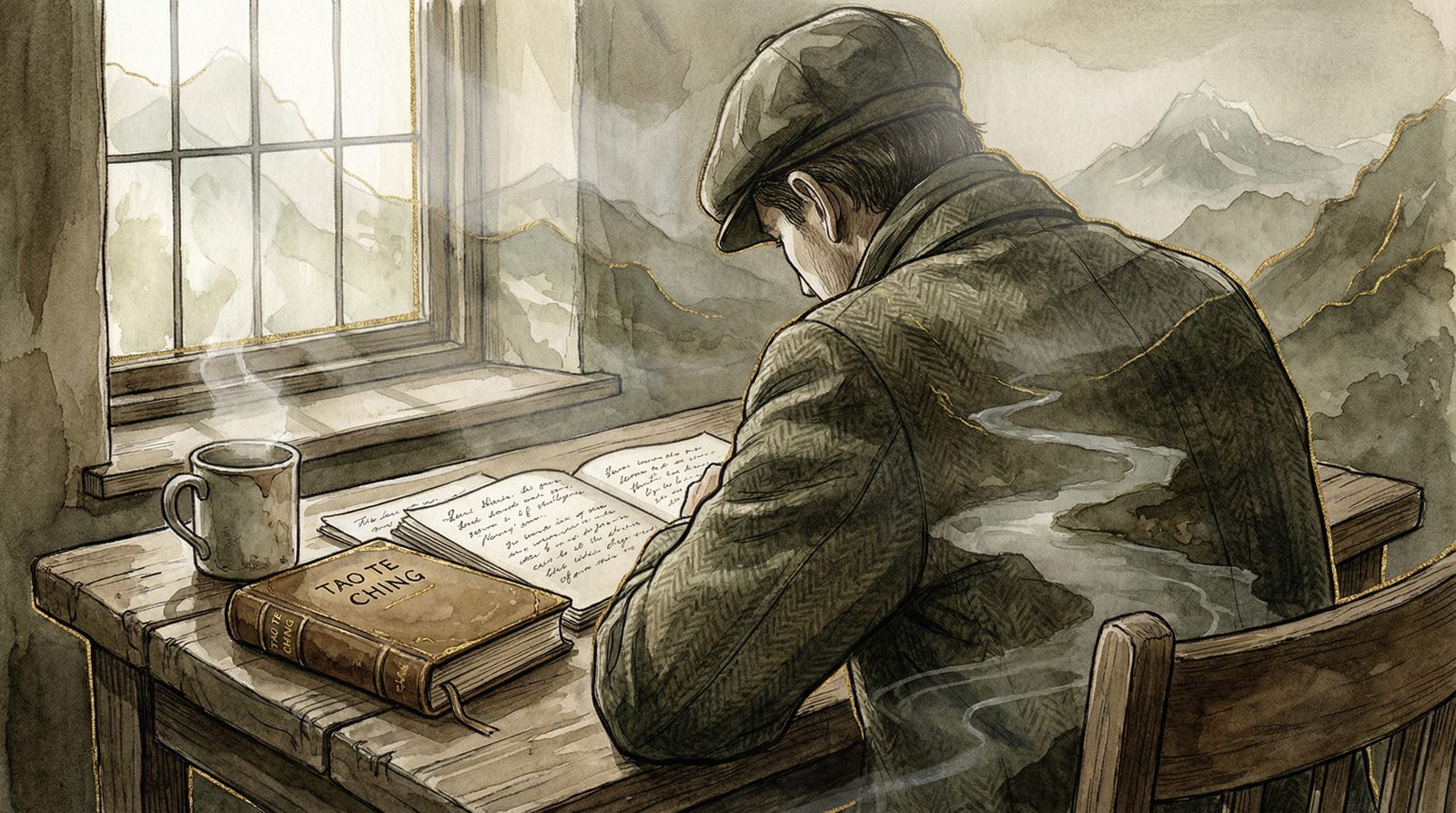
    Editorial illustration inspired by James Redfield

    THEMES & MOTIFS

    The central theme in James Redfield’s work is spiritual awakening. His protagonists are usually ordinary people who stumble into extraordinary experiences that force them to question their assumptions about reality. Awakening is presented not as a single epiphany but as a gradual process, often structured as a sequence of insights or realizations that build on one another. Readers are encouraged to view their own lives as part of a similar unfolding.

    A second recurring motif is synchronicity. Characters repeatedly encounter meaningful coincidences that seem to guide them forward, suggesting that the universe is responsive rather than random. In Redfield’s fiction, synchronicity functions both as a plot engine and as a worldview, nudging characters toward higher understanding while reassuring readers that their own chance encounters may be part of a larger pattern.

    He also returns frequently to the idea of energy fields. Characters learn to sense subtle energies around people and places, treating emotions, intentions, and relationships as energetic exchanges rather than purely psychological ones. Landscapes in books like The Tenth Insight and The Secret of Shambhala become spiritual geographies, with sacred sites and hidden realms mirroring an inner journey of growth and healing.

    Throughout his work, there is a persistent tension between fear and faith. Characters hesitate, doubt, and resist, but are ultimately invited to trust intuition, openness, and connection. The emotional through-line is one of seeking meaning, where skepticism is acknowledged but answered through lived experience rather than argument.

    Symbolic illustration inspired by James Redfield

    STYLE & VOICE

    James Redfield writes in a direct, accessible style that prioritizes clarity of message over stylistic complexity. His prose is straightforward and conversational, often pausing the narrative so characters can explain spiritual principles to one another. Dialogue frequently functions as instruction, with one character guiding another through an insight, meditation, or new way of interpreting experience.

    Structurally, his novels follow the pattern of a spiritual quest. Stories move from everyday life into increasingly visionary or mystical experiences, with each new setting revealing another layer of understanding. Moments of danger or pursuit tend to test intuition and openness rather than deliver conventional suspense.

    The overall effect is that of a guided journey. Readers are not only watching characters change, but are implicitly invited to consider their own beliefs about coincidence, purpose, and personal transformation. The tone is earnest and hopeful, with little irony, emphasizing reassurance and the possibility of growth.

    KEY WORKS & LEGACY

    The Celestine Prophecy remains the defining work of James Redfield’s career. It introduced a broad audience to his blend of spiritual awakening, synchronicity, and adventure, framing a series of insights about energy and higher purpose within a chase narrative set largely in Peru. For many readers, it served as an entry point into New Age fiction and metaphysical adventure.

    He continued this storyline in The Tenth Insight, which explores visionary states and the idea of life between lives, and in The Secret of Shambhala, which shifts the focus toward global healing and collective transformation. The film adaptation of The Celestine Prophecy brought his ideas to a wider audience, even as it revealed the difficulty of translating interior, didactic experiences into visual drama.

    Within the larger landscape of spiritual literature, Redfield’s legacy is less about literary innovation than cultural impact. His work helped normalize conversations about synchronicity, intuition, and spiritual evolution for mainstream readers. Whether viewed as inspirational or simplistic, his novels clearly tapped into a widespread desire for stories that treat the search for meaning as a central human adventure.

  • Demian (1919)

    Demian (1919)

    INTRODUCTION

    Demian (1919) by Hermann Hesse
    Bildungsroman · 268 pages · Germany


    Demian is a quiet, unsettling book, one that feels less like a story than like waking up inside someone else’s conscience. Written at the end of World War I, it traces the inner life of Emil Sinclair as he moves from the “world of light” of his bourgeois childhood into a shadowed realm of guilt, desire, and self-recognition.

    The novel is not interested in plot fireworks. It is interested in fracture: the moment when inherited morality stops working and something unnamed begins to press from inside. Kitchens, classrooms, and church hymns coexist uneasily with alleyways, forbidden thoughts, and dreams that refuse to be decoded. The tone is restless and intimate, as if every page is leaning toward a transformation that cannot be safely named.

    PLOT & THEMES

    On paper, the plot is simple. Emil Sinclair grows up. In practice, this is a coming-of-age story stripped down to a spiritual case study. As a child in a respectable German town, Sinclair is blackmailed by the bully Franz Kromer after boasting about a minor crime. The lie cracks open the boundary between what Sinclair has been taught to call good and evil.

    Max Demian enters as an unsettling presence rather than a conventional rescuer. He dismantles Kromer’s power not through force but through psychological clarity. From that moment, Demian becomes a catalyst, pushing Sinclair away from inherited moral categories and toward an inner law he barely understands.

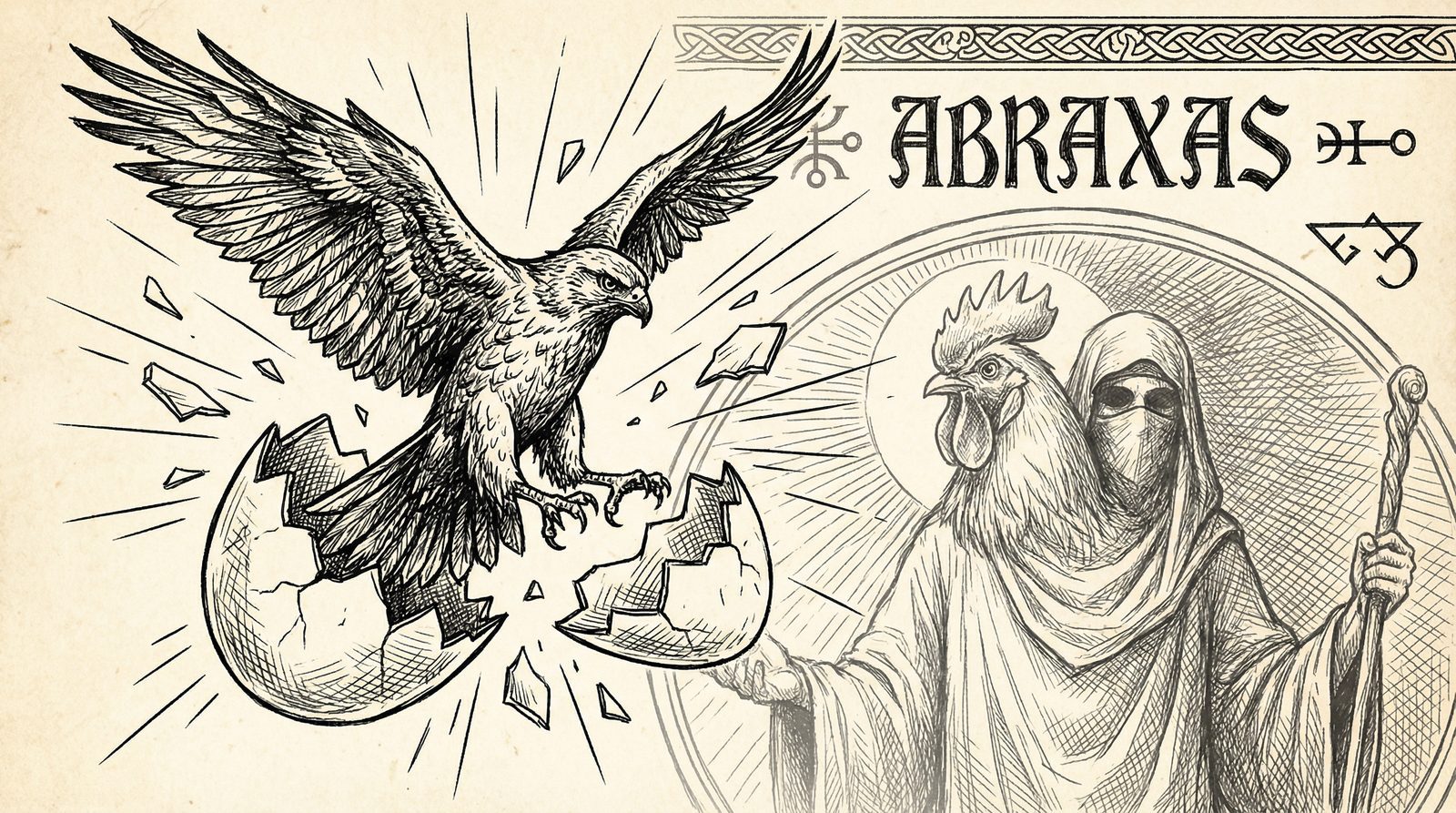
    The novel organizes itself around dualities. Sinclair moves between light and dark, spirit and flesh, obedience and rebellion. At boarding school he sinks into drinking and numb routine, then experiences a jolt of awakening through a dream of a bird breaking free from its egg. This image leads him to Demian’s mother, Frau Eva, whose house becomes a sanctuary for those drawn to a god who unites opposites rather than separating them.

    World War I remains mostly at the margins until it erupts at the end. Sinclair is wounded at the front and wakes in a field hospital to learn that Demian has been mortally injured. Demian appears one last time, perhaps in reality, perhaps as vision, and tells Sinclair that from now on he must find Demian within himself. The novel closes without consolation. The inner journey has been completed, but the world has been shattered.

    PROSE & NARRATIVE STRUCTURE

    The book is told in first-person retrospect. Sinclair narrates as an adult, looking back to locate the fault lines that ran under his youth. The prose is clear and restrained, punctured by moments of symbolic intensity: the smell of damp stone where Kromer corners him, the charged stillness of Pistorius’s organ loft, the recurring image of the hawk and the mark of Cain.

    Structurally, the novel advances in stages of consciousness rather than acts. Chapters function like psychological stations, each marking a shift in self-perception. External events often blur into interior states. Years pass quickly when Sinclair is spiritually asleep; moments of crisis expand and slow when something essential breaks or is recognized.

    Hesse keeps the focus narrow and vertical. There are no real subplots. Everything bends toward the same pressure point: the cost of becoming oneself in a world that demands conformity.
    Conceptual editorial illustration inspired by 'Demian'

    CHARACTERS & INTERIORITY

    Sinclair begins as a sheltered child who believes in the moral clarity of his parents’ world. What defines him is how quickly that certainty fractures. His interior life is obsessive and self-scrutinizing. Guilt, longing, and fascination churn long before they surface in action.

    Demian himself remains deliberately elusive. He shifts between schoolboy, prophet, and mirror. His interpretation of the Cain story reframes Sinclair’s sense of being marked as not cursed but set apart. Frau Eva embodies a vision of wholeness that Sinclair longs for, calm, inclusive, and indifferent to conventional morality.

    Minor figures are no less charged. Pistorius represents the danger of living only in symbols without fully entering the world. Kromer lingers as a reminder that darkness is not abstract. It has a voice, a smell, and a presence that can follow you into adulthood. Hesse allows these characters to blur into one another, as if they were facets of a single divided self.

    LEGACY & RECEPTION

    First published under a pseudonym, Demian spoke directly to readers emerging from the devastation of World War I. It offered neither patriotism nor consolation, but a language for inner dislocation. Its blend of psychological introspection and spiritual rebellion helped shape what would later be recognized as twentieth-century existential fiction.

    The novel’s refusal of a redemptive ending has been central to its endurance. Growing up here does not mean fitting in or finding peace. It means learning to recognize the mark that sets you apart and living with it. That idea has echoed through later portraits of alienated youth, from Hesse’s own later work to mid-century American fiction.

    IS IT WORTH READING?

    If you want a brisk plot or social panorama, this book will frustrate you. It is short, dense, and relentlessly interior. But if you are drawn to stories of adolescence as a spiritual earthquake, it remains one of the most honest accounts ever written.

    The language is accessible, the chapters compact, but the ideas linger. Hesse does not offer answers. He offers a vocabulary for the feeling that you do not quite belong to the world you were given, and that becoming yourself may require breaking something you were taught to protect.
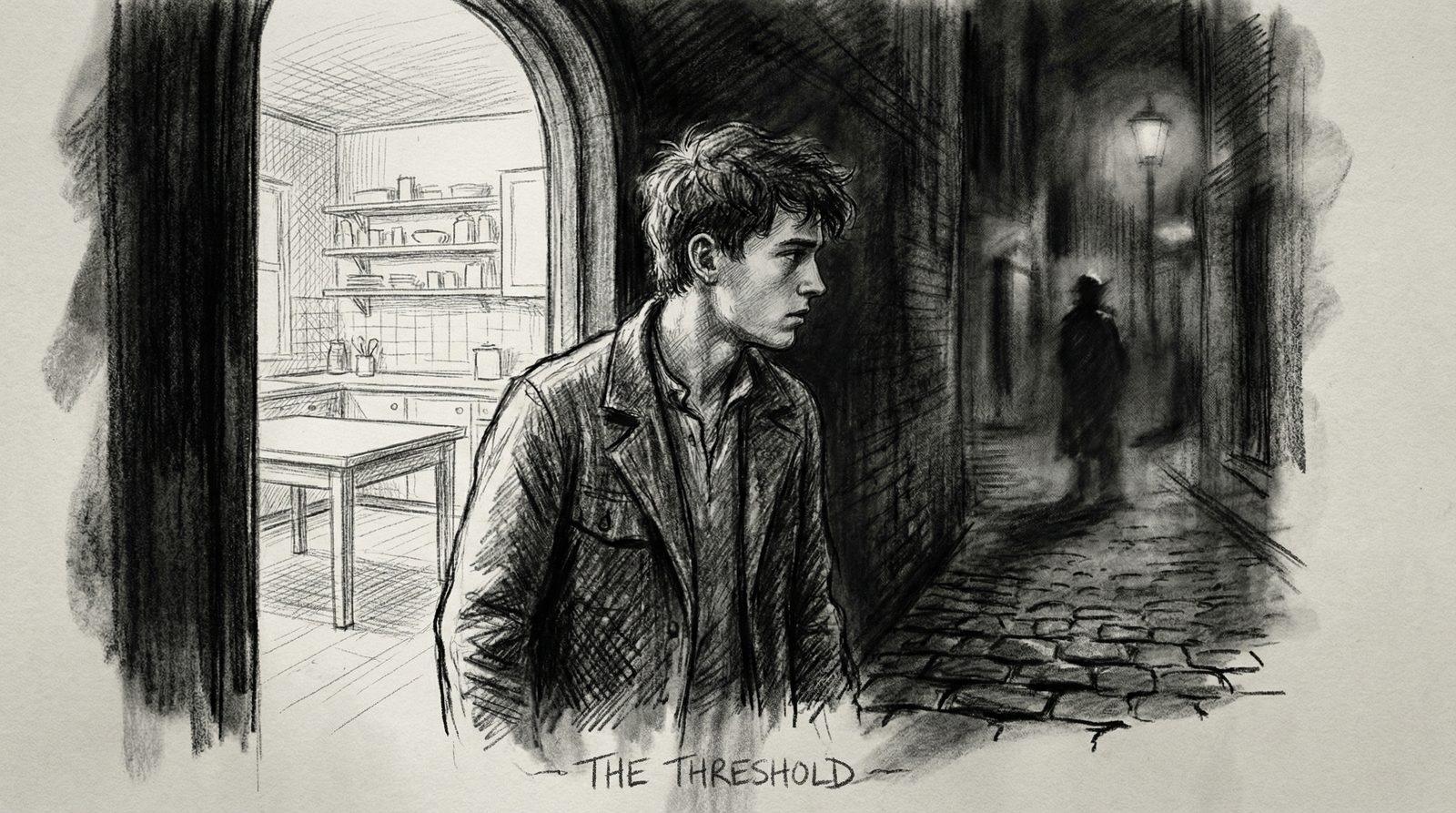
    Illustration inspired by a core idea from 'Demian'

    TRIVIA & AUTHOR FACTS

    Hermann Hesse originally published the novel under the pseudonym “Emil Sinclair,” presenting it as the confession of an unknown young writer. Only later was his authorship revealed. The book draws heavily on Hesse’s engagement with Jungian psychology and his own period of analysis during the war years.

    The figure of Abraxas comes from Gnostic traditions, reshaped by Hesse to express the unity of opposing forces. Many images in the novel echo Hesse’s own childhood memories and recurring dreams. Demian marked a decisive turn in his career toward the introspective, spiritually questing works that would define his later reputation.

    SIMILAR BOOKS

    Readers who respond to this inward intensity may also turn to Siddhartha for a later, calmer spiritual journey, or Steppenwolf for a more fractured portrait of identity and rebellion. For a different cultural register of adolescent alienation, The Catcher in the Rye offers a similarly haunted voice without the explicit mysticism.

    DISCOVERABILITY & LINKS

  • Hermann Hesse

    Hermann Hesse

    ORIGINS & BACKGROUND

    Hermann Hesse was born in 1877 in the southwest of what is now Germany, into a family deeply shaped by Protestant Christianity and missionary work in India. That tension between strict European piety and the attraction of Asian philosophy would quietly inform his imagination throughout his life. As a young man, Hesse struggled with school, religious authority, and expectations of conformity, experiencing psychological crises and periods of institutional care that later fed his sensitivity to inner fracture and spiritual unrest.

    He lived through the collapse of the old European order, the First World War, and the rise of nationalism. During this period, Hesse chose self-exile in Switzerland, distancing himself from German militarism and public ideology. This withdrawal from collective identity mirrors the journeys of his characters, who often turn away from mass movements in favor of solitary searching and inward transformation.

    Across novels such as Demian, Siddhartha, and Steppenwolf, Hesse repeatedly reworks his own conflicts: the pull between bourgeois security and artistic risk, between Western rationalism and Eastern mysticism, between belonging and solitude. His fiction is driven by this personal restlessness, filtered through a quiet, reflective temperament that treats inner crisis as a serious philosophical condition rather than a flaw to be cured.

    Editorial illustration inspired by Hermann Hesse

    THEMES & MOTIFS

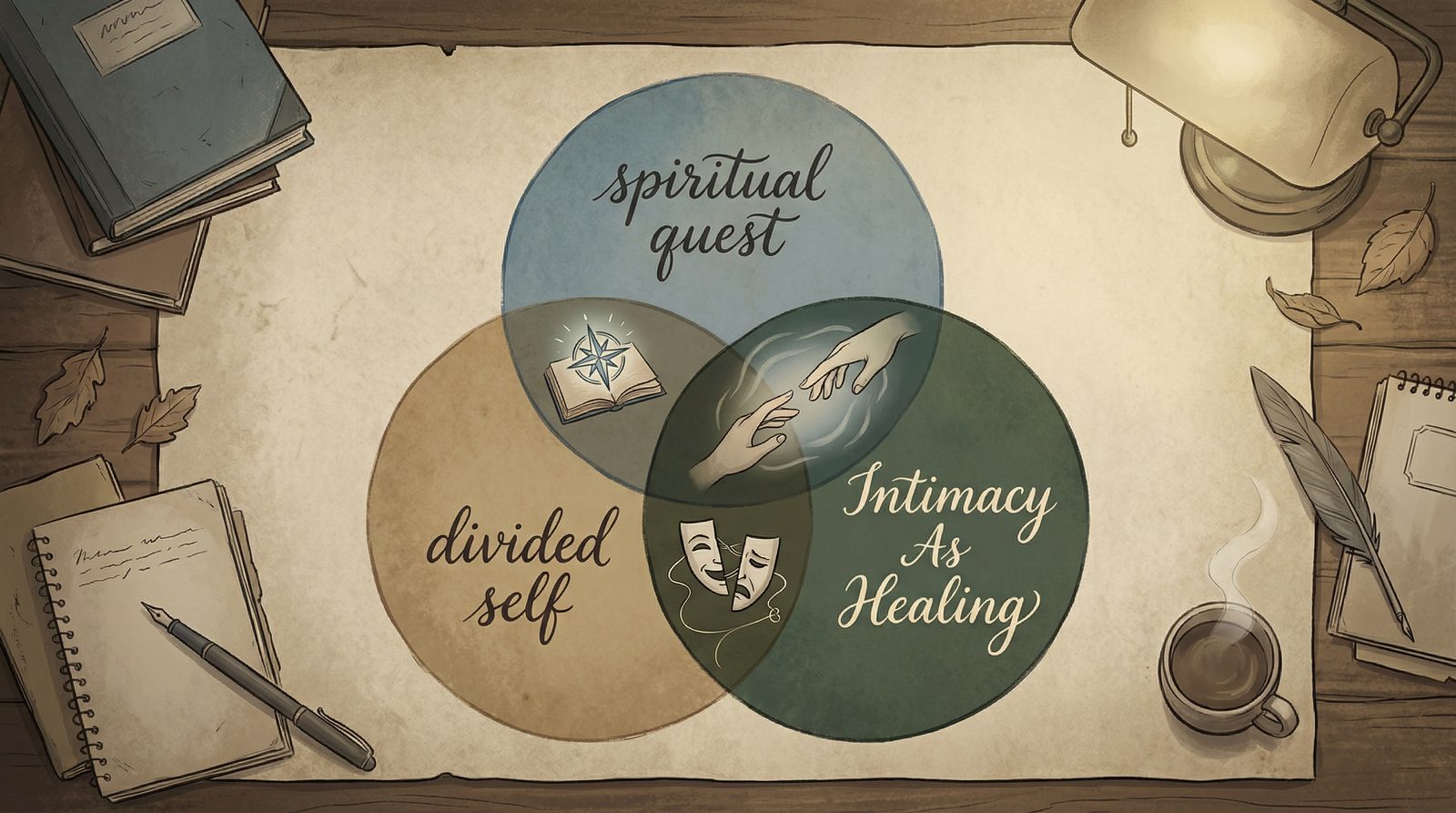
    Hesse returns again and again to the inner journey and the search for an authentic self. His protagonists are rarely satisfied with inherited identities. In novels like Demian and Steppenwolf, the central figures experience themselves as divided between a socially acceptable self and a darker, instinctive interior life. This division is not treated as pathology but as the necessary starting point for self-knowledge.

    Another persistent concern is spiritual awakening. Hesse’s characters move through belief systems, relationships, sensual experience, and renunciation, discovering that no single doctrine can replace lived understanding. Awakening in his work is slow, circular, and often painful, marked more by loss than by revelation.

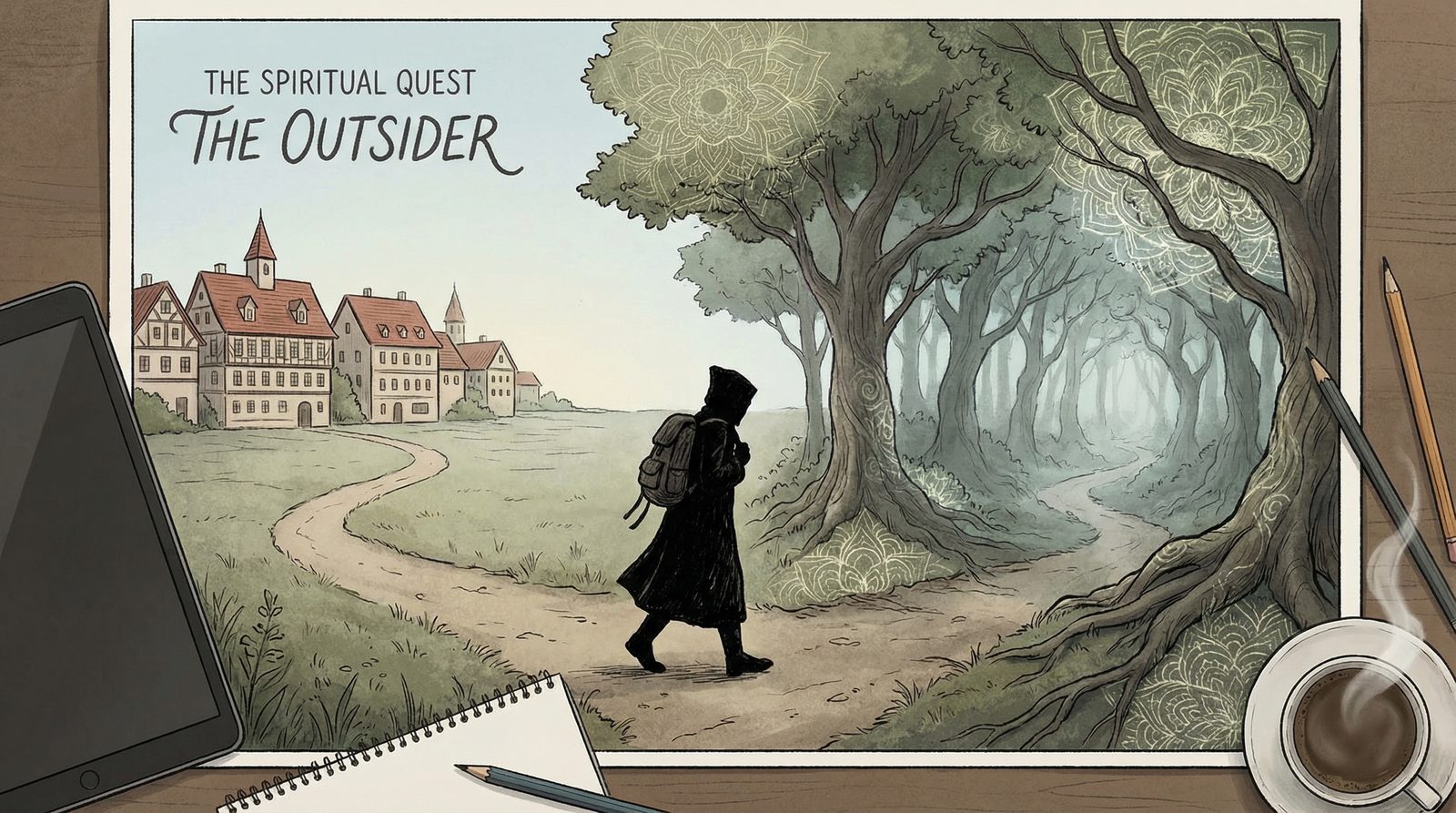
    Hesse is also preoccupied with alienation and the modern individual’s sense of being out of step with their time. The figure of the outsider recurs in different forms: the sensitive schoolboy of Demian, the wandering seeker of Siddhartha, and the tormented intellectual of Steppenwolf. These characters are torn between the safety of bourgeois life and the frightening openness of a more instinctive or spiritual existence.

    Yet his novels are not purely about solitude. Hesse repeatedly suggests that Intimacy As Healing is essential to transformation. Encounters with mentors, lovers, and mirrors of the self become turning points, not because they resolve conflict, but because they make self-deception impossible. Connection in Hesse is demanding rather than comforting.

    Symbolic illustration inspired by Hermann Hesse

    STYLE & VOICE

    Hesse’s style is deceptively simple. His prose is clear, measured, and introspective, favoring first-person or close third-person narration that stays tightly aligned with a character’s inner state. Even when mythic or symbolic material appears, the tone remains calm and reflective rather than grandiose.

    Structurally, many of his novels follow a pattern of initiation. Characters depart from familiar life, pass through periods of breakdown or excess, and return with altered perception rather than clear solutions. Action is secondary to realization, and meaning is earned through endurance rather than triumph.

    Emotionally, Hesse balances melancholy and hope. He confronts despair, loneliness, and self-destruction with honesty, yet almost always leaves a narrow path toward meaning. That path usually involves accepting contradiction rather than resolving it, and allowing connection to soften isolation without erasing it.

    KEY WORKS & LEGACY

    Demian (1919) is a compact novel of inner rebellion, charting a young man’s awakening to moral ambiguity and personal responsibility. Guided by the enigmatic Demian, the narrator comes to see identity and belief as fluid rather than fixed.

    Siddhartha (1922) follows a seeker in ancient India as he moves through asceticism, sensuality, despair, and quiet wisdom. It remains Hesse’s clearest articulation of spiritual pilgrimage grounded in lived experience rather than doctrine.

    Steppenwolf (1927) presents a darker, fractured vision of the divided self through Harry Haller, an intellectual convinced he is split between human and animal natures. Through surreal encounters, the novel explores alienation, self-hatred, and the possibility of integration.

    Hesse’s legacy sits at the intersection of European modernism and spiritual literature. His work continues to speak to readers who feel estranged from conventional paths yet skeptical of easy transcendence, offering stories where change is slow, painful, and deeply personal.

  • Paulo Coelho

    Paulo Coelho

    ORIGINS & BACKGROUND

    Paulo Coelho is a Brazilian novelist whose books sit at the crossroads of spiritual fable and mainstream popular fiction. He is best known for The Alchemist, a short allegorical novel that became a global phenomenon and turned the idea of Personal Legend And Destiny into a kind of pop-spiritual shorthand. Coelho did not arrive as a young prodigy. Before publishing novels, he worked in theater, music, and journalism, and spent years searching for his own sense of purpose. That late and hard-won success shapes how he writes about faith, failure, and second chances.

    Coelho’s Brazilian background matters less as local realism and more as the starting point for a borderless spiritual quest. His characters drift through Spain, the Middle East, Europe, and symbolic landscapes that feel intentionally simplified so the emotional terrain stands out. Like Hermann Hesse, whose Siddhartha he openly echoes, Coelho uses parable-like storytelling to explore inner transformation rather than social detail. The biography that counts most in his fiction is the internal one: people stuck in comfortable lives, haunted by the sense that they have betrayed their own dreams, and pushed by chance encounters or mystical signs to reclaim their calling.

    A defining event in Coelho’s personal mythology is his walk on the Camino de Santiago in Spain, later fictionalized in The Pilgrimage. That journey gave him a durable narrative frame: outer travel as a mirror of inner change. His Catholic upbringing, later mixed with esoteric and New Age currents, feeds into a blend of mysticism, Christianity, and universalist spirituality. He is not a doctrinal writer. Instead, he treats religion as one language among many for describing fear, courage, and meaning.

    His breakthrough came after setbacks and modestly received early work. That experience of delayed recognition shapes his recurring sympathy for characters who feel they have missed their chance. Coelho writes as someone who has lived through failure and reinvention, and he returns again and again to the question of whether it is ever too late to pursue one’s Personal Legend And Destiny.

    Editorial illustration inspired by Paulo Coelho

    THEMES & MOTIFS

    The central thread running through Coelho’s work is Personal Legend And Destiny: the belief that each person has a unique path or calling, and that suffering often comes from refusing it. In The Alchemist, this appears as a shepherd’s desert journey that is really a test of courage and attention. In The Pilgrimage, it becomes a literal road walked step by step. Across his novels, the plot is often a thin veil over the same spiritual question: will the character move toward their calling, or talk themselves out of it?

    A second major motif is Spiritual Pilgrimage. Coelho’s characters travel through deserts, cities, and symbolic landscapes, but the geography is simplified so the emotional terrain stands out. The road is where mentors appear, tests arrive, and illusions are stripped away. Even when the setting is not literally a pilgrimage route, the movement is structured like one: departure, ordeal, and a changed return.

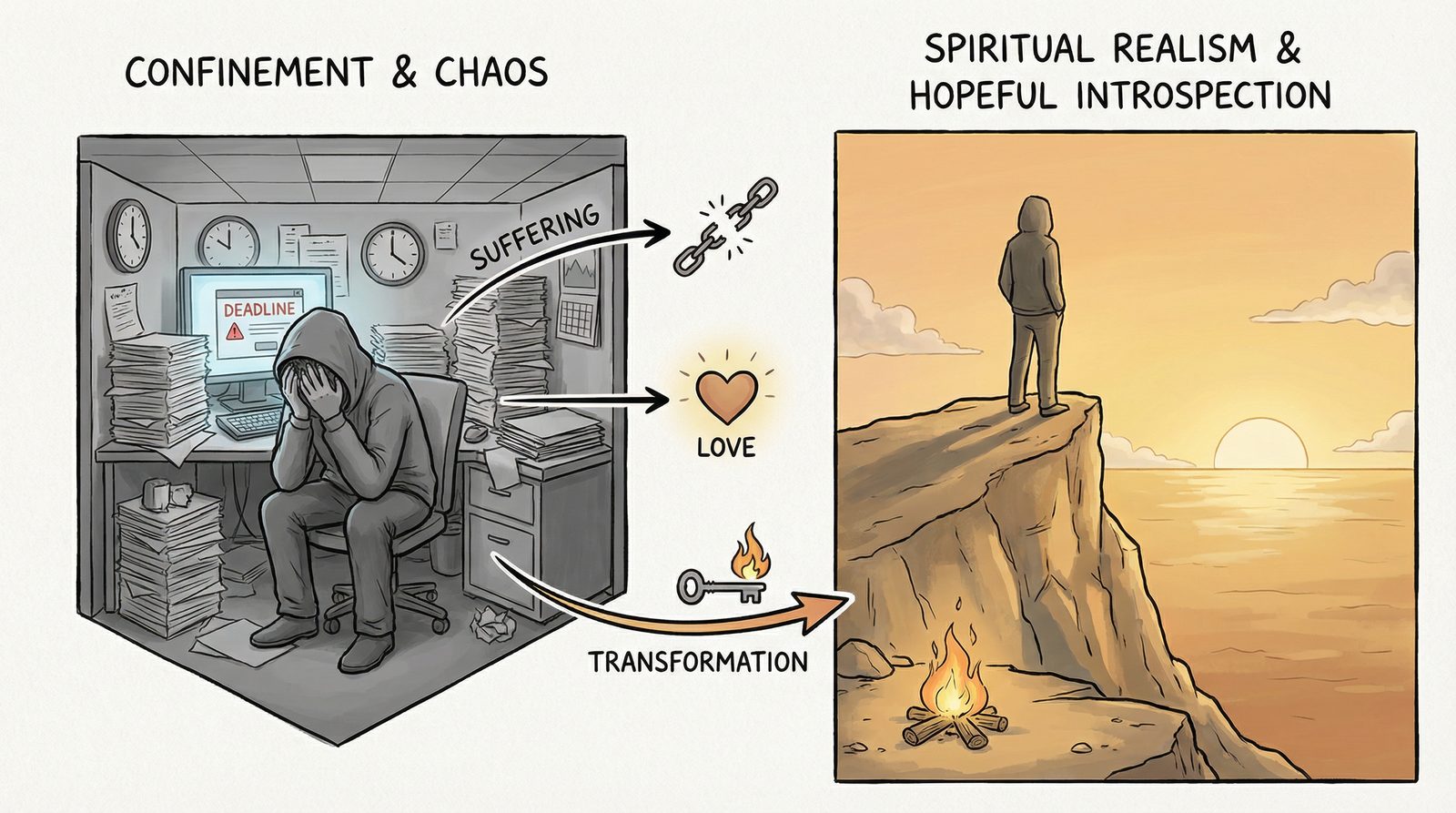
    He also returns to inner transformation through suffering. His protagonists often reach a breaking point: a numbing routine that suddenly feels unbearable, a relationship that exposes a deeper fear, or a moment of crisis that forces re-evaluation. Pain becomes a catalyst, not as heroic endurance, but as a confrontation with guilt, fear, and the stories people tell themselves about what is possible.

    There is a persistent belief in omens and meaningful coincidence. Characters read signs in repeated symbols, chance meetings, and the timing of events. The universe is treated as responsive to sincere desire. This can feel naïve or comforting depending on the reader, but it is central to Coelho’s spiritual realism. He portrays love as a force that can redirect a life, and solitude as the condition where one can finally hear what the heart wants.

    Symbolic illustration inspired by Paulo Coelho

    STYLE & VOICE

    Coelho’s style is deliberately simple, almost stripped down. Sentences are short, vocabulary is accessible, and plots unfold in clean, linear arcs. This simplicity is part of his method. He wants the reader’s attention on moral and emotional stakes rather than stylistic flourish. The voice is calm and reflective, often pausing for aphoristic statements that read like proverbs or journal entries. For some readers these lines feel like distilled wisdom; for others they feel blunt. Either way, they define his cadence.

    He favors allegorical storytelling and parable structure. Characters are less psychologically intricate individuals and more embodiments of questions such as: What do you fear losing? What do you secretly want? What excuse are you using to avoid change? Dialogue frequently functions as instruction, with guides explaining ideas about calling, fear, and faith. This gives his books a meditative pace even when the plot involves travel or danger.

    Emotionally, his work leans toward hopeful introspection. Dark subjects appear—especially in Veronika Decides To Die—but the narrative almost always bends toward renewal. The contemplative tone encourages readers to project their own experiences onto the story, which helps explain his broad appeal. Readers who respond to Hermann Hesse’s blend of narrative and philosophy in Siddhartha often find a more contemporary, streamlined version of that mix in Coelho’s work.

    KEY WORKS & LEGACY

    The Alchemist is the defining Coelho novel. Its story of a shepherd pursuing a dream across the desert crystallizes his core concerns with calling, pilgrimage, and the idea that the world responds when a person moves toward what they truly want. Because it is short and highly symbolic, it functions as an entry point into his worldview.

    The Pilgrimage is more explicitly autobiographical, recounting a trek along the Camino de Santiago and foregrounding spiritual practices and teacher-student dynamics. Veronika Decides To Die shifts to a psychiatric institution and asks what it means to be “normal” in a world that quietly crushes individuality. Brida follows a young woman drawn to initiation and magic, extending his interest in mystical apprenticeship and the tension between ordinary life and esoteric knowledge.

    Coelho’s legacy is less about formal innovation and more about accessibility. He helped popularize a kind of spiritual realism that sits between self-help and fiction, making questions of faith, purpose, and fear part of everyday reading. Whether one finds his work profound or simplistic, it has clearly shaped how contemporary readers talk about destiny, intuition, and the courage to change a life.

  • Brida (1990)

    Brida (1990)

    INTRODUCTION

    Brida (1990) by Paulo Coelho
    Spiritual fiction · novel-length (typically over 200 pages) · Brazil


    Brida is one of Paulo Coelho’s quieter novels. Set largely in Ireland in the late twentieth century, it follows a young woman who believes that learning magic might help her understand who she is, and whom she is meant to love. Coelho treats witchcraft not as gothic spectacle but as a vocabulary for anxiety, vocation, and longing.

    The tone is hushed and a little lonely. The novel often feels like walking alone through a forest at dusk and realizing you are being watched kindly, not hunted. It is a slight book in terms of plot, but it lingers because it treats ordinary decisions, career, romance, faith, as if they were rituals that change the structure of reality. For Brida, they are.

    PLOT & THEMES

    The plot is deliberately simple. Brida begins as an ordinary young woman living in Ireland who feels an unnamed lack. She seeks out a hermit known as the Magus and asks him to teach her the Tradition of the Sun. He senses that she is his soulmate, but withholds that knowledge, guiding her instead through solitude, discipline, and fear.

    In parallel, Brida studies the Tradition of the Moon with Wicca, a powerful practitioner who introduces her to trance, tarot, and the idea of reincarnation as a web of unfinished lessons. The novel’s chosen-student pattern is constantly complicated. Brida is “special” less because she has supernatural gifts than because she is willing to stay with discomfort long enough for it to become instruction.

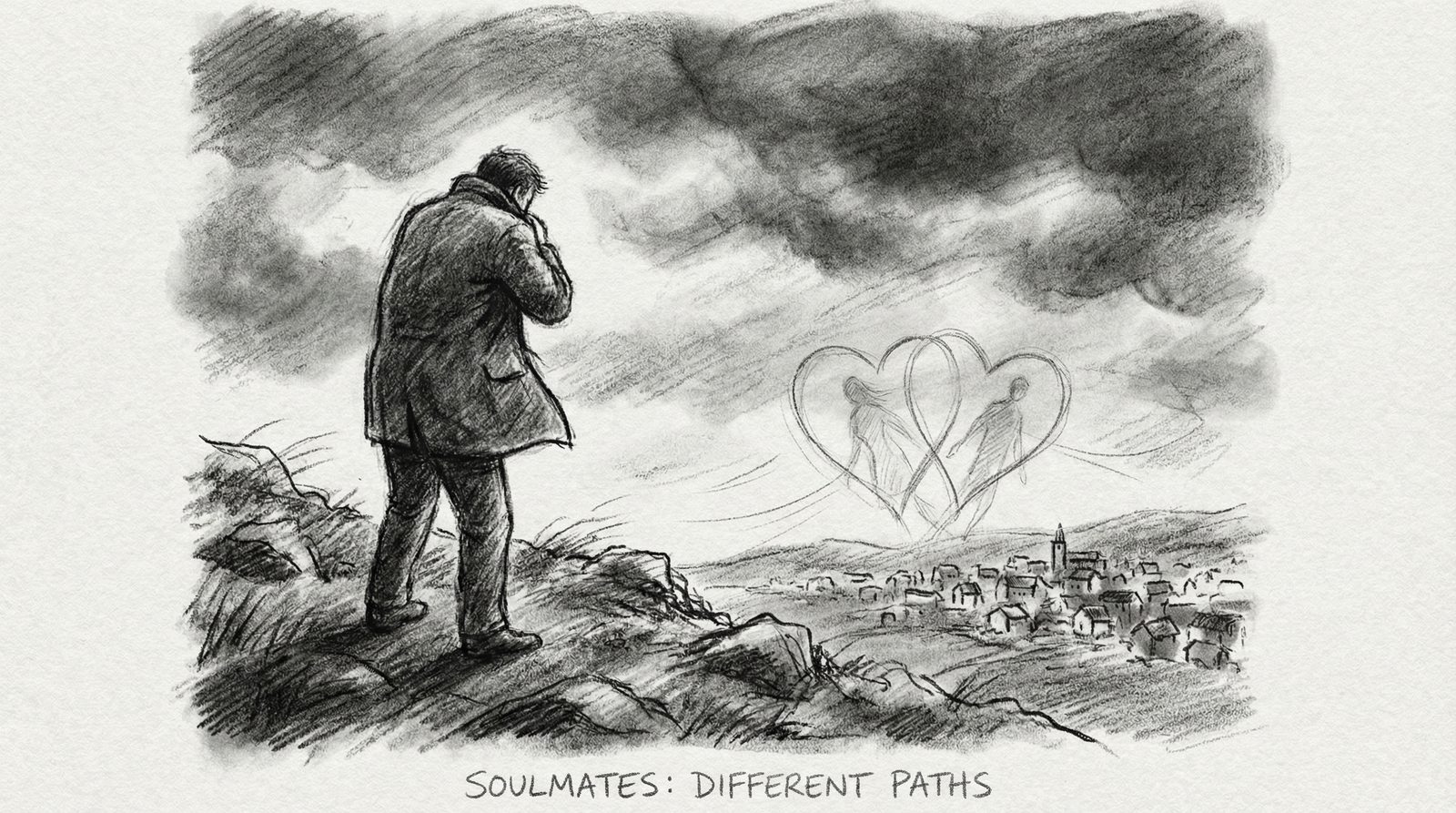
    Coelho builds much of the drama around the soulmate idea, both blessing and burden. Recognition can feel like destiny, but it can also destroy an existing life. This tension plays out between Brida and the Magus, and also in her domestic scenes with her boyfriend, Lorens, who offers a grounded future that does not require mystical completion.

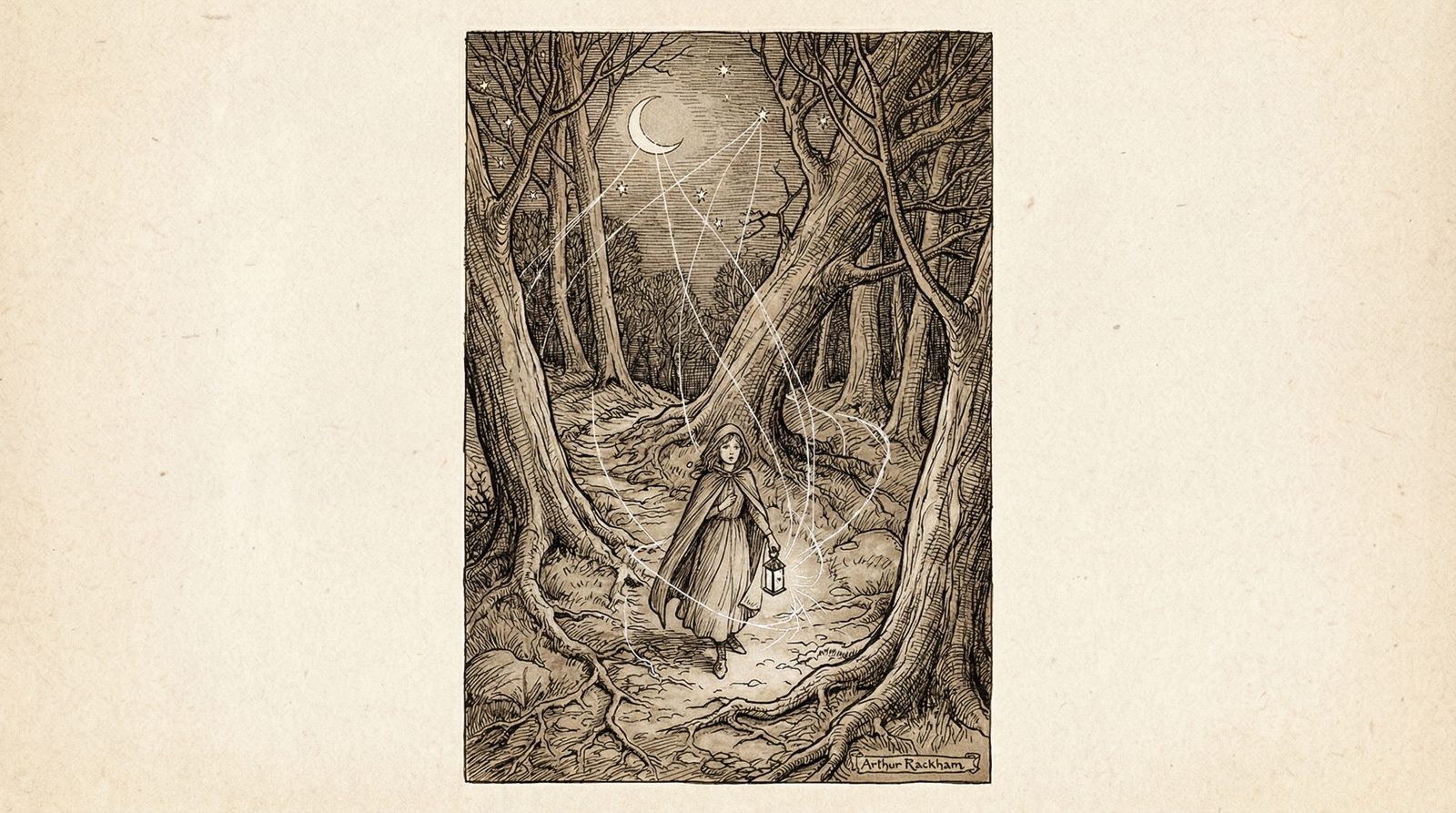
    A central sequence is Brida’s initiation in the forest, where she must walk alone at night and resist the urge to flee until the world’s “voice” becomes audible. Later, Wicca’s ritual in an abandoned church forces Brida to confront the cost of knowledge: she can glimpse other lives and hidden patterns, but she cannot force certainty. The ending is not parabolic. It is a decision. Brida recognizes the Magus as her soulmate, yet chooses to remain with Lorens, choosing a human, imperfect love over a destiny that feels absolute. The Magus releases her quietly, accepting that love sometimes means stepping aside.

    PROSE & NARRATIVE STRUCTURE

    The prose is stripped down and declarative. Coelho favors short sentences that sometimes read like fragments from a spiritual notebook. That simplicity can feel flat if you want lush description, but it suits the book’s mood of quiet searching.

    The narrative stays close to Brida while occasionally slipping into the Magus or Wicca, revealing how much they withhold from her. Structurally, the book moves through lessons and encounters: cafes with Lorens, visits to Wicca, solitary walks, the Sabbath on the hill. Each chapter feels like a small ritual with an intention. Coelho also pauses for brief explanatory passages on fear, faith, and practice. These moments can drift toward sermon, but they are usually short enough to feel like marginal notes rather than lectures.

    Symbolic objects recur with quiet insistence: tarot cards on a kitchen table, wine shared during initiation, the plain watch on Lorens’s wrist anchoring Brida to ordinary time. Coelho’s style is closer to a spiritual diary than to an elaborate occult system. The magic is kept deliberately human-scale, measured in hesitation, choice, and the aftertaste of a conversation.

    Conceptual editorial illustration inspired by 'Brida'

    CHARACTERS & INTERIORITY

    Brida is a seeker figure, but what saves her from abstraction is her ordinariness. She worries about work, about whether Lorens understands her, about looking foolish in front of Wicca’s circle. Her spiritual hunger never cancels her social awkwardness. Fear is her most consistent inner weather, fear of the forest, fear of choosing wrongly, fear of losing the life she already has.

    The Magus is written as a wounded mentor. His restraint is not aloofness so much as self-punishment, shaped by earlier failures and missed chances. Wicca, by contrast, is pragmatic and unembarrassed by power. Her scenes carry warmth and blunt clarity, undercutting the stereotype of the cold sorceress.

    Lorens might seem quieter than the other two teachers, but that is partly the point. He represents the life Brida already inhabits: shared meals, shared time, compromise, tenderness without cosmic fireworks. The emotional geometry between these three relationships is the book’s real drama, more than any ritual or spell.

    LEGACY & RECEPTION

    Brida has long lived in the shadow of Coelho’s more famous work, especially The Alchemist. It lacks that novel’s neat fable structure and global parable simplicity. Its focus on Western esoteric traditions, tarot, Wicca, reincarnation filtered through Irish landscapes, makes it more idiosyncratic and less easily packaged.

    Still, it has kept a steady following among readers drawn to spiritual apprenticeship rather than triumphant revelation. Its ending is central to its reputation. There is no miraculous reunion of soulmates, no cosmic reward for sacrifice. There is only the ache of choosing a life you can actually live, even when something in you insists another path is “meant.” That quiet refusal of fantasy closure is what gives the novel its sting.

    IS IT WORTH READING?

    Whether it is worth your time depends on what you want from the occult angle. If you are looking for intricate lore and elaborate worldbuilding, you will be frustrated. The magic here is more emotional than technical. But if you are interested in how spiritual longing collides with ordinary love, the novel can be surprisingly sharp.

    The prose is plain, sometimes blunt, yet certain scenes linger: the night walk in the forest, the quiet rituals, the final silent parting on the hill. It is a brief read, but not a light one, and it rewards readers willing to sit with ambiguity rather than tidy miracles.

    Illustration inspired by a core idea from 'Brida'

    TRIVIA & AUTHOR FACTS

    Coelho wrote Brida early in his career, drawing on his long-standing interest in esoteric traditions and spiritual searching. The Irish setting let him explore European witchcraft lore through an outsider’s gaze. The character of Wicca has often been described as inspired by a real person Coelho encountered, though details have been kept deliberately vague.

    Small details, Brida reading on bus routes, the forest as a threshold between city and countryside, reflect Coelho’s fascination with turning points where an ordinary life can tip into a different kind of awareness. The soulmate theme, which later became a recurring idea in his work, receives one of its earliest and most bittersweet treatments here.

    SIMILAR BOOKS

    If this novel speaks to you, you might seek out other stories where spiritual search intersects with ordinary love. The Alchemist offers a more fable-like journey built around omens and purpose. Foucault’s Pendulum is a denser, more ironic exploration of occult systems and the human hunger for meaning. And other Coelho novels return to similar questions: what it costs to pursue vocation, and what it costs to refuse it.

    DISCOVERABILITY & LINKS

  • Veronika Decides To Die (1998)

    Veronika Decides To Die (1998)

    INTRODUCTION

    Veronika Decides to Die (1998) by Paulo Coelho
    Psychological fiction · 139 pages · Slovenia


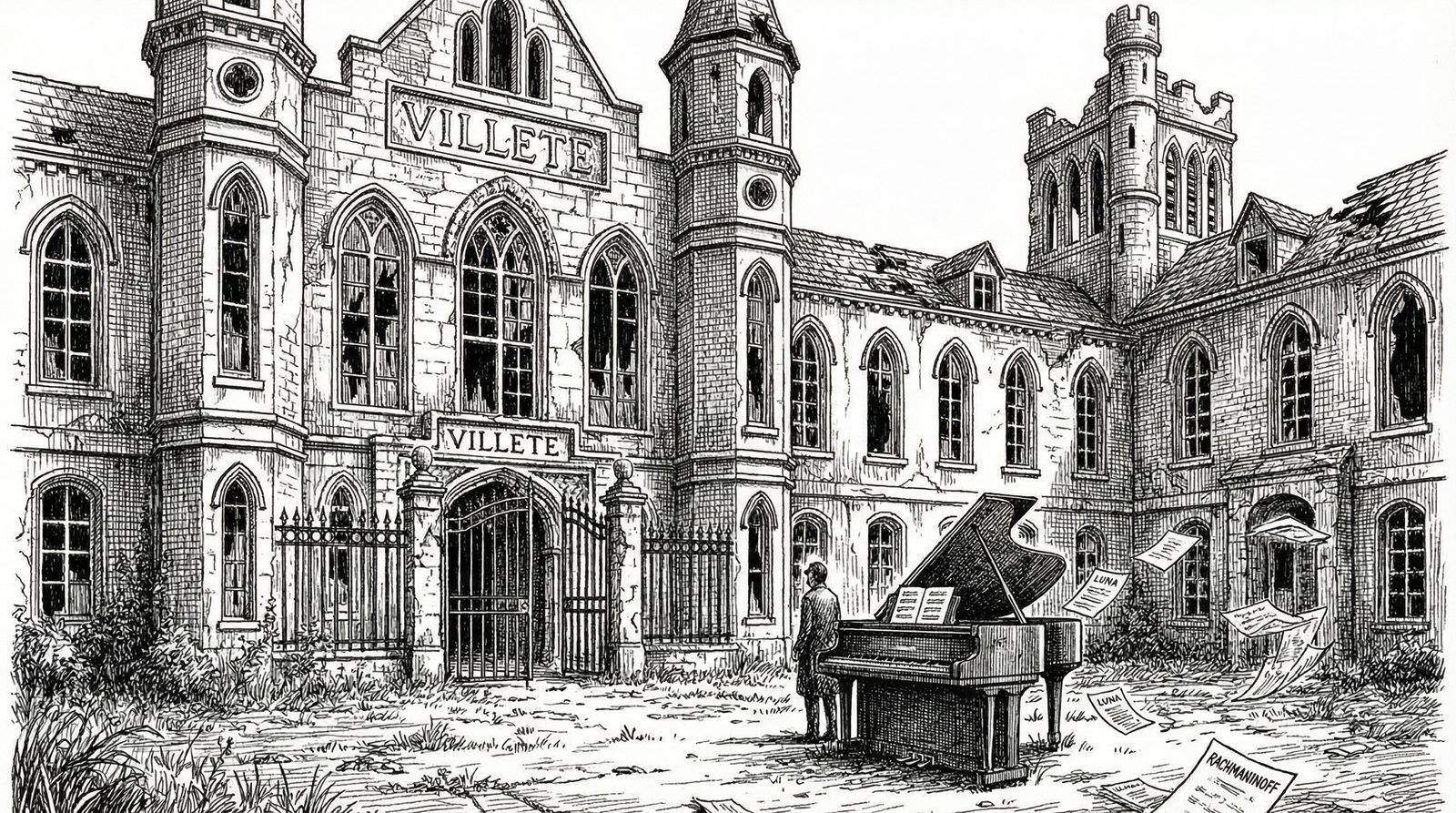
    Veronika Decides to Die begins with an ending. What follows is not a thriller about survival but a slow, unsettling study of numbness giving way to fierce, bewildering appetite for life. Coelho uses the sealed world of the Villete mental hospital as a pressure cooker where the boundary between “madness” and “normality” is tested until it breaks.

    The dominant emotional current is despair that keeps flipping into a strange, almost childlike wonder. Veronika believes she is going to die soon, and that belief makes everything vivid: music, touch, anger, risk. Behind the fable-like setup there is a hard question that the book refuses to soften: what makes a life worth continuing once you have already decided to end it?

    PLOT & THEMES

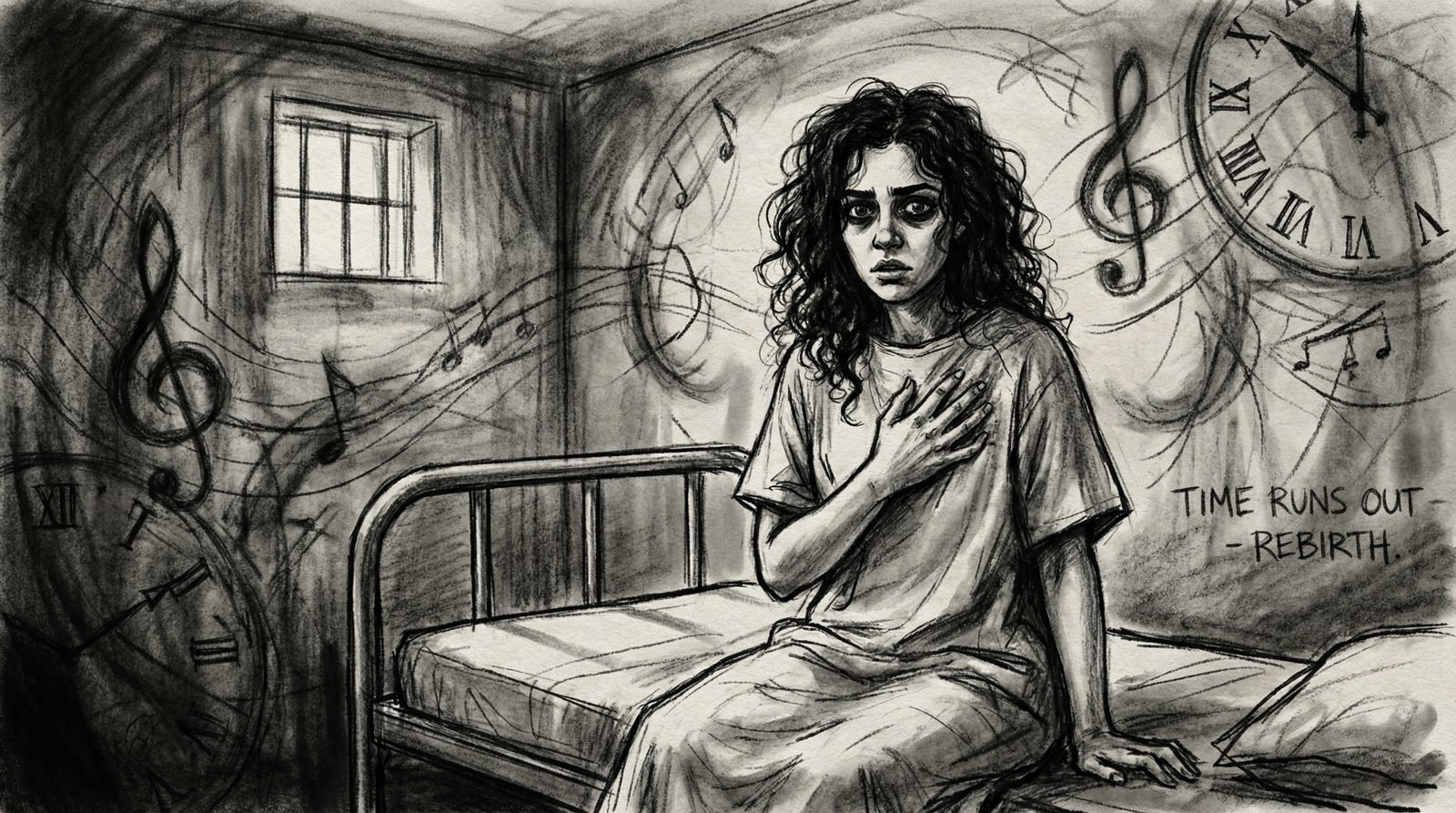
    After a suicide attempt, Veronika wakes in Villete and is told by Dr. Igor that her heart has been irreparably damaged. She has only days to live. The diagnosis is a lie, and it is the novel’s central device: a fabricated deadline meant to force a person back into desire.

    Inside Villete, Coelho builds a small society with its own rules and rituals. There is the “Fraternidade” wing for those labeled incurable, the courtyard where small rebellions become a form of breathing, and the communal piano where Veronika’s playing turns into something like speech. Time running out shapes every scene. Her original plan is to drift toward death quietly, yet the idea of having only a week makes her senses sharpen and her shame loosen its grip.

    She bonds with Zedka, treated for depression with insulin-induced comas, and Mari, a former lawyer whose panic attacks shattered her competent exterior. Most crucial is Eduard, a silent schizophrenic painter from a wealthy family, who responds to Veronika’s music as if it were the only language he trusts. Coelho keeps returning to the same tension: the asylum looks chaotic, but the world outside looks emotionally deadened. The book echoes the asylum tradition of One Flew Over the Cuckoo’s Nest, but with a mystical rather than political ambition.

    The ending is deliberately uneasy. Veronika does not die. She leaves Villete with Eduard still believing her death is imminent. Dr. Igor watches, convinced his experiment has succeeded. The novel closes on an ethical bruise: Veronika’s renewed hunger for life is real, but it was manufactured through deception. Whether that is salvation or manipulation is the question the book leaves vibrating in the reader.

    PROSE & NARRATIVE STRUCTURE

    The narration is third-person, but it often slips into an omniscient, fable-like mode. Coelho pauses the main story to address the reader directly or to sketch a minor character’s future regret. These digressions create a guided rhythm. We are not simply watching events unfold. We are being steered toward an interpretation.

    Structurally, the novel moves in short, modular chapters, alternating between Veronika’s compressed final week and the backstories of other patients. Each secondary character is given a tight arc: how they fell apart, how they were labeled, what they fear admitting about their former lives. The effect is a growing intimacy that can feel disorienting. The more you learn about the inmates, the less “mad” they seem, and the more the outside world starts to look like the real asylum.

    Coelho’s prose is plain and direct, punctuated by aphorisms that clearly want to be underlined. At times the didactic voice presses too hard, especially in Dr. Igor’s lectures about “vitriol,” the bitterness he believes poisons society. Still, the simplicity has force in key scenes, including moments of embodied defiance and sudden tenderness that the book refuses to treat as shameful.

    Conceptual editorial illustration inspired by 'Veronika Decides to Die'

    CHARACTERS & INTERIORITY

    Veronika is intentionally not given a single “origin trauma.” Her decision to die is framed as accumulation: routine, fear of aging, and the feeling that every available future is a slightly different shade of the same grey corridor. Her inner life is rendered through looping thoughts, small obsessions, and sudden surges of physical sensation once she believes she has nothing left to protect.

    The supporting characters are drawn in bold strokes but given enough specificity to feel lived-in. Zedka carries a fierce honesty about depression. Mari represents the collapse of a life built on competence and approval. Eduard risks being a mystical prop, but his history as an idealistic young man crushed by expectation gives him weight, and his connection to Veronika’s music becomes one of the novel’s few genuinely tender threads.

    Dr. Igor is the most unsettling presence: a benevolent tyrant whose experiment is both cruel and, within the novel’s moral logic, redemptive. He is less interested in saving individuals than in curing society. Villete becomes a laboratory where freedom, sanity, and cruelty are constantly being redefined.

    LEGACY & RECEPTION

    The novel arrived in the late 1990s, an era increasingly preoccupied with burnout and quiet despair, and it became one of Coelho’s signature works after The Alchemist. Its reception has always been divided. Some readers experience it as permission to question “normal” life. Others reject it as a spiritualized shortcut through realities that, outside fiction, are complex and chronic.

    The ending continues to provoke debate because it refuses a clean moral outcome. Veronika’s renewal is genuine, yet it is built on a lie. The book sits uneasily between inspirational fable and ethical minefield, and that unease is central to its endurance.

    IS IT WORTH READING?

    This is not a subtle novel, but it can be a piercing one. If you are allergic to aphorisms and spiritual metaphors, Coelho’s style will grate. Yet the book earns its place by refusing to treat suicidal despair as either a puzzle to solve or a sin to scold away. It asks a blunt question: if you thought your time was nearly up, what parts of your so-called sanity would you discard without regret?

    The asylum setting is more parable than psychiatry, but the emotional experience, numbness, anger, sudden surges of joy, can ring uncomfortably true. It is worth reading if you can tolerate a didactic, occasionally manipulative narrative in exchange for a fierce meditation on why anyone chooses to keep waking up.

    Illustration inspired by a core idea from 'Veronika Decides to Die'

    TRIVIA & AUTHOR FACTS

    Coelho has spoken openly about being committed to mental institutions as a teenager in Brazil, including experiences with electroconvulsive treatment. That biographical background echoes beneath Villete’s corridors, especially in scenes where families justify confinement “for someone’s own good.” The book was originally written in Portuguese and set in Slovenia, an unusual choice that fits Coelho’s interest in societies renegotiating conformity after political upheaval.

    Several recurring details carry symbolic weight: Veronika’s attention to a Bosnia headline before her attempt, the presence of the castle overlooking Ljubljana, and the piano as both instrument and refuge. Coelho has said the title came first, and the story was built backward from the decision to die toward the possibility of choosing life again, mirroring the novel’s structure of beginning at the end.

    SIMILAR BOOKS

    Readers drawn to stories that explore sanity, freedom, and institutional power may also look to One Flew Over the Cuckoo’s Nest for a more political vision of psychiatric control, or The Bell Jar for greater psychological nuance and a sharper portrait of social suffocation. For a quieter, confessional exploration of guilt and the pressure of simply continuing to exist, Kokoro offers a different but related intensity.

    DISCOVERABILITY & LINKS

  • The Pilgrimage (1987)

    The Pilgrimage (1987)

    INTRODUCTION

    The Pilgrimage (1987) by Paulo Coelho
    Spiritual fiction · 276 pages · Spain


    The Pilgrimage is Coelho before The Alchemist turned him into a global brand. Set along the Camino de Santiago in late twentieth-century Spain, it follows “Paulo” as he walks toward Compostela under the stern guidance of his master, Petrus. What begins as a journey across Spain becomes a chain of humiliations, occult drills, and small, piercing moments of clarity.

    The road works as an inner mirror. Crowded streets, empty stretches of the Meseta, and awkward encounters with strangers become tests of vanity, fear, and attention. The tone is restless and self-critical. This is a spiritual quest narrative that keeps tripping over ego, and that is exactly where it becomes interesting.

    PLOT & THEMES

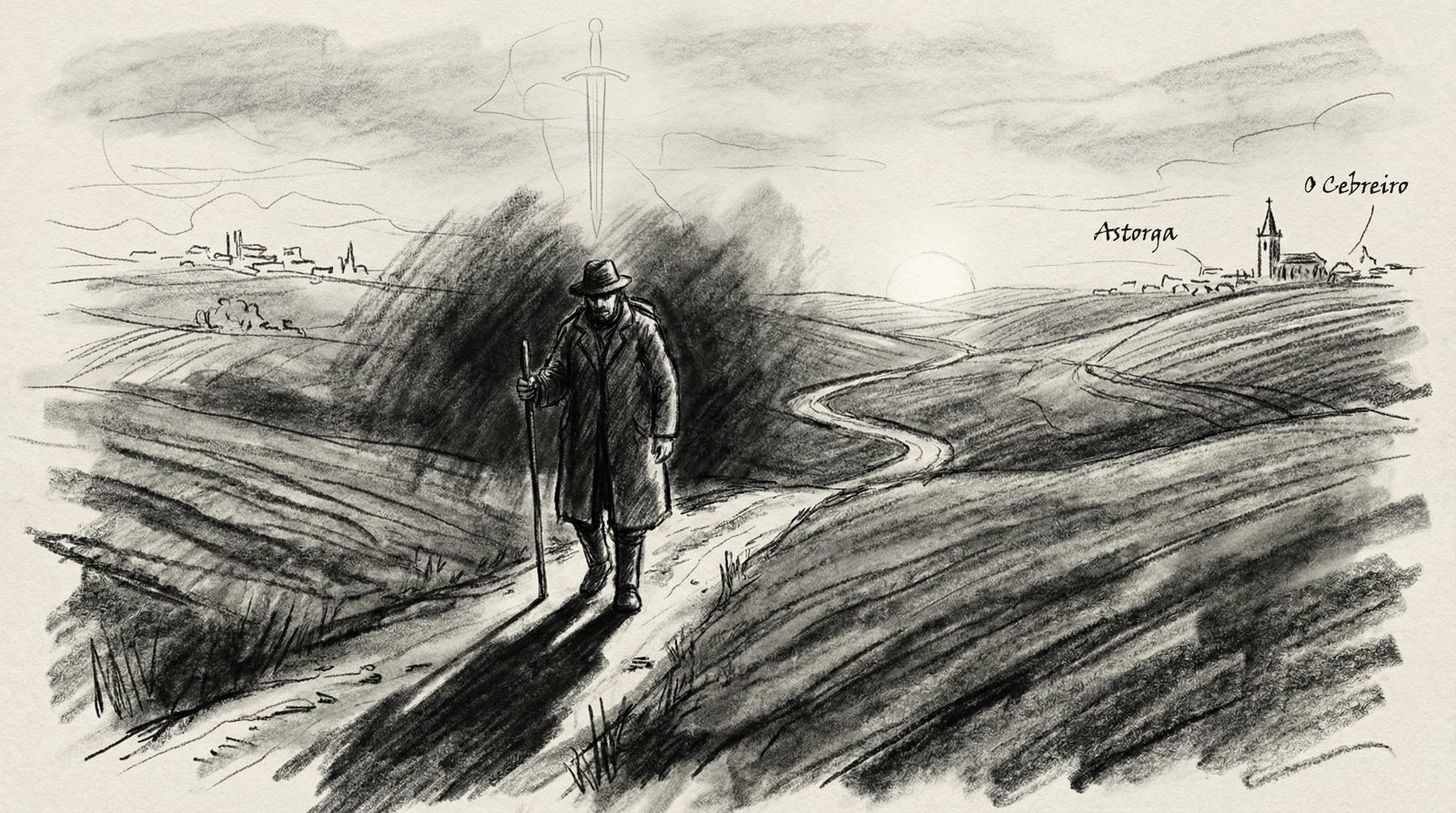
    The plot is disarmingly simple. Paulo has failed an initiation within his esoteric order, RAM, and must walk the Camino to recover a lost sword that symbolizes spiritual authority. Petrus leads him from town to town, and the journey becomes a sequence of exercises that look, at first glance, like New Age party tricks. In practice they function as slow, stubborn methods for stripping pride and building discipline.

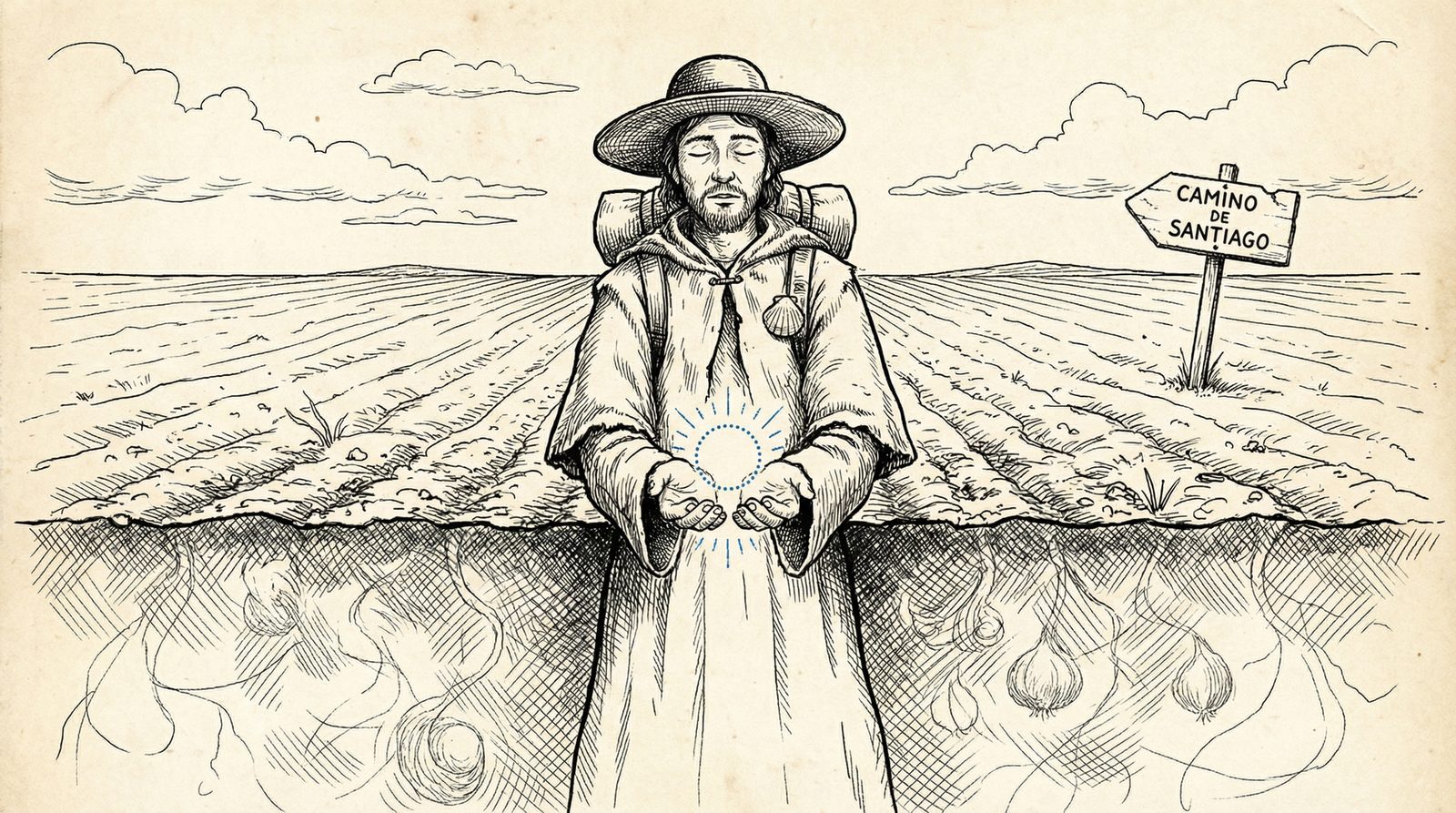
    Several rituals recur in the reader’s memory the way blisters do after a long day of walking. The Seed Exercise asks Paulo to imagine himself buried in darkness before growth. The Speed Exercise forces him to walk excruciatingly slowly while everyone else rushes past. The point is not power. The point is humiliation as instruction, and attention as the only real “skill” being trained.

    The book uses the familiar pilgrimage framework but keeps undercutting the heroic arc. Paulo becomes jealous of a dog, terrified by a madman near a ruined village, and nearly seduced off the path by an encounter that reads like temptation made flesh. The sword remains present as an absence: a symbol of authority that Paulo wants to possess, but does not yet deserve. Themes of obedience, everyday miracles, and spiritual pride run through the journey, but Coelho insists that the holy is found in missed buses, bad wine, aching feet, and arguments with the guide.

    The ending is resolutely uncinematic. Near the end of the Camino, Paulo is forced into a confrontation that feels like a ritualized fight with fear itself. Only after that does Petrus reveal the sword, and the revelation is almost wry: it has been near Paulo all along. The final lesson is not that Santiago grants miracles. It is that practice must continue. The journey is not completed once. It repeats, in different forms, for the rest of a life.

    PROSE & NARRATIVE STRUCTURE

    The book is written as first-person memoir, and that choice matters. Paulo is not an omniscient sage looking back with smug clarity. He is defensive, hungry for approval, and frequently irritated by his teacher. The sentences are short and blunt, and the rhythm can feel awkward until you realize it mirrors the act of walking: repetition, fatigue, and sudden flashes of lucidity.

    Episodes are arranged as parables rather than as a tightly plotted arc. Each town offers a new exercise, a new failure, and a new fragment of insight. Coelho also includes manual-like sections that explain practices directly. This interrupts the narrative spell, but it clarifies the book’s ambition: it wants to be used, not merely read.

    Structurally, the memoir circles back on itself. The opening failure in Brazil is mirrored by Paulo’s near-failure at the end, creating a loop rather than a straight line. The Camino becomes less a path across Spain than a track inside Paulo’s mind, where the same fears return until they are finally faced without performance.

    Conceptual editorial illustration inspired by 'The Pilgrimage'

    CHARACTERS & INTERIORITY

    Paulo is a seeker figure stripped of glamour. He is vain about spiritual rank, sulky when Petrus withholds praise, and occasionally cruel in his private judgments of other pilgrims. This imperfection gives the spiritual material friction. We are not watching a saint in the making. We are watching a person wrestling with the desire for meaning and the desire for status, and trying to pretend they are the same thing.

    Petrus is a trickster mentor who alternates tenderness with mockery. He engineers situations that feel pointless or humiliating, because humiliation is the tool. Minor figures appear briefly but function as mirrors: the pilgrim who quits after losing a bag, the farmer who explains an exercise without mysticism, the stranger who passes Paulo effortlessly, reminding him that pride is often just a story told to cover weakness.

    Interior life is the book’s real arena. Paulo’s obsessive self-monitoring can be exhausting, but it is also the most honest part of the memoir. The drama is not the landscape. It is the mind trying to keep control of the story while the walk keeps undoing it.

    LEGACY & RECEPTION

    In hindsight, this book is often read as the seed of Coelho’s later work. Where The Alchemist turns the quest into a smooth fable, The Pilgrimage keeps the blisters and the awkward pauses. It helped popularize the Camino de Santiago for readers who had never heard of Compostela, and it contributed to the late twentieth-century boom in spiritual memoirs that treat personal crisis as narrative engine.

    Reception has always been split. Some dismiss it as occult tourism. Others value its willingness to show spiritual vanity and failure without disguising them as wisdom. The ending, with the sword revealed in an ordinary field rather than inside a cathedral, has aged well. It refuses the fantasy that holiness lives in famous buildings. The climax is internal: authority is conditional, dependent on ongoing practice, and never finally earned.

    IS IT WORTH READING?

    If you want a polished parable with all rough edges sanded off, this is not it. The memoir is uneven, occasionally naïve, and sometimes embarrassing. That is also why it works. The mix of ritual, Catholic imagery, and blunt self-critique feels like a real person groping toward meaning rather than a guru dispensing aphorisms.

    Readers interested in spiritual practice, in the psychology of faith, or in the Camino as lived from the inside will find plenty to chew on. If you have no patience for mysticism, the book may grate. But as a portrait of stubborn searching, it remains strangely compelling.

    Illustration inspired by a core idea from 'The Pilgrimage'

    TRIVIA & AUTHOR FACTS

    Coelho did walk the Camino de Santiago in the 1980s after a turbulent period that included time in a mental institution and years working as a lyricist in Brazil. The order RAM is presented as real but partially fictionalized and deliberately obscured. The exercises described, including the Seed Exercise and the Blue Sphere Exercise, are framed as practices he claims to have done rather than as invented fantasy.

    The book was first published in Portuguese as O Diário de um Mago (“Diary of a Magus”), emphasizing the occult angle more than the walking-tour aspect. The manual-like appendix has inspired informal study circles and solitary readers who treat the book as a workbook as much as a narrative.

    SIMILAR BOOKS

    If this blend of outer travel and inner upheaval appeals to you, Siddhartha offers a more distilled spiritual journey, while Wild turns the walk into a contemporary reckoning with grief and self. Readers drawn to the Christian mystical angle may also find resonance in conversion narratives like The Seven Storey Mountain, where the road is traded for a monastery but the hunger for transformation remains.

    DISCOVERABILITY & LINKS

  • Craftsmanship And Quality Of Work

    Craftsmanship And Quality Of Work

    DEFINITION & CORE IDEA

    “Craftsmanship And Quality Of Work” is the motif where the way a character performs their work becomes a direct expression of their inner life. It is not simply about employment or productivity. The focus is on care, precision, pride, and the satisfaction of doing something properly, even when no one is watching. Whether the task is tuning an engine, preparing a meal, writing software, or shaping wood, the work itself carries moral weight.

    Stories built around this motif slow down and pay attention to process. In Zen And The Art Of Motorcycle Maintenance: An Inquiry Into Values (1974), motorcycle maintenance becomes a way of examining “Quality” as something experienced rather than defined. In Lila: An Inquiry Into Morals (1991), that concern expands into ethics and social life, still grounded in the idea that values are revealed through attention and care.

    At its core, this motif treats work as a moral and emotional discipline. It asks where standards come from, how they are practiced, and what is lost when integrity collides with systems that reward speed, scale, or convenience.


    HOW IT WORKS IN STORIES

    Craftsmanship And Quality Of Work usually appears through the rhythms of daily labor. Writers linger on routines: opening a workspace each morning, laying out tools, repeating movements until they become instinctive, inspecting the final result with quiet seriousness. The story may not be overtly “about” the job, but the way the work is done reveals character more clearly than dialogue alone.

    Sometimes the work itself becomes the teacher. In Shop Class As Soulcraft: An Inquiry Into The Value Of Work (2009), written by Matthew B. Crawford, manual problem-solving is framed as intellectually demanding and ethically grounding. Stories echo this idea when characters develop patience, humility, or self-respect through repeated, concrete tasks. A flawed repair or failed attempt is not just a setback, but a test of standards.

    Conflict often enters when the surrounding world does not value quality in the same way. A supervisor pushes for speed over care, a system rewards shortcuts, or customers demand something cheap and disposable. The character must decide whether to compromise, resist, or walk away. That decision becomes a clear statement of identity.

    This motif allows writers to make abstract ideas tangible. In the work of Robert M. Pirsig, the road, the machine, and the act of maintenance become tools for thinking about attention, rationality, and lived experience. Meaning is not explained. It is encountered through effort, failure, and care.

    Even in intimate or domestic narratives, the motif shapes relationships. A parent teaching a child a careful technique, or a mentor guiding an apprentice, passes on more than skill. They transmit a way of engaging with the world that can become a form of trust or love.


    EMOTIONAL EFFECT ON THE READER

    Stories shaped by this motif often feel grounding. There is comfort in watching someone care deeply about what they are doing, especially in a culture that feels rushed and disposable. Attention to tools, textures, and small decisions can be quietly absorbing.

    At the same time, the motif can provoke sadness or anger. When care is dismissed or punished, the loss feels personal. Stories about disappearing skills or neglected standards often carry a sense of dignity under threat.

    For many readers, this motif turns inward. It encourages reflection on everyday effort and responsibility. The question it raises is simple but unsettling: where does quality still matter in your own life, and what does it cost to protect it?

    There is also intimacy in this focus. Watching a character work carefully is like watching them unguarded. Habits and rituals reveal who they are when performance drops away, making later choices feel heavier and more personal.


    VARIATIONS & RELATED MOTIFS

    Craftsmanship And Quality Of Work takes many forms. In some stories, it centers on manual trades. In others, the craft is intellectual or emotional, such as teaching, caregiving, or programming. What unites them is the same pattern: the character treats their work as something deserving of attention, and their sense of self is bound to doing it properly.

    A common variation is the “lost craft” narrative, where older ways of working are disappearing. Another focuses on the collision between personal standards and impersonal systems, where care is labeled inefficient or excessive.

    This motif often pairs with Eastwest Philosophical Synthesis. In Pirsig’s writing, the road and the act of maintenance bridge Western analysis and Eastern presence. In Crawford’s work, the workshop becomes a site of moral clarity. Different settings, the same question: how should attention be lived?

    Across its variations, the motif returns to a single concern: when people invest genuine care in their work, how does that shape who they become?

  • Unintended Consequences Of Wishes

    Unintended Consequences Of Wishes

    DEFINITION & CORE IDEA

    The motif of Unintended Consequences of Wishes is all about the gap between what a character wants and what actually happens when they get it. Someone makes a wish, strikes a bargain, or voices a casual request, and the universe answers in a way that is technically correct but emotionally disastrous. The wish is granted, but it arrives with loopholes, side effects, or a cruelly literal twist.

    Stories built on this motif take the simple fantasy “What if I could have anything?” and turn it into a test of character. The wish can come from a genie, a djinn, a magical artifact, a mischievous spirit, or an impersonal cosmic rule. The key is that the wisher does not fully understand what they are asking for, or what it will cost them and others.

    In children’s fantasy like Five Children And It (1902) or comedy-fantasy such as The Brass Bottle, this motif often plays as chaotic fun, where wishes turn ordinary life into social disorder. In darker versions, the consequences become corrosive and personal, as in A Fallen Idol. In all cases, the heart of the motif is the same lesson: desire without foresight is dangerous, and power, even magical power, does not erase consequences.


    HOW IT WORKS IN STORIES

    In stories using Unintended Consequences of Wishes, the setup is deceptively simple. An ordinary person stumbles onto a source of power. The wisher is usually not a villain. They are tired, lonely, greedy, bored, or just curious. Their first wish is often small and impulsive, which makes the fallout feel both believable and embarrassing.

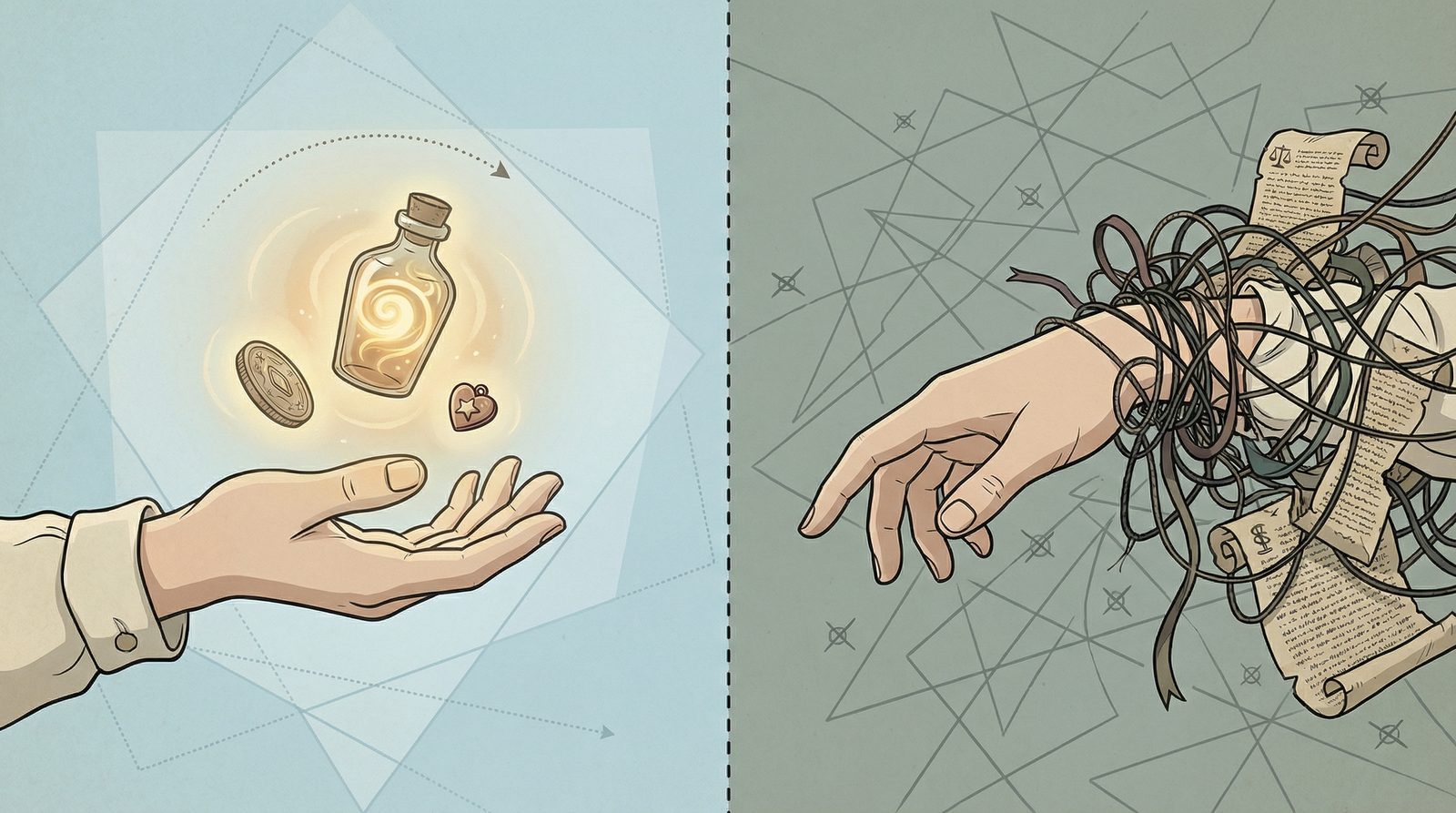
    The wish is granted with a twist. The wisher gets what they asked for, but not what they meant. A solution arrives in the worst possible form. The gift comes attached to humiliation, guilt, conflict, or harm that spreads beyond the original desire. Attempts to fix things with additional wishes often make it worse, stacking complications until the character is trapped in a web of their own making.

    Writers use this motif to explore responsibility and self-knowledge in a vivid way. Instead of lecturing about “be careful what you wish for,” the story lets us watch the character collide with the fine print of their desires. The motif pairs well with comedy and satire, because literal-minded magic exposes vanity, hypocrisy, and entitlement simply by doing exactly what was asked.

    Because wish stories often begin with a bound spirit or a magical object, this motif frequently overlaps with bottle-bound bargains, supernatural deals with hidden costs, and stories where fantasy intrudes into ordinary domestic life.


    Editorial illustration inspired by 'Unintended Consequences of Wishes'

    EMOTIONAL EFFECT ON THE READER

    Unintended Consequences of Wishes hits a mix of feelings. On the lighter side, there is real pleasure in watching a too-literal wish go wrong. The reader gets to enjoy slapstick and clever reversals while safely thinking, “I would have phrased that better.”

    Underneath the humor is a quieter discomfort. The motif nudges us to notice how often we want things without understanding the consequences. When a wish hurts someone the character cares about, the reader feels a sting of guilt by proxy. We see how easy it is to be selfish by accident, and how a small moment of impatience or vanity can spiral into something much bigger.

    In darker takes, the emotion shifts toward dread and regret. Each new wish tightens the trap, and the reader senses that there may be no clean way out. The story becomes a pressure test of character, because power keeps offering shortcuts while consequences keep demanding payment.

    Overall, this motif lets readers enjoy the fantasy of limitless power while also feeling the weight of it. It is satisfying when a character finally learns to phrase a wish carefully, to give up the power, or to accept the original messy life they were trying to escape. That mix of schadenfreude, anxiety, and eventual catharsis is what keeps Unintended Consequences of Wishes so enduring.


    Symbolic illustration inspired by 'Unintended Consequences of Wishes'

    VARIATIONS & RELATED MOTIFS

    Unintended Consequences of Wishes comes in several recognizable flavors. Comic versions focus on embarrassment, romantic misunderstandings, and chaotic but reversible disasters. Child-centered versions use wishes to explore growing up, where each fantasy is exposed as incomplete or naive. Darker interpretations treat wishes as tools of power, where unintended consequences spill into coercion, conflict, and moral compromise.

    This motif frequently intersects with stories where fantasy intrudes into domestic realism, where children encounter real magic too early, and where misunderstandings spiral into farce. The structure stays the same, even when the tone changes: a character tries to shortcut their problems and discovers that reality, magical or not, always charges a price.

  • Genie Or Djinn Released From A Bottle

    Genie Or Djinn Released From A Bottle

    DEFINITION AND CORE IDEA

    The Genie Or Djinn Released From A Bottle motif begins with a simple act: someone finds an object they should probably leave alone. It might be a genie in a bottle, a djinn in a lamp, or a spirit sealed into an ordinary-looking container, but the core idea is the same. An ordinary person suddenly gains access to impossible power, usually in the form of wishes.

    This motif is less about flashy magic and more about what happens when human desire meets an ancient, alien intelligence. The genie or djinn is often bound by rules, resentments, and centuries of captivity. The person who finds the bottle is usually naive about both magic and consequences. Stories built on this setup explore how quickly “everything you want” can twist into something frightening, absurd, or unexpectedly honest.

    Writers love the bottle because it is portable power. It can drop into any setting, from a Victorian drawing room to a modern kitchen, and instantly turns private longing into public consequence. The motif asks, in a concrete way, what someone truly wants and what they are willing to pay for it, whether that price is moral, emotional, or literal.


    HOW IT WORKS IN STORIES

    Most stories with this motif start with an accident or a small, greedy choice. A character stumbles on a lamp at a market, inherits a dusty bottle, or fiddles with a strange object that looks harmless. In The Brass Bottle, a seemingly ordinary antique releases a djinn-like figure into everyday life, and the “help” that follows creates embarrassment, confusion, and escalating disruption.

    Once released, the genie or djinn usually announces a set number of wishes and a set of rules, often with loopholes. The wisher might be a child, as in Five Children And It (1902), where daily wishes unravel and backfire in ways that expose how careless desire can be. Or the wisher might be caught in higher-stakes schemes, as in The Amulet Of Samarkand, where a bound djinn becomes a lever of power, politics, and danger. In either case, the narrative settles into a rhythm of wish, distorted outcome, and frantic attempts to fix the damage.

    The genie or djinn is rarely a neutral tool. It may be sarcastic, vengeful, lonely, or constrained by harsh magical laws. Its personality shapes the plot. A literal-minded spirit twists wishes into ironic punishments, while a weary, morally ambiguous djinn quietly tests the summoner’s character. The bottle-bound spirit often understands human weakness better than the human does, and that imbalance drives both comedy and tragedy.

    Structurally, each wish acts like a short story nested inside the larger one. A wish sets up a scenario, the spirit executes it, and the fallout reveals something about the wisher. Over time, the character either learns to wish more wisely, refuses to wish at all, or tries to renegotiate their relationship with power itself.


    Editorial illustration inspired by 'Genie Or Djinn Released From A Bottle'

    EMOTIONAL EFFECT ON THE READER

    This motif taps straight into private daydreams. It asks “What would you wish for?” long before any character answers. There is an immediate thrill in watching desire become real. When a struggling family suddenly becomes rich or an awkward child suddenly gains power, the reader shares the rush of possibility.

    That thrill quickly tangles with anxiety. The reader can usually see the flaw in a wish before the character does, which creates anticipation and dread at the same time. Watching a wish backfire feels like watching someone send a risky message they cannot unsend.

    Emotionally, these stories move between wonder, comedy, and unease. The comic chaos in Five Children And It (1902) can be funny precisely because wishes are interpreted so literally. The Amulet Of Samarkand can feel sharper and darker, because power is used casually and cruelty becomes a practical tool. Either way, the motif encourages readers to reconsider fantasies of escape, revenge, or instant success.

    When the story ends, the feeling is often bittersweet. Saying goodbye to a bottle-bound spirit can feel like closing the door on childhood wishes. If the spirit is freed, there is relief. If it is trapped again, there may be lingering discomfort about cycles of power and captivity.


    Symbolic illustration inspired by 'Genie Or Djinn Released From A Bottle'

    VARIATIONS AND RELATED MOTIFS

    This motif has several recognizable variations. In comic versions, the genie is playful or bureaucratic, and the wishes create escalating social disorder. The Brass Bottle leans into this tone, where magical intervention complicates ordinary life rather than perfecting it.

    Darker versions portray the djinn as ancient, dangerous, and resentful. In The Amulet Of Samarkand, the bound spirit is a tool of power in human conflict, and the damage spreads beyond the wisher’s private life into politics and violence. The wish-granting process is stricter and more limited, but far more destructive.

    Other stories replace the bottle with an amulet, ring, or creature that fills the same role. In Five Children And It (1902), the structure becomes a repeating cycle of desire, regret, and correction. The emotional pattern remains consistent: power arrives too easily, and the cost arrives right after.

    This motif frequently overlaps with Magical Object Disrupting Ordinary Life, Unintended Consequences of Wishes, Supernatural Bargains With Hidden Costs, and Ordinary People In Extreme Situations.