
Period: 20th Century

  • Misery 1987

    Misery 1987

    By: Stephen King
    Genre: Horror
    Country: United States


    INTRODUCTION

    Misery is a novel about pain as a kind of language. A bestselling author, a lonely superfan, and a snowbound house in rural Colorado: King strips away the outside world until only two people and their shared hallucination of a fictional heroine remain. The recurring motif of confinement is everywhere — locked doors, plaster dust, the wheelchair’s narrow orbit around the bedroom. As the story tightens, another motif surfaces: the blurred line between creation and self-destruction. The book is less about jump scares than about the slow erosion of will, the way dependency can feel like a sick form of intimacy. Misery is a horror story, yes, but it’s also a bitter little fable about what happens when your work belongs more to your audience than to you.


    PLOT & THEMES

    Misery opens with novelist Paul Sheldon waking up after a car crash in rural Colorado, his legs shattered, his body soaked in painkillers. He’s in the home of Annie Wilkes, a former nurse who calls herself his “number-one fan.” At first the trope of the rescuer turned jailer plays almost gently: she feeds him, manages his medication, and praises his work. Then she discovers his latest manuscript, where he has killed off Misery, and the story turns. She burns his new book in front of him, forcing him to watch every page go black in the grill, and demands he write Misery’s Return just for her.

    The motif of bodily mutilation runs alongside the erosion of Paul’s autonomy — from his shattered legs to the infamous amputation of his foot with an axe, and later the loss of his thumb. Unlike the film adaptation, where the sheriff dies inside the house, in the novel a state trooper becomes suspicious of Annie and investigates Paul’s disappearance; Annie murders him out in the yard, running him over with her riding lawnmower while Paul watches helplessly from the window. The world keeps trying to seep in, and Annie keeps cutting it off, figuratively and literally.

    King runs addiction and dependency as parallel themes. Paul’s history with alcohol and cigarettes mirrors his new dependency on Novril, the fictional painkiller Annie doles out and withholds. His writing of Misery’s Return becomes a survival strategy and a self-betrayal: he’s resurrecting a character he despises in order to live. The final showdown begins in the bedroom, where Paul sets fire to the manuscript as a decoy and uses the heavy typewriter as a weapon; Annie is later found dead in the barn after crawling out of the house, apparently on her way to fetch a chainsaw. Paul survives, but he is haunted — literally seeing Annie in public places, still hearing her voice. Unlike the cleaner catharsis of many film adaptations, the novel leaves him damaged, sober, and permanently entangled with the monster he outwrote but never quite escaped.

    Read alongside something like The Shining (1977) or the film Black Swan (2010), Misery sits in a line of stories where artistic creation becomes a crucible that burns away everything extraneous, including sanity.


    PROSE & NARRATIVE STRUCTURE

    The book uses close third-person as its primary narrative technique, locked almost claustrophobically inside Paul’s mind. We feel every throb in his shattered legs, every itch he can’t scratch, every spike of terror when he hears Annie’s car on the gravel. The prose has a jittery, pain-soaked feel: sentences sometimes fracture under the weight of morphine dreams and panic. King litters the text with Paul’s private slang — “goddams,” “laughing place,” the way he calls his typewriter the “Royal” as if it were a temperamental animal. These details never made it into the more streamlined adaptation, but on the page they’re crucial to how we inhabit his consciousness.

    Structurally, Misery is a chamber drama. Almost everything happens in one house, mostly one room, and King leans hard on repetition: Annie’s entrances, the ritual of the Novril pills, the clack of the typewriter keys. Interleaved with the main narrative are long passages of Misery’s Return itself, printed in a faux-typed font in many editions, complete with typos when keys stick or letters break off the typewriter. This embedded narrative isn’t just a gimmick; it’s a second story about resurrection and control that mirrors Paul’s situation.

    The book’s pacing is a slow crank. King alternates between stretches of grinding routine and short, vicious bursts of violence — the feeding of the rat in the basement, the discovery of the scrapbook that documents Annie’s past murders at Sidewinder General Hospital, the moment she cuts off Paul’s foot for trying to escape. The structure traps the reader the way Annie traps Paul: you learn the rhythms of her moods, you wait for the next explosion, and you know, long before he does, that there is no safe way out.

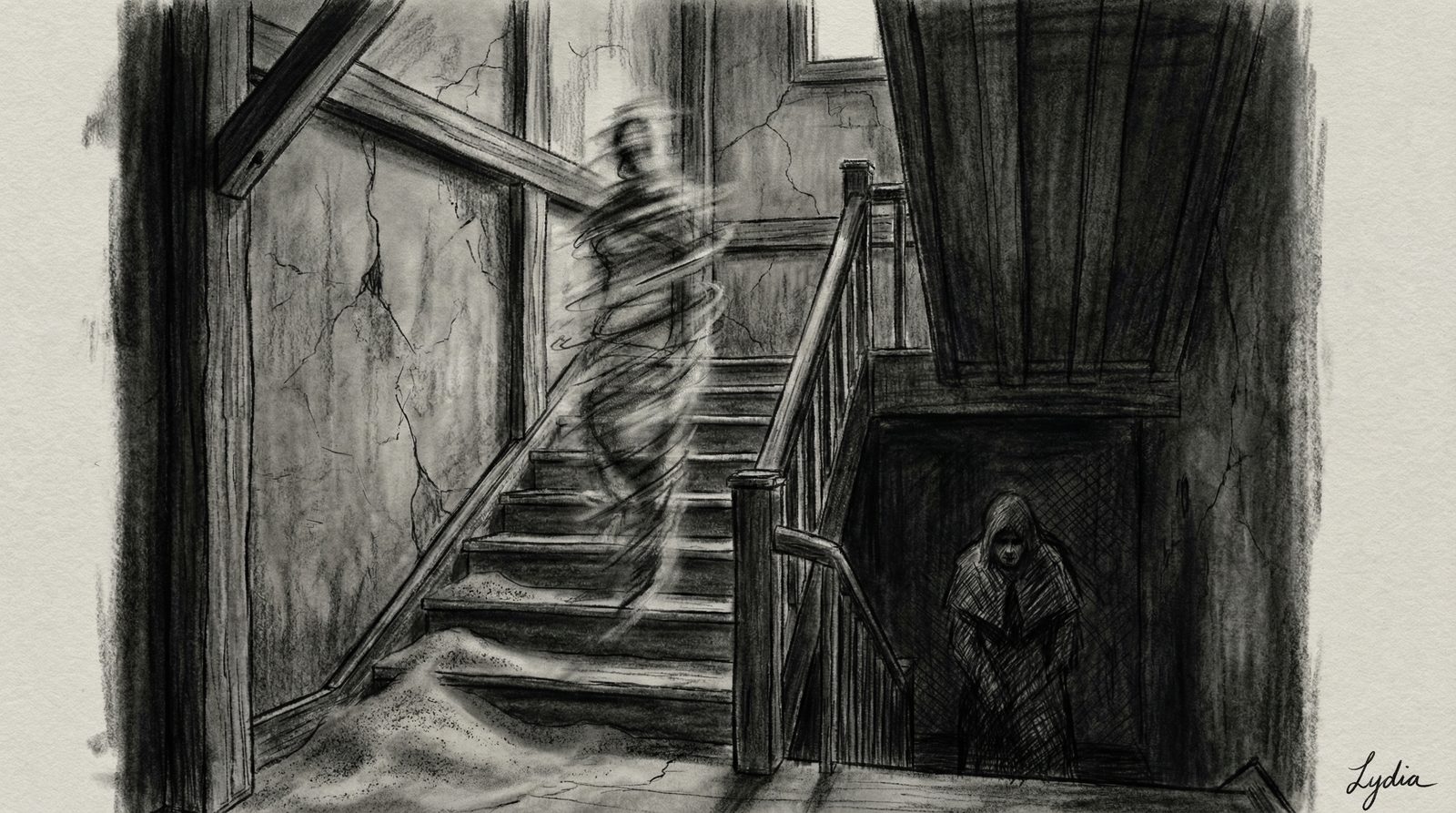
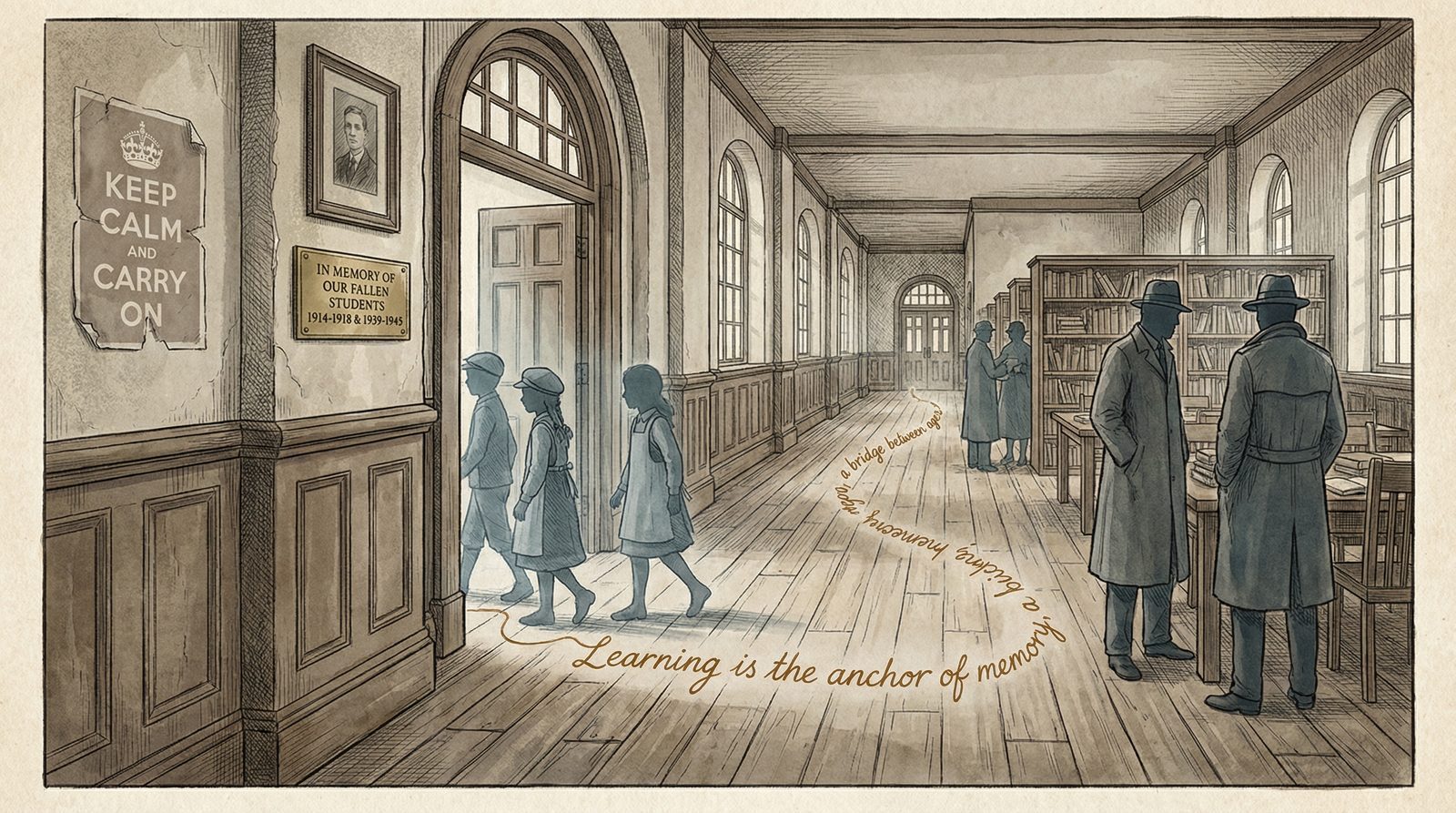
    Conceptual editorial illustration inspired by 'Misery (1987)'

    CHARACTERS & INTERIORITY

    Paul Sheldon begins as the familiar archetype of the jaded author. Trapped in Annie’s guest room, he’s stripped down to something more raw. His interior monologue swings between self-disgust, petty vanity, and a stubborn will to live. He bargains with himself as much as with Annie — promising another chapter in exchange for another day, another cigarette, another chance to crawl to the door.

    Annie Wilkes is one of King’s most precise portraits of madness. On the surface she’s the nurturing caregiver, the “good nurse” who knows how to set a splint and manage a dosage. Underneath, she’s a childlike absolutist, incapable of tolerating narrative disappointment. Her language — “dirty bird,” “cockadoodie,” her fury at “swearing” — gives her the affect of a prudish aunt, which only makes the sudden violence more jarring. The scrapbook in the spare room, where she has pasted clippings about the deaths of infants and elderly patients under her care, is a quiet, book-only horror that deepens her beyond the more theatrical moments.

    Their relationship is not simply captor and captive; it’s a grotesque parody of author and audience. Annie demands emotional honesty and narrative satisfaction on her terms. Paul, in turn, learns to manipulate her through plot twists, cliffhangers, and the promise of Misery’s resurrection. The interiority of both characters is built around control — who has it, who’s pretending to have it, and what happens when it shifts by a fraction. Even minor figures, like the store clerk at the Silver Creek market who notices Annie buying reams of paper, exist mainly as distant reminders that there is a world where people have names and choices, a world Paul can no longer quite reach.


    LEGACY & RECEPTION

    Within Stephen King’s body of work, Misery is one of the leaner, more disciplined novels, often cited alongside Gerald’s Game (1992) as proof that he can do tight, small-scale horror as well as expansive epics. Readers and critics have long read it as King’s argument with his own fame: Paul’s resentment of the Misery books echoes King’s unease with being known primarily for horror when he wanted to write other things. The novel’s focus on writer’s block, addiction, and the punishing expectations of fans has made it a touchstone for discussions about parasocial relationships decades before that term became common.

    The book’s ending, with Paul sober in New York, still seeing Annie’s ghost in a passing stranger and still half-hallucinating her voice as he writes a new, non-Misery novel, leaves a lingering aftertaste. Survival here is not triumph but a damaged continuation. That refusal to tidy up the trauma is part of why the novel has endured, even as its more famous adaptation softened some of the bodily harm and gave audiences a slightly clearer emotional release. On the page, Misery remains a sharp little knife aimed at the uneasy bond between artists and the people who consume them.


    IS IT WORTH READING?

    If you have any patience for psychological horror, Misery is worth your time. It’s compact, vicious, and oddly moving in its portrait of a man bargaining with his own worst habits as much as with his captor. The violence is graphic but not gratuitous; the real horror is the loss of agency and the way pain narrows a life to a few square feet of floor and a stack of typed pages. It’s also one of the clearest windows into how a popular writer thinks about his craft under pressure. If you want haunted houses or sprawling mythologies, look elsewhere. If you want two people locked in a room, fighting over a story and a body, this is as good as it gets.

    Illustration of a core idea or motif from 'Misery (1987)'

    TRIVIA & AUTHOR FACTS

    Stephen King has said that the idea for Misery came from a dream about a fan who held him captive and forced him to write. The fictional painkiller Novril is part of a loose web of invented drugs that appear across his work, reflecting his own struggles with substance abuse during the period. The town of Sidewinder, mentioned in Annie’s nursing history, also appears elsewhere in his Colorado-set stories, tying this small, brutal narrative into a larger imagined geography.

    The embedded novel Misery’s Return was originally much shorter in draft; King expanded it to better show Paul’s reluctant craftsmanship. The decision to have Annie’s body ultimately discovered in the barn rather than in the main house was a late structural change, meant to move the final confrontation out of the now-familiar bedroom and into a rougher, more elemental space. King has also noted that Paul’s shift from genre series work to a more serious, literary-leaning manuscript after his ordeal mirrors his own periodic attempts to step outside the expectations attached to his name.


    SIMILAR BOOKS

    If Misery appeals to you, try The Shining (1977) for another intense portrait of a writer under supernatural and psychological siege. Gerald’s Game (1992) offers a similar single-location nightmare, this time inside a marriage. For a different angle on dangerous devotion, John Fowles’s The Collector (1963) tracks a kidnapper who treats his victim like a rare specimen, not unlike Annie treating Paul as the source of her beloved stories. And if the focus on bodily vulnerability and constrained space is what grips you, you might also seek out more recent psychological horror that keeps its cast small and its emotional stakes painfully close to the skin.


    DISCOVERABILITY & LINKS

    This review of Misery is connected to wider motifs, tropes, and related works across the site, helping you trace patterns of confinement, obsession, and the uneasy bond between creators and their audiences through other books and media.

  • Stephen King

    Stephen King

    ORIGINS & BACKGROUND

    Stephen King is one of the most widely read storytellers of the late 20th and early 21st centuries, and his work has shaped how popular culture imagines horror, suspense, and the supernatural. Born in 1947 in Portland, Maine, and raised largely in working-class New England, he has returned again and again to the textures of small-town life. That sense of place is not just scenery; it is the pressure cooker for his characters.

    His early success with “Carrie (1974)” and “The Shining (1977)” came from blending the supernatural with very ordinary pain. King has spoken and written about his own struggles with addiction, and you can feel that personal knowledge of self-destruction running through his work, especially in “The Shining (1977)” and “Doctor Sleep (2013)”. The line between the haunted house and the haunted mind is thin.

    Across decades and dozens of novels, collections, and novellas, King has moved beyond strict horror into fantasy, crime, and coming-of-age fiction, but he tends to keep the same emotional territory: ordinary people pushed into extraordinary situations where their buried fears and desires become literal. Whether he is writing about a killer clown in “It (1986)” or a prison friendship in “Rita Hayworth and Shawshank Redemption (1982)”, the focus is less on the monster and more on how people respond when their world stops making sense.

    Stephen King grew up in the postwar United States, in a culture saturated with pulp paperbacks, monster movies, and comic books. That mix of high anxiety and low-budget imagination fed directly into his fiction. His New England upbringing, especially in Maine, is crucial to his work. The recurring fictional town of Derry in “It (1986)” and Castle Rock in books like “Cujo (1981)” and “The Dead Zone (1979)” are composites of the places he knew. The small town becomes a laboratory for fear and for community.

    He began as a high school English teacher writing in the margins of his day, and that sense of the working writer never really left. Many of his protagonists are ordinary workers, teachers, writers, or kids, people who do not have special training to face the supernatural. This focus on everyday people deepens his motif of ordinary evil.

    King’s own life has been marked by brushes with mortality, including a near-fatal accident in 1999. That experience sharpened his interest in survival and recovery, visible in works like “Misery (1987)” and “11/22/63 (2011)”, where bodies and timelines are broken and then painfully mended. His long career also means readers have grown older alongside him, moving from the adolescent terror of “Carrie (1974)” to the reflective nostalgia and regret of stories like “The Body (1982)” and “Doctor Sleep (2013)”. The biography matters less as trivia than as a source of his recurring concerns with trauma, addiction, and the persistence of memory.
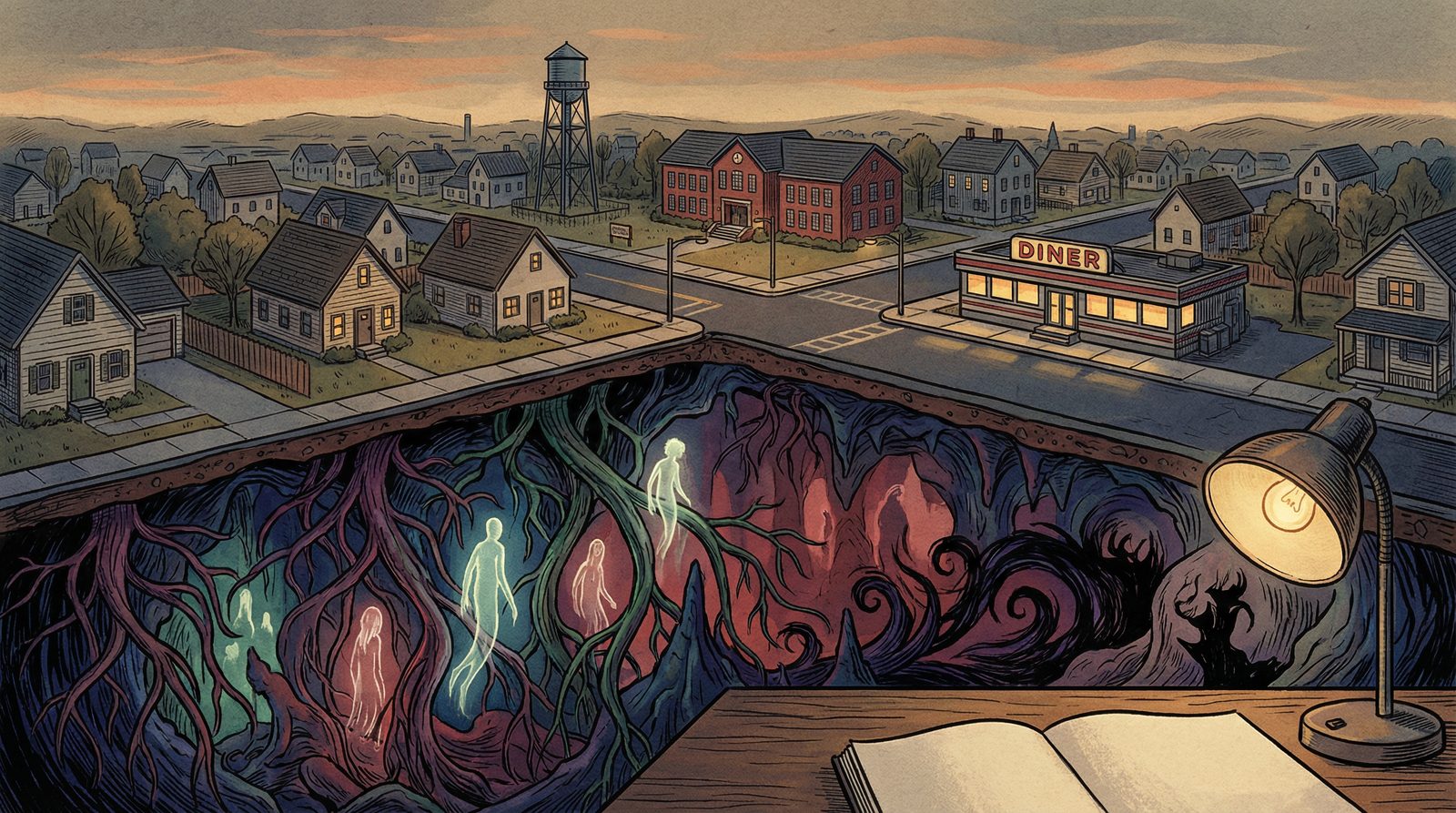
    Editorial illustration inspired by 'Stephen King'

    THEMES & MOTIFS

    At the heart of King’s work is the collision of ordinary life with supernatural horror. He returns again and again to the idea that the uncanny is never far from the surface of the everyday. A prom becomes a massacre in “Carrie (1974)”, a family vacation becomes a descent into madness in “The Shining (1977)”, and a childhood summer becomes a battleground with an ancient evil in “It (1986)”. This ordinary life meets supernatural horror dynamic lets him explore fear without abandoning realism.

    King is also preoccupied with small-town secrets. Towns like Derry and Castle Rock are full of buried crimes, shared silences, and generational guilt. In “It (1986)”, the town’s willingness to look away from violence feeds the creature that preys on children. This motif of small-town secrets links to his broader interest in generational trauma: “The Shining (1977)” and “Doctor Sleep (2013)” trace how alcoholism and violence ripple through a family across decades.

    Another persistent thread is found family. In “It (1986)”, the Losers’ Club is a group of misfits who become a chosen family to survive both bullying and a shapeshifting monster. In “Rita Hayworth and Shawshank Redemption (1982)”, friendship and solidarity inside prison are the only defenses against despair. These found family bonds are often the counterweight to evil, suggesting that connection is the only real magic people have.

    King is fascinated by addiction and redemption. Characters like Jack Torrance in “The Shining (1977)” and Danny Torrance in “Doctor Sleep (2013)” embody addiction horror, where the monster is as much the bottle as any ghost. The horror of losing control of oneself, of becoming a danger to the people you love, is one of his most unsettling themes. Alongside this runs a quieter focus on memory and nostalgia. Stories like “The Body (1982)” and “11/22/63 (2011)” treat the past as both a refuge and a trap, where childhood and history can never be fully recovered or fixed.

    Finally, King often uses cosmic horror, especially in “It (1986)” and “The Dark Tower (1982)”, to suggest that human struggles are set against vast, indifferent forces. Yet his tone rarely sinks into pure despair. Even when facing cosmic horror, his characters cling to compassion, humor, and stubborn courage, which gives his work a distinctive blend of dread and hope.
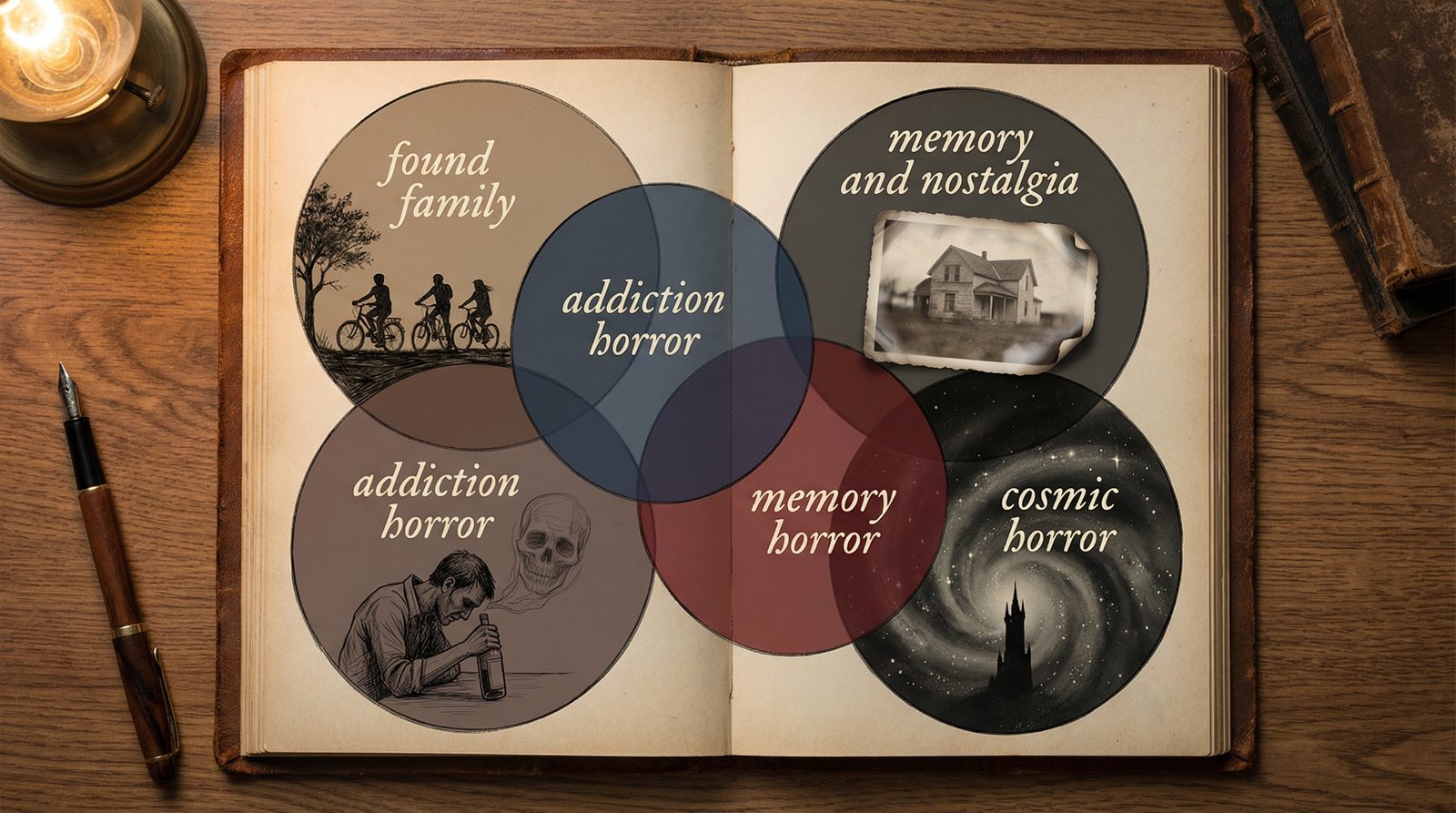
    Symbolic illustration inspired by 'Stephen King'

    STYLE & VOICE

    Stephen King’s style is conversational and plainspoken, closer to someone telling a long story at the kitchen table than to literary ornament. He favors a character-driven horror approach, spending pages on the rhythms of daily life before anything overtly frightening happens. That slow-burn suspense is part of his method. By the time the supernatural appears, readers feel they know the people it threatens.

    He often uses multiple perspectives and braided timelines. In “It (1986)”, the narrative jumps between the protagonists as children and as adults, creating a layered sense of memory and inevitability. In “The Stand (1978)”, he moves among a large ensemble cast scattered across a devastated America, building an epic scale from many intimate viewpoints. This ensemble storytelling lets him explore how different kinds of people respond to the same crisis.

    King’s prose is full of colloquial dialogue, brand names, and pop culture references. That realism can make the horror feel more intrusive, as if it is invading a recognizable world. He is also fond of interior monologue and sudden flashes of dark humor, which keep the tone from becoming monotonously bleak. Even in his grimmest stories, a joke or a stray thought will cut through the tension, reminding readers of the messiness of real minds under stress.

    Structurally, he often blends horror with coming-of-age arcs and crime or fantasy frameworks, as in “Misery (1987)” and “11/22/63 (2011)”. His endings can be divisive, sometimes abrupt or ambiguous, but that inconsistency is part of his risk-taking. Across genres, his voice remains recognizable.

    KEY WORKS & LEGACY

    Certain books have come to define Stephen King for many readers. “Carrie (1974)” announced his blend of high school cruelty and telekinetic horror. “The Shining (1977)” crystallized his obsession with addiction horror and the haunted family. “The Stand (1978)” showed his ability to stretch horror into post-apocalyptic epic, while “It (1986)” became a landmark of small-town secrets, generational trauma, and found family facing cosmic horror.

    His shorter work has also had an outsized impact. The novella “The Body (1982)” became the film “Stand by Me”, a touchstone for coming-of-age storytelling. “Rita Hayworth and Shawshank Redemption (1982)”, another novella in Different Seasons, turned into the film “The Shawshank Redemption” (1994), which many viewers think of less as horror than as a story of endurance and hope. “Misery (1987)” and “Doctor Sleep (2013)” continue his interest in the relationship between creators and fans, addiction, and the fragile process of recovery.

    King’s influence on horror and popular fiction is hard to overstate. He helped normalize the idea that horror could be mainstream, emotionally rich, and focused on character rather than just shock. His work sits alongside that of earlier figures in American horror and suspense, but he brought a distinctly late-20th-century sensibility.

    Beyond specific titles, his legacy includes the many writers and filmmakers who have taken cues from his character-driven horror and his mix of dread and hope. He showed that horror could be a flexible tool for exploring grief, guilt, and the possibility of redemption. Even readers who have never picked up one of his novels live in a culture shaped by his images of haunted hotels, killer clowns, and kids on bikes riding toward something they cannot yet name.


    DISCOVERABILITY & LINKS

    This creator page connects Stephen King to the wider Bachman–King network on AllReaders. Follow the links above to explore how his novels, pseudonymous works, and recurring motifs intertwine across horror, suspense, and character-driven storytelling.

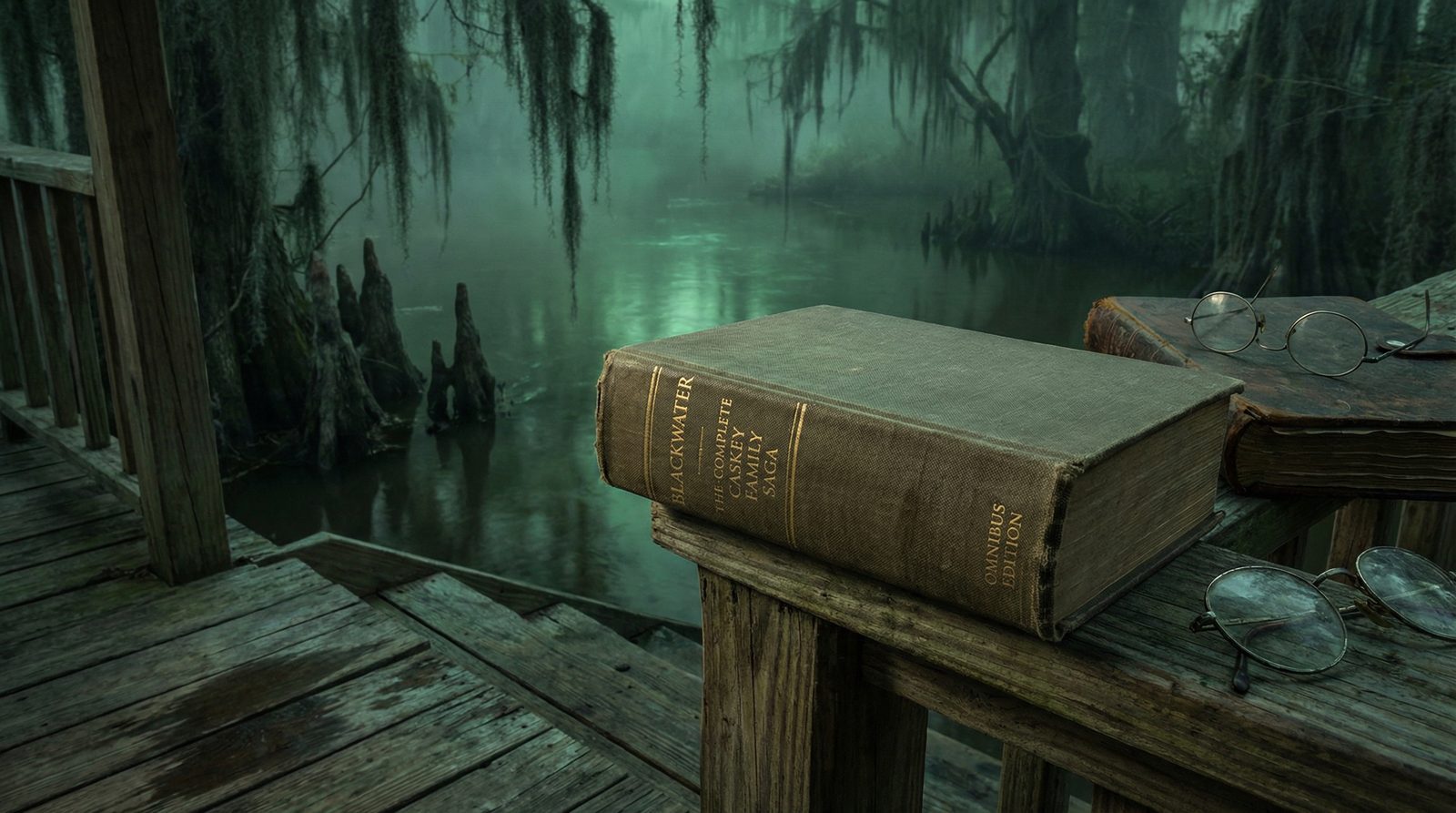
  • Blackwater: The Complete Caskey Family Saga (1983)

    Blackwater: The Complete Caskey Family Saga (1983)

    By: Michael McDowell
    Genre: Horror, Southern Gothic, Family Saga
    Country: United States


    INTRODUCTION

    Originally published in six slim volumes in 1983 and now often collected as Blackwater: The Complete Caskey Family Saga, this is McDowell’s masterpiece of scale. Set in the town of Perdido, Alabama, from the 1910s through the late 20th century, it follows the wealthy Caskey family and the mysterious Elinor Dammert, a woman rescued from a flood who may not be entirely human.

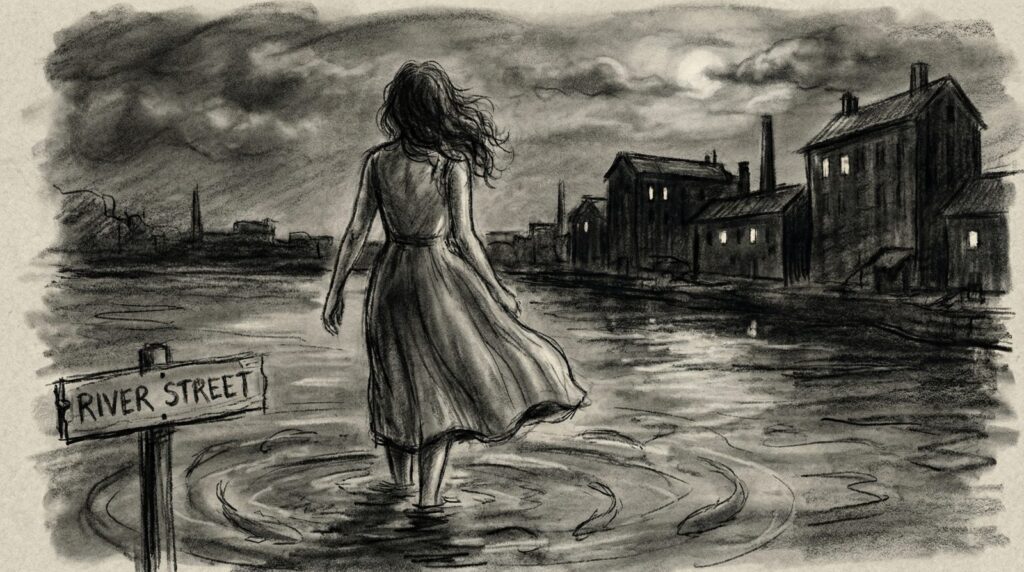
    Blackwater is part river myth, part dynastic drama. Over hundreds of pages it tracks marriages, births, betrayals, and deaths as the Caskeys consolidate power, all under the shadow of the Blackwater River and Elinor’s strange influence. It is the fullest expression of McDowell’s obsession with Trauma as Inheritance and Domestic Vulnerability as Horror.

    PLOT & THEMES

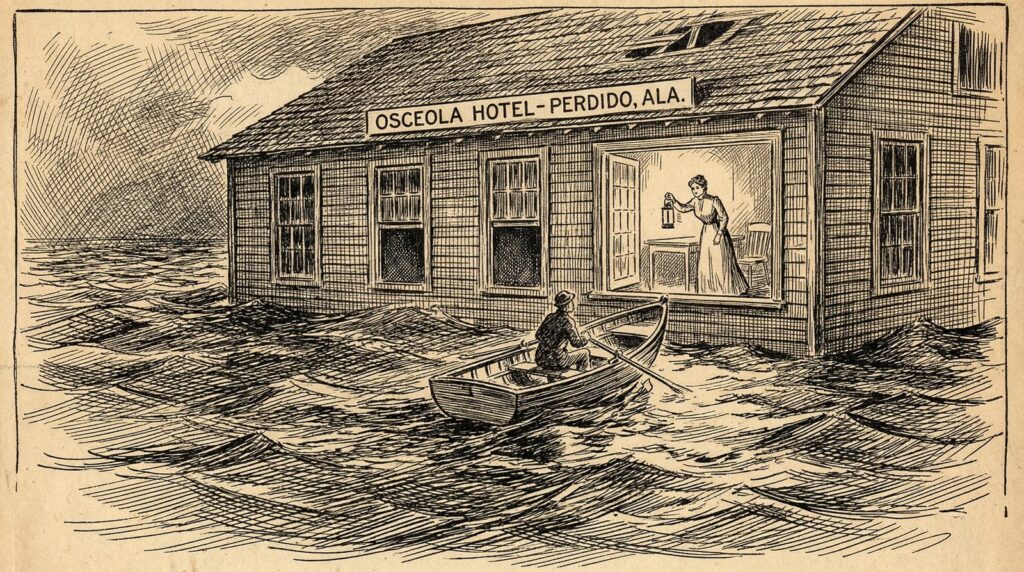
    The saga begins with a catastrophic flood that nearly destroys Perdido. As the waters recede, a young woman named Elinor is found trapped in the hotel, calm and composed. She soon marries into the Caskey family and quietly starts reshaping their fortunes. The six volumes – The Flood, The Levee, The House, The War, The Fortune, and Rain – move through decades of economic booms and busts, wars, personal tragedies, and increasingly uncanny events.

    Conceptual editorial illustration inspired by 'Blackwater the complete caskey family saga'
    Conceptual editorial illustration inspired by ‘Blackwater the complete caskey family saga’

    Thematically, Blackwater is about power: who wields it, who pays for it, and what it costs to keep it in the family. The Caskeys are not simply victims of a supernatural force. They benefit enormously from Elinor’s presence, even as they fear her. The river becomes a metaphor for both livelihood and doom, echoing motifs like Survival Narratives and the tension between prosperity and moral rot.

    Another thread is time. Because the saga spans generations, you see characters grow from children into embittered elders, and you watch grudges outlive the people who started them. It is one of the clearest fictional demonstrations of how family systems perpetuate themselves, for good and ill.

    STYLE & LANGUAGE

    Despite its length, Blackwater reads fast. McDowell writes each segment like a serialized television season: sharp hooks, cliffhangers, and payoffs, but with the same calm, controlled prose found in The Elementals. He sprinkles the supernatural elements lightly at first, allowing the family drama and economic maneuvering to carry the narrative until the reader is fully invested.

    The tone shifts subtly as the decades roll on. Early volumes feel almost like historical melodrama with hints of folk horror. Later installments grow stranger and more melancholy, as the cost of the Caskeys’ deal with the river catches up to them. McDowell’s ability to keep so many characters distinct while maintaining a clean line of tension is impressive.

    CHARACTERS & INTERIORITY

    Elinor is one of horror’s great ambiguous figures: loving mother, ruthless strategist, possible river creature. She embodies both The Double Self and The Witness archetypes, standing slightly outside human concerns while still caring intensely about her chosen family. The various Caskeys – matriarch Mary-Love, her son Oscar, and their descendants – are drawn with a soap-opera richness that never feels cheap.

    What makes the relationships compelling is their complexity. McDowell allows characters to be petty, generous, cruel, and tender in turn. Marriages shift, alliances realign, and children struggle under the weight of expectations they did not choose. This is Trauma as Inheritance not just in a supernatural sense but in the very ordinary ways families pass down unfinished business.

    Illustration of a core idea or motif from 'Blackwater the complete caskey family saga'
    Illustration of a core idea or motif from ‘Blackwater the complete caskey family saga’

    LEGACY & RECEPTION

    Blackwater occupies a strange but fascinating place in horror history. It was originally a mass-market experiment in serialized paperback publishing, then fell out of print, and has since been reclaimed as a cult classic. Modern readers often discover it through reissues that present the whole saga in one volume, which highlights how ahead of its time it was in blending family saga with supernatural horror.

    Its influence can be felt in later works about cursed dynasties and haunted towns, as well as in television that treats horror as a generational affair. For anyone mapping Southern Gothic across media, Blackwater is a cornerstone text alongside The Elementals and Candles Burning.

    IS IT WORTH READING?

    If you can commit to the length, Blackwater is one of the richest horror reading experiences available. It rewards patient readers with an immersive sense of place and character, and its horror accumulates quietly until the river and the family feel inseparable. Start here if you love sprawling multi-book epics and want to see McDowell at his most ambitious.

    SIMILAR BOOKS

    Readers who enjoy this blend of family saga and horror should explore The Elementals for a more concentrated take on haunted houses and legacy, and Cold Moon Over Babylon for a shorter, river-driven ghost story. Candles Burning offers a related mix of Southern family secrets and the supernatural, filtered through a single protagonist’s perspective.

    DISCOVERABILITY & LINKS

  • The Elementals (1981)

    The Elementals (1981)

    By: Michael McDowell
    Genre: Horror, Southern Gothic
    Country: United States


    INTRODUCTION

    The Elementals (1981) is the book that turned McDowell from a strong paperback horror writer into a cult legend. Two old Southern families, the Savages and the McCrays, retreat to their summer houses on the isolated Alabama coast to mourn a death. There, they confront a third house partially buried by sand – a structure that may or may not be empty.

    It is a slow, suffocating novel that treats the haunted house as a living, hungry presence and family tradition as a kind of curse. The book crystallizes motifs like Domestic Vulnerability as Horror and Trauma as Inheritance more cleanly than almost anything else in McDowell’s catalog.

    PLOT & THEMES

    After the funeral of Marian Savage, the extended family heads to Beldame, their cluster of Victorian houses on the Gulf. Two houses are occupied. The third, House Three, is abandoned and steadily being swallowed by sand. Young India McCray becomes fascinated by it, sensing both danger and invitation. Strange figures are glimpsed in the windows. Sand appears in places it should not.

    The plot moves slowly, drifting between lazy vacation scenes, family arguments, and increasing incursions from House Three. As the book unfolds, it becomes clear that the families have lived with this horror for generations, building traditions and taboos around it rather than confronting it. That secrecy is the true engine of the story.

    Thematically, the novel is about denial. The adults embody Identity Collapse in Isolation, living half in the present and half in inherited scripts. India, by contrast, is curious and resistant, closer to The Reclaimer archetype. The Elementals themselves are barely explained, which keeps the focus on how humans respond to them rather than on lore.

    STYLE & LANGUAGE

    McDowell’s prose here is patient and confident. He lets whole chapters go by with nothing more violent than a family meal or a beach excursion, trusting that the buried house and creeping sand are enough to keep tension simmering. The descriptions of heat, wind, and isolation are so precise that you can almost feel the grit between your teeth.

    Crucially, the horror is described in the same matter-of-fact tone as the domestic scenes. When the book finally delivers its most disturbing images, they land hard because they feel like a natural extension of the same physical world. That restraint and commitment to realism make the hauntings here some of the most effective in modern horror.

    Conceptual editorial illustration inspired by 'the elementals'

    CHARACTERS & INTERIORITY

    India is one of McDowell’s finest protagonists: bright, prickly, and not easily scared in the conventional sense. She is caught between generations, watching the adults around her drink, snipe, and retreat into old roles. Her relationship with her father, Luker, and with the eccentric Adele Savage gives the novel its emotional shape.

    The adults are at once sympathetic and frustrating. They refuse to talk openly about the Elementals, which is both a survival tactic and a form of cowardice. This dynamic is a textbook example of Trauma as Inheritance: the previous generation survives something terrible and then fails to equip the next generation with the knowledge they need, passing along fear instead of tools.

    LEGACY & RECEPTION

    The Elementals has become a key text in modern Southern Gothic, mentioned alongside works like Blackwater whenever critics talk about drowned towns, haunted houses, and family ghosts. It is frequently recommended as an entry point for readers curious about McDowell and has influenced a long list of later coastal and house-centric horror novels.

    Its reputation has grown significantly since its initial paperback run, thanks in part to reissues and championing by contemporary writers. When people talk about “quiet horror” or atmosphere-driven dread, this is often the book they have in mind.

    IS IT WORTH READING?

    Yes – if you read only one McDowell novel, it should probably be The Elementals. The pacing is measured, so readers who want constant jump scares may find it slow, but the payoff is immense if you like lingering, uncanny atmosphere. It also connects cleanly to the rest of his work, making it a perfect hub text before diving into Cold Moon Over Babylon or the much longer Blackwater.

    Illustration of a core idea or motif from 'the elementals'

    SIMILAR BOOKS

    For more coastal and house-based horror, Candles Burning brings a similar sense of Southern atmosphere and haunted family legacy. Readers who enjoy multi-generational sagas with eerie settings should look at Blackwater: The Complete Caskey Family Saga. Outside McDowell’s own work, this novel pairs well with other haunted house classics and modern Southern Gothic, especially books that treat place as a living character.

    DISCOVERABILITY & LINKS

  • Cold Moon over Babylon (1980)

    Cold Moon over Babylon (1980)

    By: Michael McDowell
    Genre: Horror, Southern Gothic
    Country: United States


    INTRODUCTION

    Cold Moon Over Babylon (1980) is McDowell’s river book, a story where grief and revenge seep out of the Florida wetlands. After a young girl named Margaret Larkin is murdered, something rises from the Styx River to avenge her, and the town of Babylon discovers that the dead do not always stay still. It is one of McDowell’s purest ghost stories and one of his most emotionally direct novels.

    Where The Amulet is jagged and angry, Cold Moon Over Babylon is mournful. It leans into the motif of Trauma as Inheritance, but here the trauma belongs to a family trying to survive poverty, corruption, and divine indifference. The book feels like a bridge between pulp revenge horror and the more elegiac tone of The Elementals.

    PLOT & THEMES

    The Larkin family runs a struggling farm in Babylon. When teenage Margaret is found dead in the river, her grandmother Evelyn and brother Jerry are left shattered and nearly destitute. The town’s powerful families – who control the local economy and politics – close ranks. The official investigation is half-hearted at best, openly corrupt at worst.

    Then strange things start happening along the Styx. Lights in the water. Cold spots. Apparitions. The haunting escalates into a series of set pieces where guilty parties are stalked by what seems to be Margaret’s vengeful ghost. These scenes are structured almost like morality plays, but McDowell complicates the satisfaction of revenge by showing the ongoing suffering of those who loved her.

    The central themes are justice, class, and the cost of ignoring the vulnerable. Margaret is an example of The Erased Girl: a young woman dismissed by the town while alive and transformed into a terrifying symbol once dead. Babylon’s elites treat her family as disposable, and the haunting reads like the landscape itself refusing that verdict.

    PROSE & NARRATIVE STRUCTURE

    McDowell’s prose here is evocative without ever becoming purple. The river scenes are vivid, humid, and strangely beautiful, even as terrifying things happen on the water. He uses repetition – the steady return to the Styx, the recurring image of the cold moon – to create an almost ritual rhythm. You feel the cycles of tide and night as strongly as the rising panic.

    The pacing alternates between quiet domestic moments and explosive supernatural events. This contrast keeps the book from becoming simple revenge fantasy. The Larkins’ financial struggle and emotional collapse play out in scenes that would be compelling even without ghosts, and that realism grounds the surreal horror.

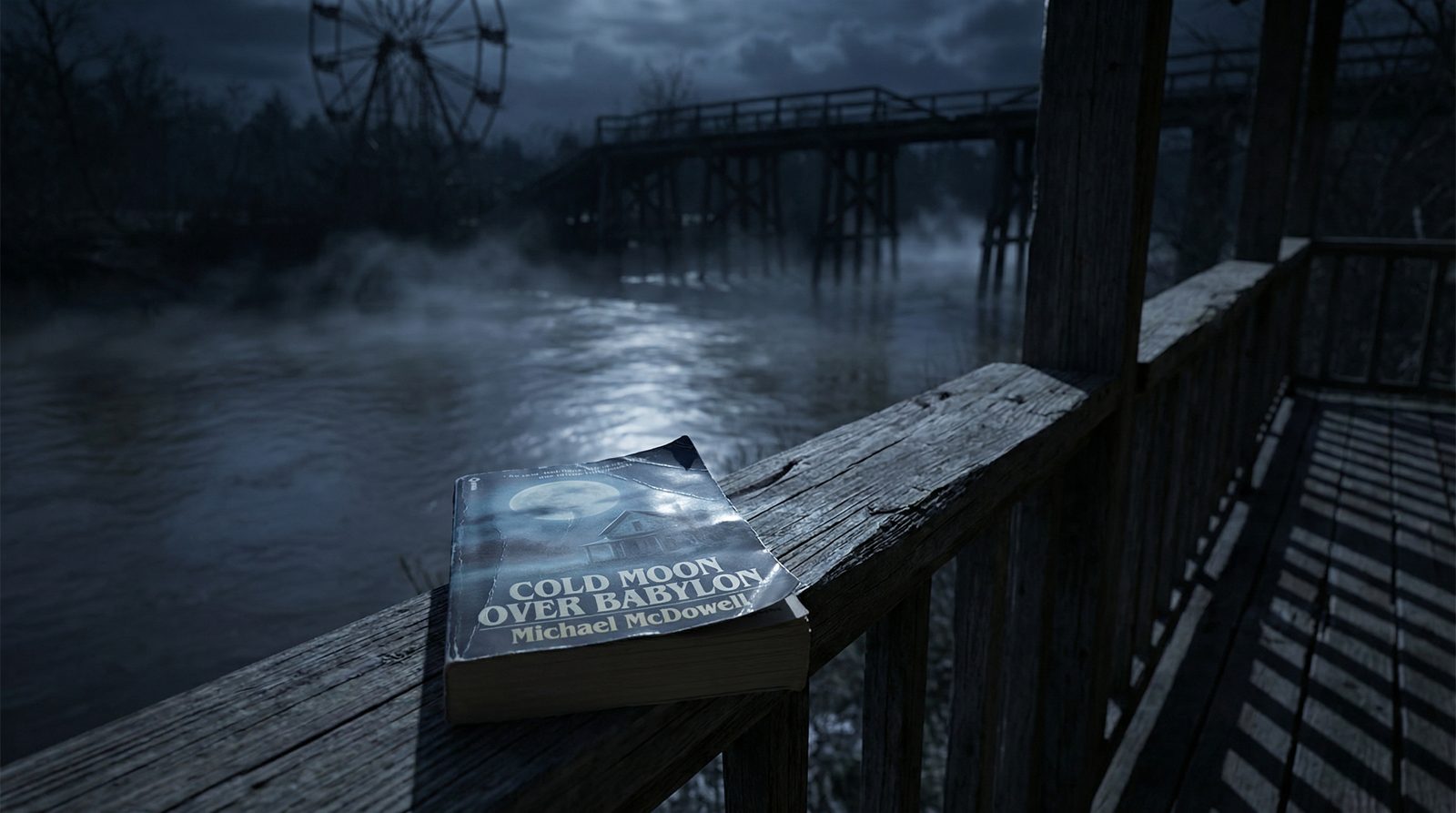
    Conceptual editorial illustration inspired by 'cold moon over babylon'

    CHARACTERS & INTERIORITY

    Evelyn Larkin is the heart of the novel: a grandmother clinging to dignity as her world falls apart. She embodies the archetype of The Witness, someone who survives long enough to see the truth but pays for that knowledge with isolation and grief. Jerry, Margaret’s brother, carries a different kind of weight – he is a teenager asked to become an adult overnight, and his helpless anger directs much of the book’s emotional charge.

    The antagonists are not monsters but businessmen, sheriffs, and pillars of the community. That choice underlines McDowell’s recurring interest in Domestic Vulnerability as Horror: the institutions that should protect you are the ones that failed you, so the only remaining justice comes from something older and less merciful than law. The relationships between families, churches, and local power structures feel painfully plausible.

    LEGACY & RECEPTION

    Cold Moon Over Babylon sits comfortably beside other American rural horror of the period, but McDowell’s Southern specificity sets it apart. The book engages quietly with themes of agricultural collapse, the fragility of small landowners, and the way wealth concentrates in a few hands. It is also one of his clearest explorations of Survival Narratives, even when that survival is more spiritual than economic.

    The novel has had a slower burn in terms of reputation than The Elementals, but modern reissues have helped cement it as one of McDowell’s finest works. Its recent film adaptation under the shorter title Cold Moon has also introduced the story to new viewers, even if the book remains the deeper and more resonant version.

    IS IT WORTH READING?

    Absolutely. If you want one McDowell novel that combines emotional heft with classic ghost story pleasures, Cold Moon Over Babylon is a prime candidate. It is less baroque than Blackwater and more focused than Candles Burning, making it a strong entry point for readers who like their horror both sad and sharp.

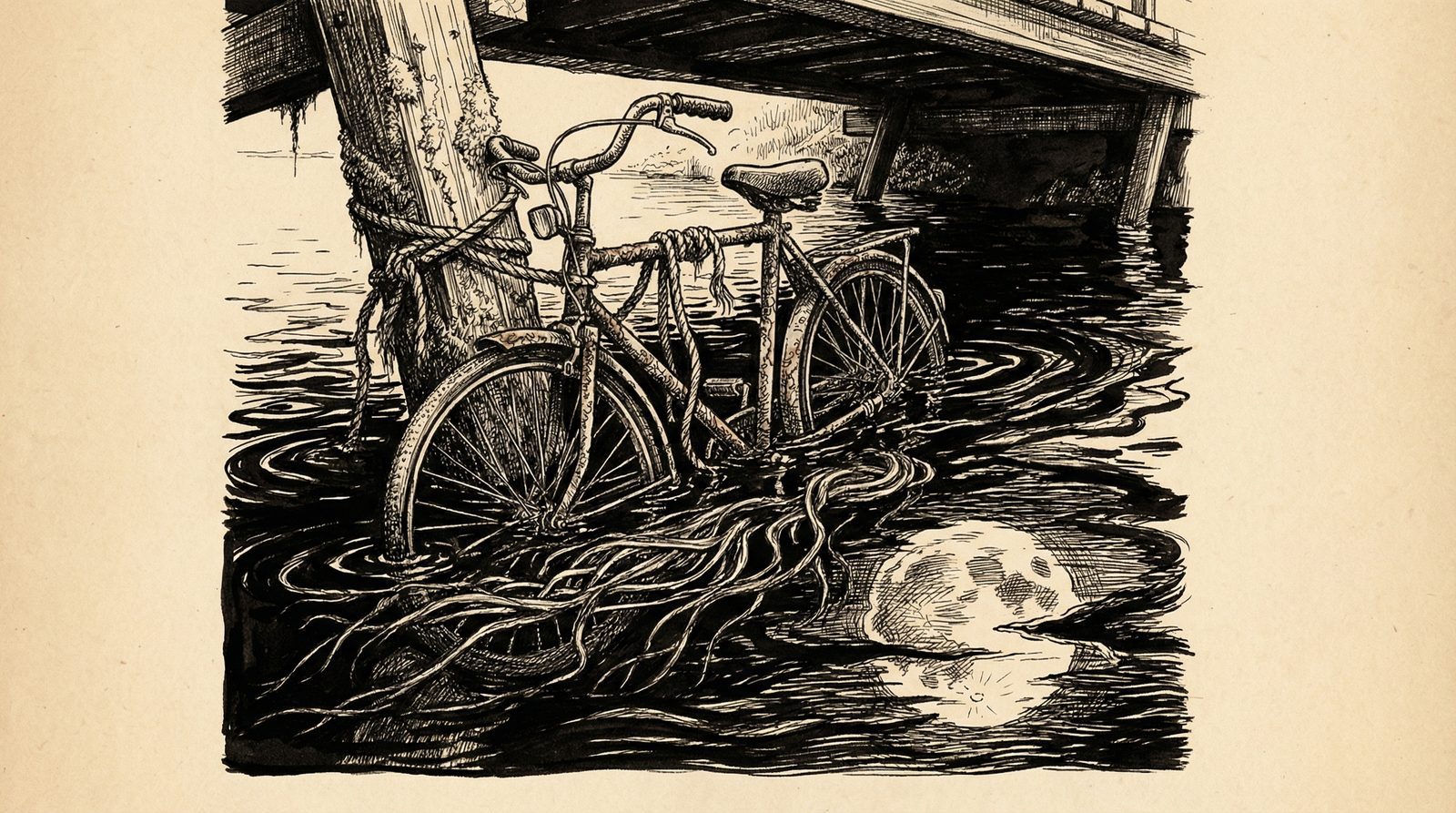
    Illustration of a core idea or motif from 'cold moon over babylon'

    TRIVIA & AUTHOR FACTS

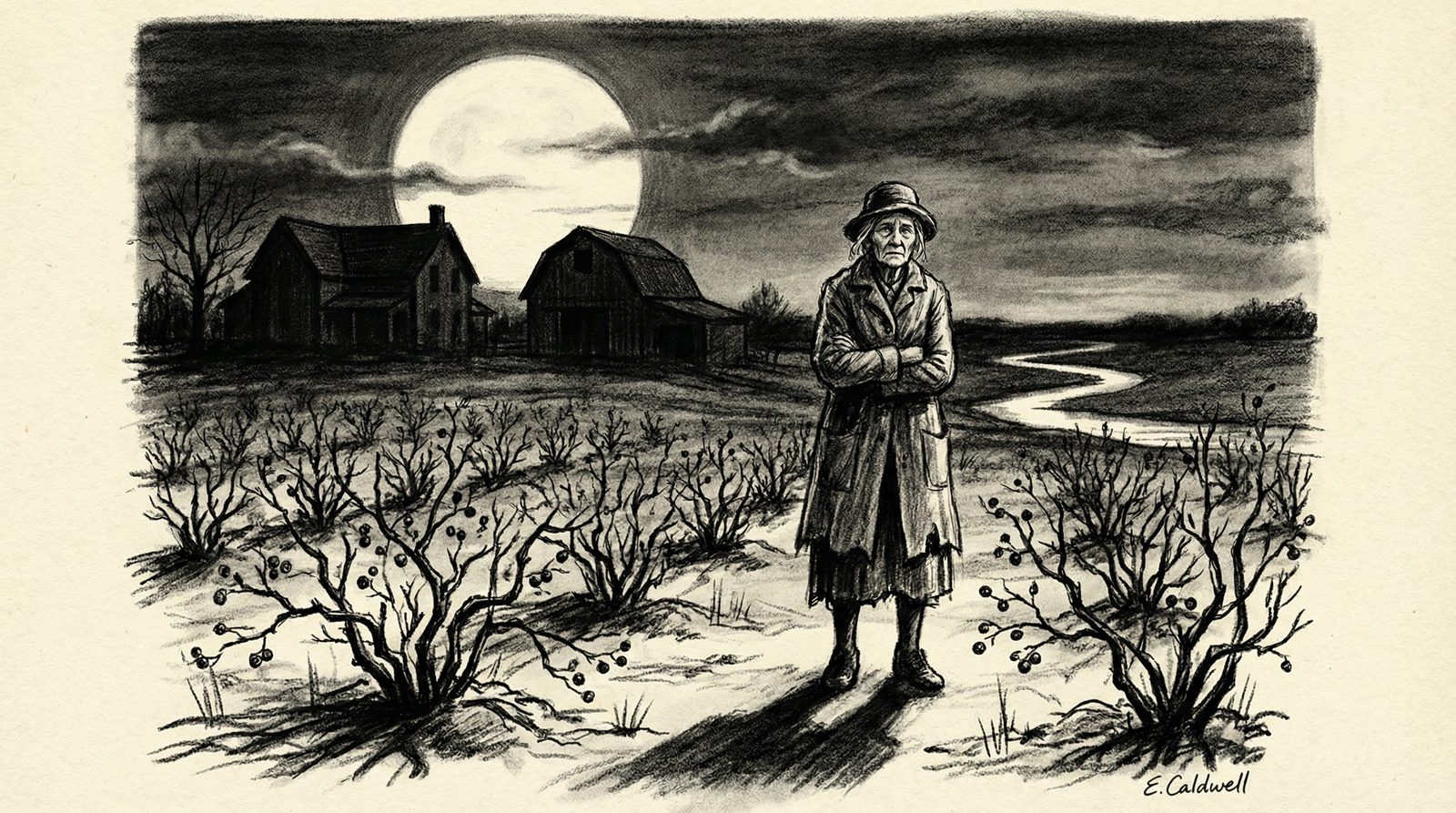
    Michael McDowell was a prolific writer, juggling paperback originals, screenplays, and tie-ins with an almost workmanlike discipline. A native of Alabama, he knew the Deep South’s humid landscapes and social hierarchies from the inside, which shows in the way Babylon’s church ladies, sheriffs, and bankers move through the book. He reportedly loved physical ephemera-old documents, photographs, legal records-and that archival obsession seeps into cold moon over babylon through its snippets of testimony and local history. The novel’s focus on a failing blueberry farm was unusual in horror at the time; McDowell gives as much attention to irrigation, crop yields, and bank notes as to ghosts. He later wrote screenplays and teleplays, but his paperback horror has outlived much of the era’s more hyped work, kept alive by readers who pass dog-eared copies along like a secret. His early death in the 1990s cut short a career that was still evolving.

    SIMILAR BOOKS

    Readers drawn to river and marsh settings will likely enjoy The Elementals, with its decaying beach houses and encroaching sand. For more multi-generational dread and small-town politics, Blackwater offers a much larger canvas. If you are interested in how McDowell’s themes translate into collaboration, Candles Burning continues his fascination with murdered children, inheritance, and Southern justice.

  • The Amulet (1979)

    The Amulet (1979)

    By: Michael McDowell
    Genre: Horror, Southern Gothic
    Country: United States


    INTRODUCTION

    The Amulet (1979) is Michael McDowell’s debut novel and a mission statement for everything he would do later. Set in the small Alabama town of Pine Cone, it follows Sarah Howell as she watches a mysterious charm move from hand to hand, turning ordinary objects into engines of gruesome death. Beneath the splatter, the book is about resentment, economic stagnation, and how a community quietly decides who deserves to suffer.

    Already you can see McDowell’s fixation on cursed domestic life: the story is less about the amulet itself and more about how hatred travels through families and neighbors. Readers who later love Cold Moon Over Babylon or The Elementals will recognize the seeds of Trauma as Inheritance and Domestic Vulnerability as Horror already taking root.

    PLOT & THEMES

    The novel begins with a factory accident that leaves Sarah’s husband, Dean, grotesquely maimed and comatose. Dean’s mother, Jo Howell, is bitter, controlling, and obsessed with punishing everyone she imagines wronged her son. When a sinister amulet comes into her possession, Jo starts passing it along as a “gift”. Wherever it goes, bizarre and violent deaths follow: a gun range, a beauty pageant, a seemingly quiet home. Each new victim is tied back to Pine Cone’s gossip, grudges, or petty power plays.

    The horror is structured almost like a chain letter. McDowell cycles through different households and workplaces, showing how a small town is stitched together by class resentment, racism, and fear. The amulet does the killing, but the town supplies the motive. This is a textbook example of Trauma as Inheritance: old anger is handed down, objectified, and weaponized until it consumes everyone in reach.

    Another key thread is complicity. Sarah is not a typical Final Girl. She is exhausted, broke, and trapped between a monstrous mother-in-law and a husband who was never much of a prize. Pine Cone itself becomes a character, a place where people know something is wrong and mostly choose to look away. The town’s refusal to intervene, even as the body count rises, is what pulls this into the realm of domestic-political horror rather than just a curse story.

    STYLE & LANGUAGE

    McDowell writes in brisk, clear prose that never slows down to admire itself. The sentences are lean, the chapters short, and the deaths described with a chilly matter-of-factness that makes them feel nastier than purple description ever would. His background in Southern life and funerary culture shows up in the details: the rituals around accidents, the formal language of condolences, the way a town crowds in and then pulls away from tragedy.

    The book slides effortlessly between viewpoints, giving each victim just enough depth that their fates sting. There is a pulpy pleasure in the outrageous set pieces, but McDowell’s control keeps the novel from tipping into parody. The tone is closer to angry social realism with supernatural teeth than to camp. This balance between swift plotting and emotional specificity is part of what later makes Blackwater and Candles Burning so effective.

    Conceptual editorial illustration inspired by 'the amulet'

    CHARACTERS & RELATIONSHIPS

    Sarah is an early version of the McDowell heroine: intelligent, limited in obvious power, and forced to navigate a hostile domestic landscape. Her relationship with Jo is the book’s real center. Jo is not a cackling witch so much as a recognizable type from small-town life, a woman whose world has narrowed to grudges and control. Through their clash, McDowell sketches a generational conflict where the younger woman wants a life beyond the town and the older one would rather see everything burn than lose control.

    Secondary characters – town officials, co-workers, gossipy neighbors – are sketched with quick, memorable strokes. Many of them embody Identity Collapse in Isolation: people whose lives are so small and boxed in that when horror touches them, they have nothing to fall back on. The amulet doesn’t just kill them physically. It exposes how little room they had to be anything but victims in the first place.

    CULTURAL CONTEXT & LEGACY

    Released at the end of the 1970s paperback boom, The Amulet is very much a product of its era, yet it has aged better than many of its contemporaries. Its focus on economic frustration, toxic nostalgia, and small-town rot feels surprisingly current. You can see why McDowell would later be tapped for projects like Beetlejuice and why The Elementals has become a cult classic: he understood how to make local, specific horror feel mythic.

    For readers tracing McDowell’s career, this is where to start. It shows his early interest in Domestic Vulnerability as Horror and the way household objects, marriages, and mother-in-law jokes can become genuinely terrifying. It is rougher than later work, but the voice is already there – calm, ruthless, and deeply attuned to how ordinary people live with quiet rage.

    Illustration of a core idea or motif from 'the amulet'

    IS IT WORTH READING?

    If you are interested in the roots of modern Southern Gothic horror, The Amulet is essential. It is nasty in places, but never senselessly so, and beneath the shocks there is a serious interest in how communities decide who matters. Start here if you want to see McDowell in raw form before moving to the more expansive dread of Cold Moon Over Babylon or the spectral coastal decay of The Elementals.

    SIMILAR BOOKS

    If you like The Amulet, you may also appreciate the rural grief and supernatural vengeance of Cold Moon Over Babylon, the multi-generational river saga in Blackwater: The Complete Caskey Family Saga, and the haunted family narrative of Candles Burning. All of them develop the same obsessions with cursed inheritance, suffocating towns, and the quiet horror of being stuck where you were born.

    DISCOVERABILITY & LINKS

  • Future Shock as Transformation

    Future Shock as Transformation

    WHAT THIS MOTIF MEANS

    Future Shock as Transformation is the moment when rapid change — technological, environmental, social, or emotional — forces characters to evolve faster than they can comfortably handle. Instead of treating the future as a distant horizon, this motif pushes it directly into everyday life. The shock isn’t just external; it penetrates the psyche, reshaping identity and worldview in real time.

    The motif originates in the idea that when change outpaces the human nervous system, it produces disorientation, vulnerability, and heightened perception. In fiction, that pressure becomes catalytic: characters adapt, collapse, or transform under forces they can’t slow down.


    HOW IT WORKS

    The shock arrives when a known system breaks — a planet’s ecosystem, a belief, a family structure, a community rule, a personal identity. The future intrudes through:

    • new technology characters aren’t ready for,
    • a new world with no familiar rules,
    • a cultural shift that destabilises old identities,
    • a personal event that rearranges one’s sense of self,
    • a scientific discovery that changes everything.

    Unlike dystopian or disaster motifs, the emphasis here is on response. The shock forces characters into a new shape — sometimes stronger, sometimes fractured, always altered.

    Future Shock as Transformation inline concept image

    WHERE WE SEE IT

    In Arthur C. Clarke’s 2061: Odyssey Three, the motif appears through scientific expansion: new frontiers, new worlds, and humanity’s struggle to understand technologies that leap far ahead of its emotional readiness.

    Jill Paton Walsh’s The Green Book uses the motif in a gentler key. The colonists confront a new planet with unfamiliar biology, forcing them to adapt socially and psychologically. The future arrives not as spectacle but as a slow, disorienting reshaping of daily life.

    Even Laurie Halse Anderson’s Catalyst contains a grounded version of the motif. Kate Malone’s “future shock” is academic and emotional — when her imagined future shatters, she must rebuild an identity without the scaffolding she relied on.

    The motif bridges sci-fi and realism. Whether characters face cosmic mysteries or personal upheaval, the pattern is the same: the future arrives too fast, and transformation becomes unavoidable.


    WHY IT MATTERS

    This motif resonates because it captures a universal human anxiety: the fear of being unprepared. When the familiar collapses, characters confront who they are without scripts or habits to lean on. The result can be liberation, collapse, or reinvention — but never stasis.

    Future Shock as Transformation shows that change itself is a narrative engine. The future doesn’t wait; it forces characters to confront their blind spots, illusions, ambitions, and vulnerabilities.

    Future Shock as Transformation inline diagram image

    ARCHETYPES & VARIANTS

    The motif intersects with archetypes like The Witness — characters who observe change before they can act — and The Double Self, whose internal contradictions snap under pressure.

    Variants include:

    • The scientific leap – technology outpacing comprehension.
    • The cultural rupture – old identities no longer functioning.
    • The environmental shift – survival requires reinvention.
    • The personal implosion – a future imagined collapsing overnight.


    RELATED MOTIFS & WORKS

    This motif forms a triad with Domestic Vulnerability as Horror and Identity Collapse in Isolation. Together, they track how environments — intimate, isolating, or futuristic — reshape identity under pressure.

    Examples include 2061: Odyssey Three, The Green Book, and the emotional freefall in Catalyst.

  • Identity Collapse in Isolation

    Identity Collapse in Isolation

    WHAT THIS MOTIF MEANS

    Identity Collapse in Isolation describes the psychological unraveling that happens when a character’s sense of self is stripped of external anchors. Alone, misunderstood, or cut off from their usual environment, they lose the stabilising forces that normally tell them who they are. The collapse isn’t usually dramatic; it’s slow, quiet, and internal. Thoughts loop. Doubt magnifies. Reality bends inward.

    This motif thrives in stories where characters face pressure without support — academically, emotionally, socially, or physically. Their identities crumble under the weight of expectation or trauma, and the “collapse” becomes the catalyst for transformation, survival, or deeper harm.


    HOW IT WORKS

    The collapse typically begins with one destabilising event — rejection, trauma, loss, failure, or isolation. The character withdraws, either by choice or by circumstance. Without affirmation or grounding, their internal narrative shifts:

    • Daily routines lose meaning.
    • Internal monologues become repetitive or fragmented.
    • Fear, guilt, or pressure amplifies.
    • Self-image distorts.
    • Small triggers become psychological landmines.

    The motif often intertwines with anxiety, disassociation, and the feeling of being watched or judged, even when alone. It’s not about madness — it’s about the erosion of identity when all external mirrors break.


    Identity Collapse in Isolation inline concept image

    WHERE WE SEE IT

    This motif appears strongly in Tabitha King’s work. In One on One, Deanie’s entire sense of self fractures under community pressure and exploitation. In Survivor, A. P. Hill experiences a painful identity freefall after trauma destroys her ability to function in familiar spaces.

    Laurie Halse Anderson uses the motif sharply in Catalyst, where Kate Malone’s collapse begins the moment her carefully constructed academic identity fails. The momentum of her breakdown feels claustrophobic because the isolation is both emotional and self-imposed.

    Even Jill Paton Walsh’s The Green Book reflects this motif at a gentler level, with colonists forced to redefine themselves on a foreign planet where nothing familiar exists. Isolation becomes not just physical, but existential.


    WHY IT MATTERS

    The motif resonates because it sits at the intersection of fear and transformation. It shows how fragile identity can be when its scaffolding collapses — when relationships fail, routines vanish, or expectations crumble.

    Stories built on this motif challenge readers to confront uncomfortable truths: who are we when no one is looking? Who are we without validation? What happens when the internal voice becomes hostile or unreliable?

    Identity Collapse in Isolation often precedes either a breakthrough or a breakdown. It’s a narrative pivot point, not an endpoint. Characters emerge stronger, shattered, or fundamentally changed — but never the same.


    Identity Collapse in Isolation inline diagram image

    ARCHETYPES & VARIANTS

    The motif intersects cleanly with archetypes like The Double Self, where characters must perform one identity while privately breaking down. It also aligns with The Survivor Confessor, who must rebuild identity after trauma strips it away.

    Variants include:

    • The perfectionist collapse – when a character’s identity is built entirely on achievement.
    • The trauma-driven shell – when external shock disrupts internal stability.
    • The relational void – when isolation is social, not physical.
    • The environmental erasure – when characters lose culture, context, or home.


    RELATED MOTIFS & WORKS

    This motif pairs closely with Domestic Vulnerability as Horror and connects to the speculative pressure of Future Shock as Transformation.

    Strong examples include One on One, Survivor, Catalyst, and the milder but thematically aligned The Green Book.

  • Domestic Vulnerability as Horror

    Domestic Vulnerability as Horror

    WHAT THIS MOTIF MEANS

    Domestic Vulnerability as Horror is the fear that comes not from the supernatural or the unknown, but from the places that should be safest. Homes, families, bedrooms, kitchens, schools — the everyday environments where people sleep, eat, and share their lives — become pressure chambers where danger grows quietly. The horror here is emotional, social, and psychological. It’s the dread of being unprotected in the one space where you expect comfort.

    The motif appears across genres: literary fiction, YA realism, psychological dramas, and even soft sci-fi. It’s the threat of being misunderstood by the people closest to you, of being trapped in routines or roles that hurt, of having nowhere to escape because everything that frightens you is already inside the house.


    HOW IT WORKS

    This motif relies on tension, not spectacle. The unsettling moments usually come from subtle shifts: a parent’s silence that suddenly feels hostile, a partner’s smile that hides resentment, an expectation that becomes a burden, or a home that starts feeling like a cage instead of a sanctuary.

    The horror emerges when characters lose agency within familiar walls. Emotional safety erodes. Control slips away. Intimacy becomes danger. The motif often overlaps with psychological collapse, family pressure, and the erosion of identity — especially for characters who have no external support network.

    Domestic Vulnerability as Horror inline concept image

    WHERE WE SEE IT

    This motif shows up repeatedly across our current clusters. In Tabitha King’s Pearl, the home becomes the stage for social scrutiny and inherited tension. In One on One, Deanie’s house — and the adults inside it — offers no protection from predatory attention or community pressure.

    Laurie Halse Anderson uses the motif heavily in Catalyst, where the Malone household is loving but brittle, and the emotional expectations placed on Kate become suffocating. Even a soft sci-fi novel like Jill Paton Walsh’s The Green Book brushes this motif: the colonists’ improvised shelters on a new planet are fragile, constantly threatening their safety and identity.

    The strength of this motif lies in how universal it is. Everyone understands what it feels like when a supposedly safe environment starts to feel threatening — whether emotionally, socially, or physically.


    WHY IT MATTERS

    Domestic Vulnerability as Horror matters because it exposes the power structures inside families and tight-knit communities. It reveals how protection can flip into danger when trust is broken or when roles harden into traps. The motif forces characters — and readers — to confront uncomfortable truths about dependence, intimacy, and the fear of not being believed or understood.

    In fiction, this motif is often where the deepest emotional work happens. It’s where characters confront the pressure to perform normalcy, the pain of unmet expectations, and the fight to reclaim space that belongs to them.

    Domestic Vulnerability as Horror inline diagram image

    ARCHETYPES & VARIANTS

    The motif often intersects with archetypes like The Double Self — characters who present one face to their family and another to themselves — and The Survivor Confessor, who must speak their truth after being harmed or misunderstood inside the home.

    Variants include:

    • The suffocating home – where control masquerades as love.
    • The brittle family – where silence becomes a weapon.
    • The unsafe childhood space – where adults fail to protect or actively harm.
    • The collapsing sanctuary – when a home becomes a psychological burden.


    RELATED MOTIFS & WORKS

    This motif connects directly to Identity Collapse in Isolation and the more speculative Future Shock as Transformation. Together, they form a triad about pressure, environment, and the ways external structures reshape the self.

    Key works using this motif include Tabitha King’s One on One, Pearl, and Survivor, Laurie Halse Anderson’s Catalyst, and even elements of Jill Paton Walsh’s The Green Book.

  • Samuel R. Delany

    Samuel R. Delany

    INTRODUCTION

    Samuel R. Delany is one of the most influential and revolutionary voices in modern science fiction. A trailblazer in both form and content, Delany reshaped the genre by insisting that speculative fiction could be linguistically experimental, socially daring, and intellectually demanding. His novels combine high-concept speculative ideas with explorations of identity, sexuality, class, and communication — making him a cornerstone figure for readers who want sci-fi that challenges rather than comforts.

    His 1983 novel The Void Captain’s Tale — while not part of our backlink cluster — remains a cult favourite for its surreal structure and its blend of eroticism, philosophy, and space opera. Delany’s broader body of work, though, is even more central to sci-fi’s evolution: Dhalgren, Babel-17, Nova, and the Neveryon series represent some of the boldest experiments in the genre’s history.


    LIFE & INFLUENCES

    Born in 1942 in New York City, Delany grew up in Harlem and began publishing fiction at an astonishingly young age. By his early twenties he had already won the Nebula Award and established himself as an innovator. His influences include modernist literature, linguistics, queer theory, myth, and the science fiction pulps he devoured as a child.

    Delany’s career is marked not only by literary experimentation but also by his contributions to academic thought. His essays on semiotics, narrative structure, and the politics of reading remain foundational for scholars studying speculative fiction. He has taught at multiple universities and shaped generations of writers who see sci-fi as a space for radical possibility.

    Editorial illustration inspired by 'Samuel R. Delany'

    THEMES & MOTIFS

    Delany’s work frequently confronts transformation — not just technological or societal, but linguistic and psychological. Many of his protagonists face situations where language itself becomes unstable, echoing motifs like Identity Collapse in Isolation but on a conceptual scale.

    He also writes intensely about desire and the body, often exploring sexuality in ways that were decades ahead of mainstream publishing. This sometimes intersects with the motif Future Shock as Transformation, reframed through cultural and bodily change instead of purely technological upheaval.

    His political concerns — race, class, power, communication — appear across everything he writes. Delany sees sci-fi not as an escape from reality but as a lens that magnifies its structures and contradictions.


    STYLE & VOICE

    Delany’s style is dense, lyrical, and unapologetically intellectual. He blends poetic description with philosophical digressions, technical speculation, and erotic detail. His narratives often disrupt linear timelines or stable perspectives, forcing readers to participate in constructing meaning.

    Unlike more traditional hard sci-fi writers like Arthur C. Clarke, Delany rarely focuses on engineering realism. Instead, he centers subjectivity, metaphor, and the fluidity of language. His work rewards close reading and often demands it.

    This makes him one of the most distinctive voices in the genre — divisive for some readers, transformative for others.

    Symbolic illustration inspired by 'Samuel R. Delany'


    KEY WORKS

    Delany’s bibliography is extensive, but a few works define his legacy:

    • Babel-17 (1966) – A linguistic mystery set in wartime, foundational to sci-fi about language.
    • Nova (1968) – A space opera that helped bridge pulp sci-fi with literary ambition.
    • Dhalgren (1975) – A divisive, experimental masterpiece considered one of the most important sci-fi novels ever written.
    • The Tale of Plagues and Carnivals (1984) – A groundbreaking work on sexuality, disease, and myth.
    • The Void Captain’s Tale (1983) – Erotic, philosophical, stylistically daring.


    CULTURAL LEGACY

    Delany’s influence is enormous. He expanded what science fiction could talk about — queer desire, race, language, the subconscious, political myth. Writers from Octavia Butler to N. K. Jemisin have cited him as a foundational figure. His academic work helped legitimize sci-fi as a subject of serious study.

    Even when his novels challenge or frustrate readers, they remain alive in conversation. Delany is not just a sci-fi writer; he is one of the genre’s theorists, innovators, and boundary-pushers. Including him in AllReaders strengthens the site’s reach across both classic and experimental speculative fiction.