
Period: 20th Century

  • Jill Paton Walsh

    Jill Paton Walsh

    INTRODUCTION

    Jill Paton Walsh was a British novelist known for her sharp intelligence, elegant prose, and rare ability to move between children’s literature, science fiction, and crime fiction with equal confidence. Her career spans award-winning children’s novels like Fireweed, collaborative extensions of Dorothy L. Sayers’s mystery work, and thoughtful speculative titles such as The Green Book. What unites her writing is clarity — emotional, ethical, and stylistic.

    The Green Book remains one of her most enduring works, a quiet science fiction novel that has survived for decades in school curricula and library circulation. Rebuilding her creator page gives AllReaders a strong anchor for legacy backlinks and preserves the reputation of a writer who bridged genres with unusual grace.


    LIFE & INFLUENCES

    Born in London in 1937, Jill Paton Walsh studied English literature before becoming a teacher and then a full-time writer. Her early influences included C. S. Lewis, George Eliot, and the post-war British children’s literature tradition. She had a deep interest in ethics, education, and the ways stories teach us how to be human.

    Her work in children’s fiction brought her early acclaim, but she never limited herself to a single genre. Her later career included both literary fiction and the high-profile continuation of Dorothy L. Sayers’s Lord Peter Wimsey mysteries — an unusual and widely respected achievement.

    Editorial illustration inspired by 'Jill Paton Walsh'

    THEMES & MOTIFS

    Paton Walsh often returned to themes of moral responsibility, the fragility of community, and the tension between innocence and knowledge. Her children’s novels frequently feature young protagonists who must navigate ethical complexities usually reserved for adults.

    The Green Book draws on the motif Future Shock as Transformation — ordinary people adapting to extraordinary environments. Many of her works share this interest in how humans respond to change, pressure, and uncertainty.


    STYLE & VOICE

    Her prose is clean, warm, and exact. She writes with the clarity of a teacher and the emotional intuition of a storyteller. Even in her speculative work, Paton Walsh avoids excess — preferring grounded characters, direct description, and simple but resonant imagery.

    She is especially skilled at writing from a child’s point of view without flattening complexity. That control and restraint is part of why The Green Book still holds up: it trusts young readers to understand big ideas without talking down to them.

    Symbolic illustration inspired by 'Jill Paton Walsh'

    KEY WORKS

    Besides The Green Book, Paton Walsh’s notable works include Fireweed, Gaffer Samson’s Luck, and her Lord Peter Wimsey continuations such as Thrones, Dominations and The Attenbury Emeralds. Her range was unusual — few authors moved so easily between speculative fiction, crime fiction, and children’s literature.

    Her work has been widely taught, widely borrowed, and continues to appear on school reading lists, particularly in the UK.


    CULTURAL LEGACY

    Jill Paton Walsh’s literary influence spans several generations. She helped redefine moral complexity in children’s fiction, brought new life to one of the most beloved mystery series in English literature, and contributed to early, humanistic science fiction with works like The Green Book.

    Her reputation is that of a writer who valued truth, clarity, and kindness — and whose stories continue to resonate because they treat readers of all ages as capable of deep thought. Rebuilding her presence on AllReaders strengthens the site’s sci-fi, YA, and literary foundations all at once.

  • Laurie Halse Anderson

    Laurie Halse Anderson

    INTRODUCTION

    Laurie Halse Anderson is one of the defining voices of modern young adult fiction. Her work is emotionally direct, psychologically exact, and unafraid to confront the kinds of experiences teenagers are often left to navigate alone. Best known for Speak, she helped reshape YA literature into a space where trauma, identity, pressure, and recovery could be explored with honesty rather than moralising.

    Catalyst, published in 2002, sits firmly within that evolution. It’s a novel about perfectionism, collapse, and the suffocating expectations placed on high-achieving teens. Rebuilding Anderson’s creator page on AllReaders ensures that long-standing backlinks from school reading lists, academic sites, and YA resource hubs have a modern landing page — and it reintroduces a writer whose influence ripples across the entire genre.


    LIFE & INFLUENCES

    Born in 1961, Anderson grew up in New York and began writing as a teenager. Her early influences included historical fiction, journalism, and the raw honesty of contemporary realist novels. Before her fiction career took off, she worked as a freelance reporter — a background that trained her to observe closely and write with clarity even when the emotional terrain is heavy.

    Her breakout novel, Speak (1999), changed YA literature. Its depiction of trauma and recovery was groundbreaking at the time, opening doors for more realistic, psychologically nuanced fiction for teens. Anderson became a prominent advocate for trauma-informed education, mental health awareness, and free speech in schools, roles that complement and deepen her literary work.

    Editorial illustration inspired by 'Laurie Halse Anderson'

    THEMES & MOTIFS

    Anderson’s novels often focus on girls under pressure — social, academic, emotional, and institutional. Her characters rarely have the luxury of stability; instead, they confront crises that force them to rebuild their identities piece by piece. This aligns closely with motifs like Identity Collapse in Isolation, especially in Catalyst, where Kate Malone’s perfectionist identity breaks apart after a single rejection letter.

    She also frequently explores the darker side of the home: families that love but fail, parents who mean well but miss crucial signs, and the quiet violence of unrealistic expectations. This echoes Domestic Vulnerability as Horror, though Anderson frames these pressures through emotional realism rather than genre tropes.

    Across her body of work, Anderson returns to themes of resilience, self-redefinition, and the power of speaking truth. Whether in contemporary YA or in her historical Seeds of America series, she writes characters who push back against silence and erasure.


    STYLE & VOICE

    Her prose is lean, stripped of ornament, and driven by emotional urgency. She writes teenagers with real voices — quick, reactive, contradictory — and avoids adult handholding or explanation. Short chapters and sharp scene transitions give her novels a breathless quality that mirrors her characters’ anxiety and momentum.

    This directness is what makes her work resonate. She doesn’t bury meaning in metaphor; she lets the emotional reality sit plainly on the page. It’s an approach that many YA writers adopted in her wake, but Anderson still does it with a control and restraint that gives her novels staying power.
    Symbolic illustration inspired by 'Laurie Halse Anderson'

    KEY WORKS

    Speak remains her landmark novel, a foundational text in modern YA. Catalyst functions almost as a companion piece, exploring a different kind of silence — the silence of overachievement, self-denial, and emotional overload.

    Her Seeds of America trilogy (Chains, Forge, Ashes) showcases her range, blending historical detail with the emotional intensity that defines her contemporary work. Shout (2019), her poetic memoir, offers the fullest picture of her voice and advocacy.


    CULTURAL LEGACY

    Laurie Halse Anderson’s impact is enormous. She shifted the YA market toward honesty about trauma, identity, and mental health. She influenced how teachers and librarians approach sensitive topics. Her books are frequently challenged, frequently defended, and frequently taught — a trifecta that proves their lasting significance.

    Rebuilding her presence on AllReaders isn’t nostalgia; it’s infrastructure. She remains required reading in schools, highly searched online, and deeply relevant to modern conversations about adolescence and resilience.

  • Arthur C. Clarke

    Arthur C. Clarke

    INTRODUCTION

    Arthur C. Clarke remains one of the defining voices of twentieth-century science fiction. Known for his clean, technical prose and his unwavering belief in scientific progress, Clarke helped shape the modern genre both through his novels and through his work as a futurist. His writing rarely indulges in melodrama; instead it pursues clarity, scale, and the thrill of discovery. From Childhood’s End to Rendezvous with Rama to the Space Odyssey series, Clarke consistently asked how humanity might grow — not shrink — in the face of the unknown.

    Even his quieter novels, like 2061: Odyssey Three, carry his fascination with physics, exploration, and the belief that the universe is ultimately comprehensible. Clarke’s influence reaches beyond literature: satellites, space policy, and public understanding of astrophysics all bear his fingerprints. Rebuilding his creator profile on AllReaders preserves a cornerstone of classic sci-fi and re-anchors long-standing backlinks from decades of fan and academic references.


    LIFE & INFLUENCES

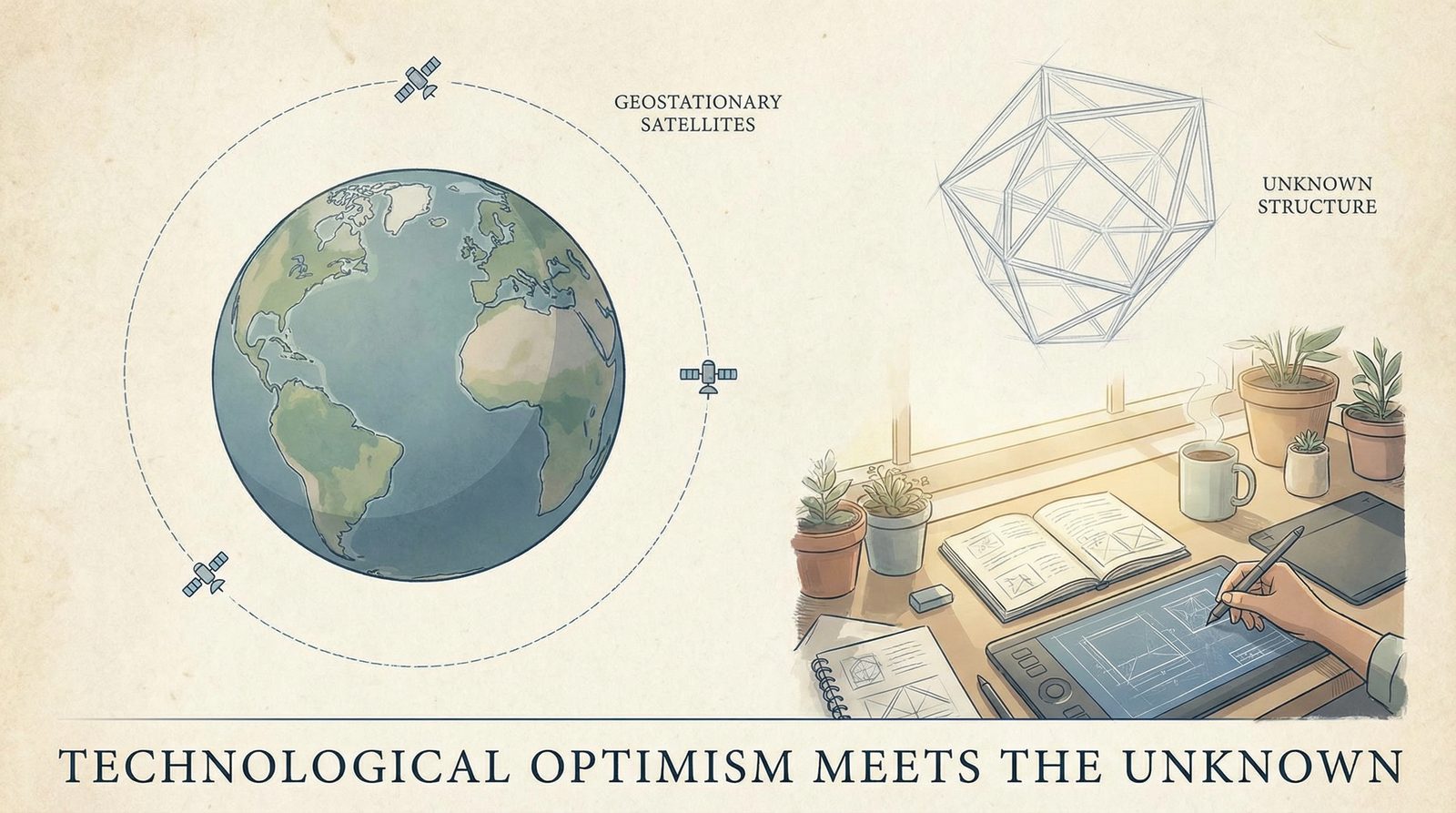
    Born in 1917 in Minehead, England, Clarke grew up on the threshold of the modern space age. His early love of astronomy shaped everything that followed. After serving as a radar specialist in World War II, he became an engineer, writer, and public intellectual. He was among the first to propose geostationary communication satellites — an idea that eventually reshaped global communication.

    Clarke’s literary influences ranged from H. G. Wells to Olaf Stapledon, but his true muse was science itself. He believed technology would transform humanity, not strip it of meaning. This optimism distinguishes him from many later sci-fi writers who leaned into dystopia. For Clarke, the cosmos was a place of possibility, not despair.

    He spent the latter part of his life in Sri Lanka, drawn by the sea, diving, and the island’s slower pace — a setting that subtly informed some of his later writing. His personal philosophy can be felt in the calm, almost meditative quality of his prose: a steady belief that curiosity is our finest trait.

    Editorial illustration inspired by 'Arthur C. Clarke'

    THEMES & MOTIFS

    Clarke’s fiction revolves around a few core themes: humanity’s place in a vast cosmos, the transformative power of technology, and the ethical weight of exploration. Even in the quieter 2061: Odyssey Three, these themes are unmistakable.

    His work regularly intersects with the motif Future Shock as Transformation. For Clarke, technological upheaval isn’t something to fear — it’s the catalyst that pushes humanity into its next phase. He also often engages with Identity Collapse in Isolation, especially in astronauts and explorers confronting environments that dwarf human scale.

    Clarke’s aliens, when they appear, are rarely enemies. They are mentors, mysteries, or glimpses of our potential future. That orientation — curiosity instead of threat — makes his voice distinct among his contemporaries.


    STYLE & VOICE

    Clarke’s style is famously cool and precise. He writes like an engineer building a cathedral of ideas: clean lines, no unnecessary ornament, everything justified by structure. Emotional beats are present but understated; he trusts readers to supply their own wonder.

    He excels at integrating scientific exposition into narrative — orbital mechanics, geology, astrophysics — without sacrificing readability. His characters often feel secondary to the concepts, which is a conscious aesthetic choice rather than a flaw.

    The result is fiction that feels both timeless and distinctly mid-century, shaped by the optimism of an era when humanity believed it might soon live among the stars.

    Symbolic illustration inspired by 'Arthur C. Clarke'

    KEY WORKS

    Clarke’s bibliography is enormous, but a few titles define his legacy. 2001: A Space Odyssey (1968) and its sequels — including 2061: Odyssey Three — remain cultural landmarks for their blend of cosmic mystery and scientific rigor. Rendezvous with Rama (1973) helped solidify the subgenre of “big dumb object” sci-fi. Childhood’s End (1953) remains one of the most influential alien-contact novels ever written.

    His short stories, such as “The Nine Billion Names of God” and “The Star,” continue to circulate as some of the finest examples of tight, conceptual sci-fi in print.


    CULTURAL LEGACY

    Few authors have influenced both science and fiction as profoundly as Clarke. His satellite concept helped reshape global communication. His novels and essays inspired generations of scientists, engineers, and astronauts. His collaboration with Stanley Kubrick permanently altered how cinema depicts space.

    Clarke’s legacy is not a single book or idea, but a worldview: that science and imagination are not opposites but partners. Rebuilding his profile on AllReaders strengthens our sci-fi backbone and restores one of the site’s most important historical figures.

  • 2061: Odyssey Three (1987)

    2061: Odyssey Three (1987)

    By: Arthur C. Clarke
    Genre: Science Fiction, Hard Science Fiction
    Country: United Kingdom


    INTRODUCTION

    2061: Odyssey Three, published in 1987, marks Arthur C. Clarke’s return to the Space Odyssey universe with a story that leans heavily into scientific curiosity and long-view optimism. The novel arrives after the metaphysical ambition of 2001 and the political tension of 2010, and it settles into a calmer mode. Clarke writes with the confidence of a writer who knows how vast the universe is and wants to slow down long enough to study it. This is late-career Clarke: patient, technical, and comfortable letting the grandeur of space speak for itself.

    For AllReaders, this book earns a refreshed page because of its strong legacy presence in the original site archives. Even if the novel is not the boldest of the series, it still attracts readers who want to complete the full Odyssey sequence or who appreciate Clarke’s blend of scientific detail and quiet wonder.


    PLOT & THEMES

    The story follows two paths. Dr. Heywood Floyd, now elderly, travels aboard a luxury spacecraft heading toward Halley’s Comet. At the same time, the ship Galaxy finds itself stranded on Europa, a world that remains off-limits after the events of 2010. The novel uses this split to create a sense of broad exploration rather than tight suspense. Clarke uses both storylines to highlight physics, geology, orbital mechanics, and the kind of speculative astronomy that shaped his career.

    Themes emerge slowly. Human ambition meets its limits. Curiosity pushes against boundaries set by forces far older than humanity. Clarke also touches on the ethics of exploration, especially when discovery risks disturbing worlds that were never meant to be touched. The motif Future Shock as Transformation appears in the background, since the characters constantly meet technologies and environments that challenge their understanding of what is possible. Clarke frames this adjustment with optimism rather than fear.

    The Europa thread adds a low pulse of danger. Clarke returns to his long-running fascination with alien life as something wondrous and fragile. Even without large set pieces, the presence of life under Europa’s ice casts a quiet shadow over the story. The universe remains beautiful, but it is never entirely safe.

    Conceptual editorial illustration inspired by '2061 odyssey three'

    STYLE & LANGUAGE

    Clarke’s prose is crisp and confident. He writes with the tone of someone explaining the universe to readers he respects. The novel offers long stretches of scientific explanation, including propulsion systems, cometary chemistry, and planetary composition. Fans of hard science fiction will find this deeply satisfying.

    Readers seeking emotional drama may find the story distant. Clarke keeps his focus on ideas, not interpersonal complexity. Still, he offers brief but thoughtful moments that explore Floyd’s aging body and the contrast between his lifelong work and the world of younger explorers now rising around him.

    The pacing moves in waves. Clarke alternates between stretches of technical detail and bursts of incident. This rhythm defines the Odyssey series, and 2061 continues the pattern with quiet confidence.


    CHARACTERS & RELATIONSHIPS

    Heywood Floyd returns as the emotional touchpoint. Age limits his physical ability, but not his curiosity. Clarke uses him to reflect on what it means to keep learning in a universe that changes faster than any human can adapt to. Floyd’s quiet resilience anchors the book’s most human moments.

    The supporting cast serves the story rather than stealing attention. Engineers, scientists, and crew members offer competing interpretations of scientific problems. Their personalities matter less than their expertise. Clarke keeps their interactions clean and functional.

    Europa itself becomes one of the novel’s strongest characters. Clarke describes the moon as a place of beauty and danger, a world shaped by forces no human can fully comprehend. It reminds the reader why the monolith’s warning still holds weight.


    CULTURAL CONTEXT & LEGACY

    2061 belongs to Clarke’s reflective late style. He writes with patience and an eye on scientific discovery rather than dramatic shock. When the novel appeared, research into comets, planetary oceans, and Europa’s icy crust was accelerating, and the book captures that growing excitement. Clarke’s attention to real theories gives the story a sense of authenticity even when it wanders from strict narrative structure.

    The novel lacks the cultural impact of 2001 and the narrative tension of 2010. Even so, it remains an essential link in the Odyssey cycle. Readers who enjoy grounded speculation and careful scientific extrapolation continue to return to it. Clarke’s reputation keeps the book alive, and the ideas inside still spark curiosity.

    Illustration of a core idea or motif from '2061 odyssey three'

    IS IT WORTH READING?

    For fans of hard science fiction, yes. 2061: Odyssey Three offers detailed worldbuilding, thoughtful speculation, and a sense of scientific joy. For readers who want complex interpersonal drama or emotional heat, the book may feel distant. Clarke focuses on ideas rather than intimacy, and he does so with intention.

    Anyone reading the entire Odyssey sequence should not skip it. For casual readers, it is optional but rewarding if you enjoy slow, idea-driven science fiction grounded in astrophysics.


    SIMILAR BOOKS

    Readers who enjoy scientific exploration may appreciate Jill Paton Walsh’s The Green Book, which offers a gentler approach to survival on new worlds. Those drawn to stories where danger arises from unfamiliar environments might also connect with Tabitha King’s Survivor, even though the genres differ.

  • The Green Book (1981)

    By: Jill Paton Walsh
    Genre: Science Fiction
    Country: United Kingdom


    INTRODUCTION

    Jill Paton Walsh’s The Green Book is a slim, sharp piece of early sci-fi that has quietly endured since its release in 1981. Written for younger readers but thoughtful enough for adults, it follows a small group of refugees fleeing a dying Earth and resettling on a strange new planet. The book isn’t trying to be a blockbuster or a grand space epic. Its power comes from its restraint: simple language, exact emotional beats, and worldbuilding delivered in small, carefully chosen details.

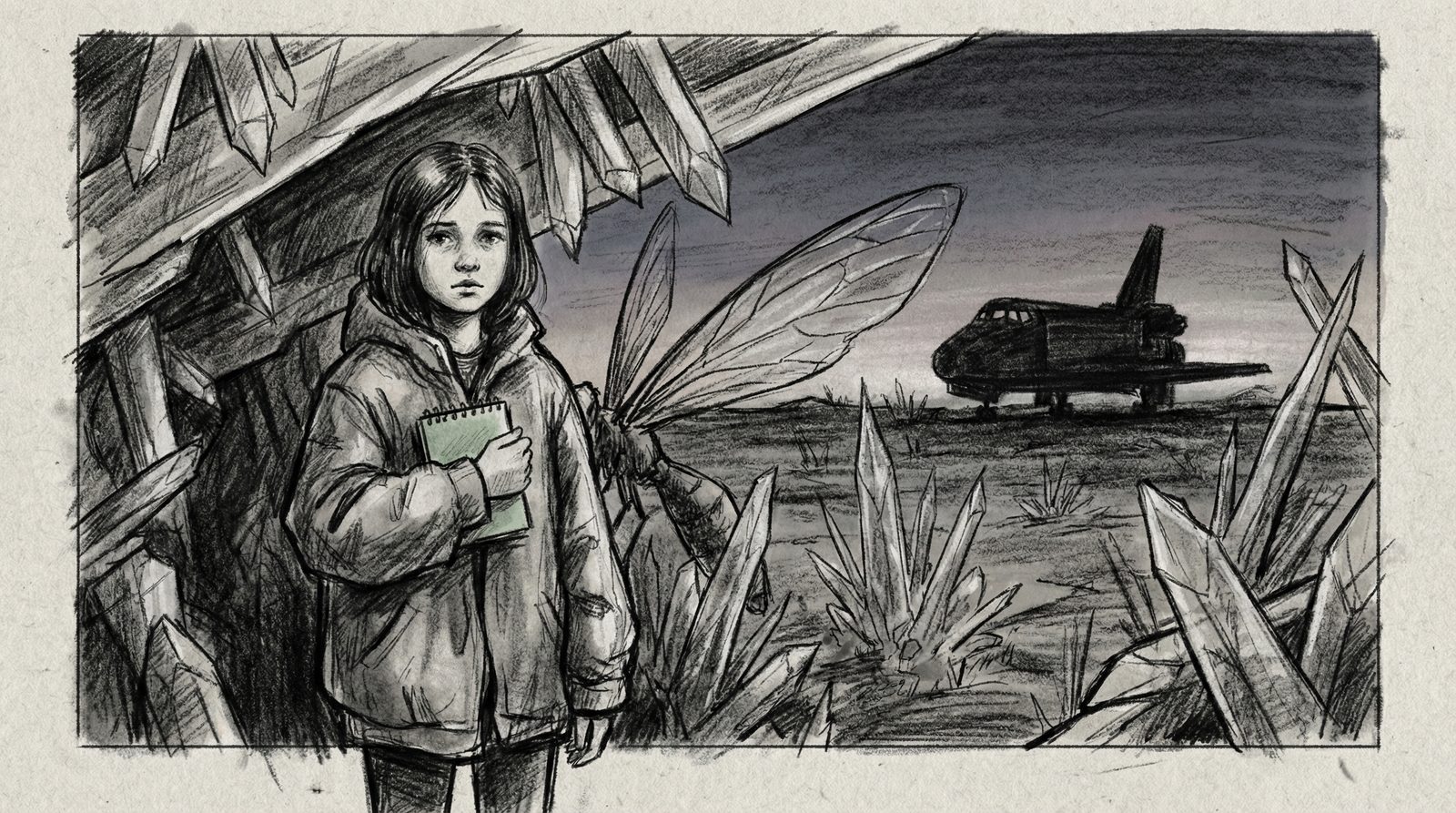
    The story centers on Pattie, the youngest child in her family, whose only possession on the doomed starship is an empty notebook she calls her green book. What she writes, and what that writing becomes to the community, is the novel’s quiet heartbeat.


    PLOT & THEMES

    The premise is simple: Earth is dying, and a handful of families escape aboard an overcrowded craft to a habitable but unknown world. Each person is allowed to bring one book. Pattie brings an empty one. That small, almost throwaway decision becomes the novel’s central metaphor.

    Once the colonists arrive, they struggle to adapt. The new planet’s vegetation is edible but strange. Animals behave unpredictably. The familiar rules of agriculture, architecture, and survival do not apply. Through this, Walsh explores classic early sci-fi themes — resource scarcity, community formation, and adaptability — through a gentle, almost fairytale-like lens.

    The emotional theme is about voice and value. Pattie is underestimated throughout the journey, but she becomes the recorder of the colony’s founding — a role that reshapes the community’s identity. This touches lightly on the motif Identity Collapse in Isolation, though the story treats it with far more hope than darkness.

    Conceptual editorial illustration inspired by 'the green book (1981)'

    STYLE & LANGUAGE

    The prose is spare and clear, written for younger readers but not condescending. Walsh refuses melodrama, instead building tension from practical challenges: how to make lamps, how to grow food, how to survive the nights. The simplicity is intentional — it turns the alien world into a space for lessons about cooperation, curiosity, and resilience.

    Some readers may find the storytelling too soft or too brief. It is absolutely a product of children’s sci-fi from the early 1980s. But within those limits, Walsh hits her marks with precision.


    CHARACTERS & RELATIONSHIPS

    Pattie is the emotional center of the novel. Her curiosity, fear, and eventual sense of responsibility give the book its shape. She is written simply, but with enough interiority to feel real.

    Her siblings and father form the secondary cast, offering a grounded portrait of a family under pressure. Their interactions are understated, but Walsh uses small gestures to suggest their exhaustion, worry, and protectiveness.

    The larger colony functions more as a collective presence than a set of distinct characters, but that works for the book’s fable-like structure. These are not heroes and villains, just ordinary people trying to survive a radically new environment.


    CULTURAL CONTEXT & LEGACY

    The Green Book sits comfortably within the tradition of soft, humanistic sci-fi of the 1970s and early 1980s. It shares DNA with books like A Wrinkle in Time and The Giver, though it is smaller in scope. For many readers, it was their first encounter with sci-fi that valued emotional intelligence as much as technology.

    The book’s legacy is modest but persistent. Teachers still assign it. Libraries still stock it. And it shows up year after year on lists of formative sci-fi for young readers. It’s not a complex novel, but it remains surprisingly durable.

    Illustration of a core idea or motif from 'the green book (1981)'

    IS IT WORTH READING?

    If you’re looking for hard sci-fi or intricate worldbuilding, no — this isn’t that book. But if you want a quiet, thoughtful survival story with emotional clarity, The Green Book is worth your time. It especially holds up for readers who appreciate character-driven speculative fiction.

    It’s also a strong recommendation for younger readers and anyone looking for an entry point into early sci-fi that isn’t all lasers, starfleets, and cosmic peril.


    SIMILAR BOOKS

    Readers drawn to quiet, survival-focused sci-fi may enjoy Arthur C. Clarke’s 2061: Odyssey Three, which approaches space and adaptation from a more adult, technical perspective. Laurie Halse Anderson’s Catalyst pairs well thematically in terms of personal reinvention and pressure, even though it’s not sci-fi.

  • The Book of Reuben (1994)

    The Book of Reuben (1994)

    By: Tabitha King
    Genre: Literary Fiction, Domestic Psychological Fiction
    Country: United States


    INTRODUCTION

    The Book of Reuben, published in 1994, is one of Tabitha King’s most fully realised novels. It continues the Nodd’s Ridge cycle but shifts the emotional center to a man who has spent years running from his own choices. Reuben Stilnick is not a natural hero. He is stubborn, defensive, and shaped by decisions he made when he was too young to understand their long reach. King uses him as a lens to explore responsibility, self-deception, and the complicated work of trying to become a better person when everyone around you remembers the older version.

    Because King rarely builds her novels around male narrators, this one feels immediately distinct. Yet the familiar elements remain. Domestic tension, interior conflict, and the scrutiny of a small town where every mistake becomes a cautionary tale. Compared to Caretakers or The Trap, the narrative feels tighter and more confident, as if King has settled into the emotional terrain of Nodd’s Ridge and knows exactly where to look for its pressure points.


    PLOT & THEMES

    The novel follows Reuben Stilnick through a period of reckoning. His younger years were marked by impulsive choices and a talent for avoiding responsibility. King shows these mistakes slowly, through layered flashbacks and the hard edges of his present-day life. Reuben carries a reputation that everyone in Nodd’s Ridge seems to know by heart. Some of it is deserved. Some of it is the town’s way of freezing him in a version of himself that no longer fits.

    The themes here are quieter than in some of King’s earlier novels, yet they carry a heavier weight. Regret, emotional inheritance, and the uneasy work of rebuilding one’s life form the backbone of the story. Reuben is a man caught between who he was and who he wants to be, and the distance between those two versions becomes the source of the novel’s tension.

    King’s use of motifs is subtle but present. Identity Collapse in Isolation fits Reuben’s arc in a way that feels more mature and weathered than the motif’s typical application. His collapse is not dramatic. It arrives through smaller moments, half-realised thoughts, and days when the weight of his past becomes impossible to ignore. Domestic Vulnerability as Horror also threads through the book. Home becomes a mirror he can no longer avoid, a place that reflects every flaw he has worked so hard to hide.


    STYLE & LANGUAGE

    The writing in The Book of Reuben is measured and assured. King leaves behind the wide sprawl of Caretakers and instead leans into a style that suits Reuben’s internal landscape. The prose is clean, with moments of striking clarity, especially when Reuben slips into memory or tries to understand the gap between who he is and who people believe him to be.

    Flashbacks blend smoothly into the present. King never lets them overwhelm the narrative, but she uses them to add weight to Reuben’s relationships and to show how a single decision can echo through decades. The geography of Nodd’s Ridge also becomes emotional terrain. Roads, storefronts, and familiar gathering places hold the memory of choices Reuben would rather forget, and each location becomes part of his character development.

    The pacing is deliberate. Some chapters move slowly, but the restraint fits the novel’s focus on introspection rather than spectacle. King writes with confidence, trusting that the quiet moments will reveal what they need to reveal without forcing the drama into larger shapes.


    Conceptual editorial illustration inspired by 'the book of reuben'

    CHARACTERS & RELATIONSHIPS

    Reuben Stilnick is flawed and fully human. King resists offering easy sympathy. Instead, she allows his growth to happen through discomfort and honest self-examination. The result is one of her most layered protagonists, shaped by regret yet still capable of change.

    The townspeople serve as both chorus and pressure. Some hold grudges. Others are quietly encouraging. Many simply observe him, waiting to see whether old patterns return. Their reactions help shape the arc of the story and give a sense of how deeply rooted the town’s memory can be.

    Characters from earlier books — especially those from Pearl and The Trap — appear again through Reuben’s perspective. These shifts offer new context and deepen the sense of interconnected lives that run through the entire Nodd’s Ridge cycle.


    CULTURAL CONTEXT & LEGACY

    When the novel was published in the mid-1990s, literary fiction was increasingly drawn toward character-driven stories about interior conflict and social belonging. King’s work fits neatly into that landscape. Her focus on small-town masculinity feels ahead of its time. She neither condemns Reuben nor excuses him. Instead, she examines how identity is shaped by environment, memory, and the long trail of choices people carry with them.

    Within the Nodd’s Ridge cycle, The Book of Reuben acts as a hinge. It reframes earlier events, clarifies emotional histories, and adds depth to the town’s mythology. Many readers consider it one of King’s strongest novels. It may not have the immediate heat of One on One or the intensity of Survivor, but it carries a quiet power that lingers long after the final chapter.

    Illustration of a core idea or motif from 'the book of reuben'


    IS IT WORTH READING?

    The Book of Reuben is essential for readers following the Nodd’s Ridge novels in sequence. It stands on its own, but the emotional layers deepen if you already know the town’s history and its people. Readers who enjoy introspective, character-driven fiction will find the novel particularly satisfying.

    Those looking for King’s most psychologically intense writing may gravitate toward Survivor, yet The Book of Reuben remains one of her most consistent and thoughtful works. It offers a portrait of a man trying to rebuild his life without shortcuts or dramatic transformations. Instead, the book focuses on the quiet, steady work of becoming someone better.


    SIMILAR BOOKS

    Readers who appreciate Reuben’s journey will find strong emotional continuity in Pearl, which expands the inner life of Nodd’s Ridge through a different lens. Outside King’s work, novels by Richard Russo offer similar explorations of flawed middle-aged men navigating small-town expectations.

  • Small World (1981)

    Small World (1981)

    By: Tabitha King
    Genre: Literary Fiction, Domestic Psychological Fiction
    Country: United States


    INTRODUCTION

    Small World is Tabitha King’s debut novel, published in 1981, and it immediately sets her apart from the mainstream horror boom of the early eighties. Instead of supernatural thrills or big set pieces, King leans into something far stranger and more intimate: a psychological pressure cooker about obsession, control, and the lengths people go to when they think fate owes them something. It’s a messy, ambitious first novel, sometimes brilliant, sometimes uneven, but unmistakably hers.

    The story revolves around a woman who wins a house in a contest, only to find that ownership brings out the worst in herself and the people around her. If that sounds like the setup for a satirical fairy tale, the book plays it straighter and darker. King takes an almost ordinary premise and pushes it toward social commentary, edging into surreal territory without ever fully leaving realism behind.


    PLOT & THEMES

    At the centre is Dorothy “Doll” Carter, a young woman who unexpectedly wins a house in the fictional town of Nodd’s Ridge. What should be a fresh start slowly becomes a trap as Doll’s relationships, responsibilities, and self-image begin to twist in uncomfortable ways. King uses the premise to explore how sudden opportunity can destabilise people who were already balancing on emotional knife-edges.

    Themes of envy, resentment, and social scrutiny run strong. The town resents Doll for receiving something unearned, and Doll resents the town for refusing to let her grow into her new identity. This gives the book a sharp psychological edge, resonating with the motif Identity Collapse in Isolation as Doll’s sense of self starts to fracture under the town’s gaze.

    There is also an early form of the motif Domestic Vulnerability as Horror. The house becomes less a prize and more a space of anxiety — a physical representation of expectations Doll can’t meet. The tension comes not from ghosts or monsters but from the oppressive weight of other people’s assumptions.

    Conceptual editorial illustration inspired by 'small world (1981)'

    STYLE & LANGUAGE

    The novel’s style is jagged and experimental compared to King’s later work. She jumps between points of view, plays with psychological interiority, and occasionally leans into melodrama. Not all of it lands, but when it does, it lands hard. You can feel her testing the boundaries of what a small-town novel can do.

    The prose alternates between elegant restraint and raw emotional bluntness. Scenes can pivot quickly from quiet domestic detail to moments of striking intensity. For some readers, this tonal oscillation is part of the book’s charm; for others, it’s a sign of a writer still finding her centre. Both interpretations feel fair.

    What’s undeniable is King’s gift for observation. Even in her earliest writing, she understands how people wound each other with words they don’t fully mean, and how fear of judgment can mutate into self-sabotage. Those strengths would become hallmarks of her later novels.


    CHARACTERS & RELATIONSHIPS

    Doll Carter is a fascinating and sometimes frustrating protagonist. She’s insecure, impulsive, and prone to self-deception — which makes her feel painfully real but also means some readers may struggle to stay patient with her. Her arc is compelling not because she triumphs, but because King refuses to clean up her rough edges.

    The supporting cast — neighbours, family, opportunists, critics — form a chorus of conflicting desires and judgments. Some characters are thinly sketched, a common drawback in debut novels, but several stand out as early templates for later, more refined characters in books like Pearl and The Book of Reuben.

    The relationships here are tense, transactional, and often painfully one-sided. Love, generosity, and community support are all tinged with suspicion. King captures how quickly a close-knit town can turn hostile when someone disrupts the social order.


    CULTURAL CONTEXT & LEGACY

    Small World is clearly a debut — ambitious, uneven, and fiercely interested in human psychology. Its legacy comes less from its polish and more from its place in King’s evolution. Many of the themes she would later refine are present in embryonic form here: the pressure of small-town expectations, the fragility of self-worth, and the violence of being forced into roles you never asked for.

    For readers following the entire Nodd’s Ridge sequence, this book is an essential origin text. For casual readers, its appeal may depend on how much patience you have for experimental early work. It absolutely has strong sections — sometimes startlingly strong — but also stretches that feel like a writer working through her style in real time.

    Illustration of a core idea or motif from 'small world (1981)'

    IS IT WORTH READING?

    If you’re committed to reading Tabitha King’s work in full, Small World is a must. It’s the seed from which the entire Nodd’s Ridge universe grows. If you’re new to King, this is not the strongest entry point — One on One or Pearl are easier and more polished introductions.

    That said, readers who enjoy psychologically dense domestic fiction, flawed protagonists, and early-career experimentation will find a lot to chew on here. The book rewards patience and offers real emotional depth — as long as you accept that it’s not trying to be smooth or conventional.


    SIMILAR BOOKS

    Fans of experimental domestic dramas may connect this to King’s later, more controlled novels like Survivor. For another take on disrupted identity and social pressure, Laurie Halse Anderson’s Catalyst pairs surprisingly well. Within the Nodd’s Ridge world, Pearl is the closest in tone once King found a more consistent style.

  • Caretakers (1983)

    Caretakers (1983)

    By: Tabitha King Genre: Literary Fiction, Domestic Psychological Fiction Country: United States

    Introduction

    Caretakers, published in 1983, is the first novel to introduce readers to Nodd’s Ridge, the rugged Maine town that would later anchor several of Tabitha King’s strongest works. The book reads as a wide canvas rather than a single portrait. King gives us a town long before she gives us a central protagonist, and that choice sets the tone for the entire series. Beneath the ordinary routines of the community, there are frictions that have been building for years. Some come from family strain. Others grow out of class divides, private resentments, or the uneasy sense that life has settled into patterns that no longer fit. The novel has the shape of a traditional small-town saga. It carries the weight and warmth of multiple voices, each pushing against the quiet expectations of the town. The ambition of the book is both its advantage and its drawback. King tries to show as many sides of Nodd’s Ridge as she can, which gives the world depth but also causes some plotlines to stretch farther than they need to. Even so, Caretakers stands as the necessary foundation for what would follow, the moment when King’s recurring themes start to crystallise.

    PLOT & THEMES

    The novel focuses on the caretakers of Nodd’s Ridge, a loose group of people who hold the town together in ways that are rarely recognised. Parents, spouses, community leaders, workers who keep the town’s institutions running. Each carries their own struggles while trying to maintain a sense of stability for others. Money troubles strain marriages. Parents and children talk past each other. Local politics create quiet winners and quieter casualties. The tension comes from ordinary life rather than anything sensational, and that restraint becomes one of the book’s strongest qualities. This is also where King begins shaping one of her central motifs, Domestic Vulnerability as Horror. The most frightening spaces in the novel are familiar ones. Bedrooms, kitchens, and the back rooms of small businesses. They are places where love is supposed to protect, yet they become sites of emotional exposure. King shows how danger can emerge through silence, disappointment, or the pressure to hold everything together without cracking. Several storylines also brush against the motif Identity Collapse in Isolation. Characters who thought they understood their roles in the community begin to see themselves through the eyes of others. The gap between those identities becomes difficult to reconcile. Choices that once felt safe lead to unexpected consequences, and the weight of responsibility becomes something that reshapes entire futures. Responsibility sits at the core of the book. Who accepts it, who avoids it, and who finally breaks under the burden. These themes echo throughout the later Nodd’s Ridge novels, yet here they feel newly formed, as if King is testing the edges of what this world can hold.
    Conceptual editorial illustration inspired by 'caretakers (1983)'

    PROSE & NARRATIVE STRUCTURE

    In tone and structure, Caretakers is more traditional than King’s later work. The prose is clear and measured, although it occasionally slows under the weight of exposition. King moves between viewpoints with confidence, but the shifts sometimes loosen the narrative focus. This is less a flaw and more a reflection of what the novel aims to do. It wants to show an entire community, not just a central figure, and that ambition requires room to wander. When King lands on an emotional moment, the writing sharpens. A confession whispered in a quiet room. A private argument that exposes a fracture in a marriage. A conversation that reveals how much has been unsaid. These scenes remind the reader of the writer she would become in books like Survivor, where emotional clarity becomes the driving force of the narrative. The pacing is uneven. Some chapters move with energy, while others linger on domestic routines that do not always deepen the story. Even so, this approach helps build the texture of the setting. The town becomes a place you can almost walk through. Each street and household holds its own weather system, and the slow parts help make the world feel lived in.

    CHARACTERS & INTERIORITY

    Caretakers is an ensemble novel. King moves between couples, families, and town figures with a wide lens, allowing readers to see how responsibility and expectation shape each household. Some characters feel trapped in roles they never chose. Others work themselves into exhaustion trying to keep the peace. Their private worries and small victories form the emotional backbone of the story. The most memorable characters are the ones who feel invisible in their daily lives. A spouse who stays quiet to avoid conflict. A parent overwhelmed by the demands of raising children without support. A neighbour who carries everyone else’s burdens while hiding their own. These figures echo through later novels like Pearl and The Book of Reuben. Their appearances in those books feel richer if you have followed them from the beginning. Not every character stands out. Some remain sketched rather than fully realised, which reflects the scale of the book. King is trying to cover an entire town, and although the emotional core remains strong, a few storylines drift to the margins without landing with full impact.

    LEGACY & RECEPTION

    Caretakers carries the sensibilities of the early 1980s, a time when domestic fiction was beginning to blend more openly with literary suspense. King leans toward realism here, with just a hint of the psychological tension that would define her later writing. The book’s concerns reflect its era. Small towns facing economic pressure. Shifting social expectations. Families wrestling with old hierarchies and new responsibilities. As the first novel in the Nodd’s Ridge sequence, its legacy is structural as much as emotional. It sets the geography of the town, the social rules people follow, and the buried conflicts that later books bring into sharper focus. For new readers, it may feel like groundwork. For returning readers, it becomes the starting point that gives weight to everything King builds later. The book also lays out a theme that appears throughout King’s career. Small towns often hide the most volatile conflicts beneath calm surfaces. A moment of pressure is all it takes for those hidden tensions to rise into view. Caretakers shows that early and clearly.
    Illustration of a core idea or motif from 'caretakers (1983)'

    IS IT WORTH READING?

    Caretakers is essential if you plan to read the Nodd’s Ridge novels in order. It establishes the emotional and social architecture that the later books refine, especially Pearl and The Book of Reuben. On its own, the book can feel uneven and sometimes too broad for its own good, but its atmosphere and emotional depth make it rewarding for readers who enjoy slow-burn small-town fiction. Readers seeking King’s sharpest psychological writing may prefer starting with Survivor. Readers who love character webs, family sagas, and the rhythms of community life will find a lot to appreciate here. Even with its flaws, Caretakers sets a tone that echoes throughout the entire series.
    If Caretakers resonates with you, continue directly to Pearl and The Book of Reuben. Both deepen the emotional politics of the town and refine many of the themes introduced here. Readers who enjoy community-driven drama may also appreciate the layered family stories found in the work of Lori Lansens or the ensemble focus of Elizabeth Strout.

    DISCOVERABILITY & LINKS

  • The Trap (1985)

    The Trap (1985)

    By: Tabitha King
    Genre: Literary Fiction, Domestic Psychological Fiction
    Country: United States


    INTRODUCTION

    The Trap, first published in 1986 and reissued later as Wolves at the Door, is the second entry in Tabitha King’s Nodd’s Ridge sequence. It deepens the world introduced in Caretakers and plants early threads that find their shape in later installments like The Book of Reuben. The novel blends old grudges, class tensions, and personal ambition inside a town that always looks calm from a distance, even while storms gather behind closed doors.

    This is a book with uneven edges. Some chapters land with real force. Others drift a little before finding their footing again. Even so, the novel remains important within the larger cycle. It exposes the wiring behind the politics, personalities, and long-standing resentments that define Nodd’s Ridge, and without it the later books lose some of their emotional context.


    PLOT & THEMES

    The story moves between households, businesses, and local power circles. Marriages strain under pressure. Rivalries simmer. Business ambitions collide with private loyalties. The town’s polite surface thins each time someone pushes for advantage or stumbles into old conflicts that were never resolved. Unlike the tight psychological focus of One on One or the intensity of Survivor, The Trap spreads itself across an ensemble, which gives the book breadth and the occasional loss of momentum.

    Power is the center of gravity here. Characters negotiate for status or protection, sometimes quietly and sometimes with open hostility. The social ecosystem punishes people who step outside the roles the town expects them to play. This atmosphere ties naturally to the motif Domestic Vulnerability as Horror. The threats are entirely human. They come from jealousy, resentment, and the pleasure some people take in seeing others fall.

    The book also explores identity drift. Several characters discover that the image they hold of themselves does not match the one the community reflects back at them. This tension echoes the motif Identity Collapse in Isolation, since the people of Nodd’s Ridge often find themselves alone with their doubts despite being surrounded by a familiar town.

    Conceptual editorial illustration inspired by 'the trap (1985)'

    STYLE & LANGUAGE

    King’s prose in The Trap is at its most expansive. She shifts between characters frequently and tries to capture every social layer of the town. The result is a panoramic view of Nodd’s Ridge that can feel rich in one chapter and a little scattered in the next. When the approach works, the writing is vivid and filled with small, revealing details. When it falters, the middle third of the book slows and wanders before tightening again.

    Dialogue remains one of King’s strengths. She fills ordinary conversations with tension, affection, and the subtle posture of people who know each other too well. Many of the best scenes take place in everyday settings, such as church gatherings, family kitchens, or local businesses. These moments show how much weight small gestures can carry in a place where everyone has a history with everyone else.

    At times, the book feels like two narratives running parallel. One is a domestic drama focused on relationships and emotional patterns. The other is a political allegory about money, class, and institutional influence. When the threads weave together, the story feels strong. When they drift apart, the structure loosens and the book loses some of its focus.


    CHARACTERS & RELATIONSHIPS

    The ensemble includes business owners, town officials, families with reputations to defend, and working-class residents whose futures hinge on decisions made in private rooms. Some figures, particularly the ones who reappear in Pearl or The Book of Reuben, feel grounded and complex from the moment they appear.

    Not every character receives the same depth. The ambition to cover the entire town stretches the narrative thin in places, and certain personalities never quite break out of the outline stage. That occasional thinness stands in contrast to the richness of the setting, which grows more detailed with each chapter.

    The emotional conflicts remain King’s strong suit. Jealousy, pride, envy, and the desire for connection all shape the arcs of the characters. The novel uses these tensions to show how tightly Nodd’s Ridge is woven together and how personal disputes can ripple outward into community-wide consequences.


    CULTURAL CONTEXT & LEGACY

    The Trap holds an unusual space in King’s bibliography. It may not be her most polished work, yet it expands the Nodd’s Ridge universe in ways that become essential later. Readers who enjoy the long-game storytelling of interconnected novels will find value in how this book lays out the emotional and political foundations that later books refine.

    The story also reflects mid-1980s concerns about class mobility, public reputation, and the informal structures that hold small communities together. Some elements show their era, but the underlying themes still resonate, especially the ways institutions protect themselves at the expense of individuals.

    Illustration of a core idea or motif from 'the trap (1985)'


    IS IT WORTH READING?

    The Trap is most rewarding for readers already invested in Nodd’s Ridge. Newcomers may find the pacing uneven or the ensemble structure overwhelming, but anyone reading King’s work in order will appreciate how the novel sets up the interpersonal and political dynamics that shape the later books. Those seeking King’s most refined storytelling might prefer One on One, Pearl, or Survivor, but The Trap remains a significant piece of the larger picture.


    SIMILAR BOOKS

    Readers who enjoy community-driven tension might connect with Caretakers or The Book of Reuben, both of which offer more concentrated character arcs inside the same world. For a contemporary parallel that focuses on personal crisis inside a tightly structured community, Laurie Halse Anderson’s Catalyst offers a similar emotional undercurrent.

  • Survivor (1997)

    Survivor (1997)

    By: Tabitha King
    Genre: Domestic Psychological Fiction, Literary Fiction
    Country: United States


    INTRODUCTION

    Survivor is one of Tabitha King’s most emotionally concentrated novels. It avoids neat catharsis and instead follows the long, uneven work of recovery after a single life-altering moment. First published in 1997, the book steps away from the wide social tapestries of the Nodd’s Ridge cycle and turns its attention to a college campus shaken by a terrible accident. What emerges is a story about guilt, memory, reputation, and the fragile ways people try to move forward while others continue to see them through an outdated and distorted lens.

    Where One on One traces adolescence under pressure and Pearl examines adult identity inside a small community, Survivor asks what happens when the story of your life is abruptly cut in half. The book is quieter than some of King’s earlier work, yet the psychological focus is sharper, and that precision makes it one of her most memorable novels.


    PLOT & THEMES

    The novel centers on A. P. Hill, a student whose life is divided into a before and an after by a catastrophic accident at college. The details of what happened do not arrive in a single exposition dump. Instead, they surface in fragments, scattered across memories, conversations, and moments of intrusive thought. That structure mirrors Hill’s own attempts to make sense of the event and to place it somewhere she can live with.

    When Hill returns to campus, she walks into a community that has already decided what it thinks it knows. She passes through corridors full of whispers, half-truths, and unresolved grief. King writes trauma without spectacle. The damage shows up in sleepless nights, in strained small talk, and in the effort it takes to pretend that everything is fine just so other people can feel more comfortable. This connects closely to the motif Identity Collapse in Isolation, since Hill has to rebuild a sense of self inside an environment that feels both crowded and profoundly lonely.

    King also returns to one of her recurring interests: the way apparently safe spaces can become threatening. The campus should function as a protective setting, a place dedicated to learning and support. Instead, it turns into a maze of watchful eyes and secondhand stories. Even friendships cannot be trusted without hesitation. There is no supernatural threat in Survivor, only the ongoing consequences of a single moment that nobody can erase.


    STYLE & LANGUAGE

    King’s prose in Survivor is stripped back and deliberate. Compared to the more expansive style of the Nodd’s Ridge novels, this book feels tighter and more contained, which suits its psychological focus. Interior monologue plays a major role. Readers spend a great deal of time inside Hill’s thought patterns, watching her circle the same fears and questions while trying to decide which dangers are real and which are echoes.

    Scenes often cut away at the moment when emotions spike, which reflects Hill’s own tendency to withdraw when a situation becomes too charged. Dialogue is full of missed signals and partial truths. People want to help but lack the language. Others avoid the subject altogether, afraid that the wrong phrase might cause more pain, and end up making the silence heavier instead.

    One of King’s strengths here is her sense of how trauma warps time. Ordinary days stretch out and feel strangely hollow, while memories arrive with a clarity that pushes the present aside. The pacing of the novel, sometimes slow and sometimes suddenly sharp, reflects the uneven rhythm of recovery.

    Conceptual editorial illustration inspired by 'survivor (1997)'

    CHARACTERS & RELATIONSHIPS

    A. P. Hill is one of King’s most carefully drawn protagonists. She is not presented as a symbol or a lesson. She is a young woman trying to gather the scattered pieces of her identity while everyone around her has an opinion about what she should feel. Her anger, numbness, and occasional flashes of dark humor make her feel fully human rather than emblematic.

    Her classmates and professors orbit around her in ways that reveal the institution’s limits. Some hover with well-meaning concern that never quite turns into real understanding. Others view her as a problem to manage or a reminder of something they would rather not face. A few characters project their own guilt and fear onto her survival. Together, they echo the motif Domestic Vulnerability as Horror, recast here as institutional vulnerability, where the system assumes that students can absorb anything and keep going.

    Her family appears in concentrated, emotionally charged scenes. They care about her and want explanations, but their need for clarity sometimes clashes with her need for space and privacy. King captures the way love, fear, and frustration can sit in the same room without finding a comfortable arrangement.


    CULTURAL CONTEXT & LEGACY

    When Survivor appeared in the late 1990s, campus novels were beginning to take on darker and more psychologically complex subjects. King’s approach stands out because of how quietly she handles her material. There is no final courtroom scene, no neat confession, no dramatic twist that reorders everything. The focus stays on aftermath and on the way trauma seeps into daily life.

    Within King’s body of work, Survivor feels like a close cousin to One on One, although the scope is narrower. Instead of showing how an entire community responds to pressure, King stays close to a single internal journey and lets the wider world remain slightly out of reach. The novel also anticipates later psychological and domestic fiction that centers on women whose trauma shapes how others see them, often in ways they cannot control.


    IS IT WORTH READING?

    Survivor is not an easy read, but it is a deeply honest one. Readers who appreciate character-driven psychological fiction, domestic or institutional suspense without sensational twists, and stories about the slow work of rebuilding after crisis will find it compelling. It also serves as a strong companion to Pearl and The Trap, offering a more tightly focused exploration of themes that run throughout King’s work, such as pressure, visibility, and the struggle to feel safe in one’s own life.


    SIMILAR BOOKS

    Readers drawn to novels about trauma, recovery, and the social aftershocks of a single event may find a strong echo in Laurie Halse Anderson’s Catalyst, which also follows a young woman navigating pressure and expectation in a close-knit environment. Within Tabitha King’s own work, One on One offers another look at vulnerability and defiance in youth, while Pearl explores identity struggles in a more community-rooted setting.